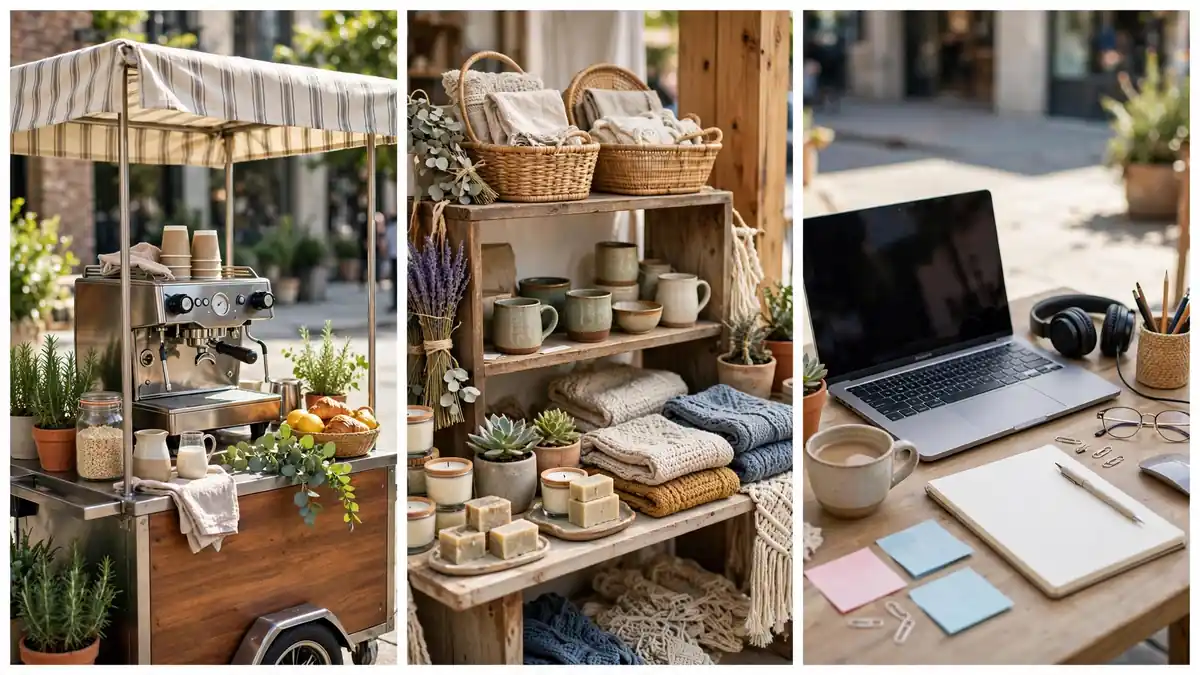
Choosing from the best small business ideas is less about chasing trends and more about matching an idea to your budget, your skills, and the customers in front of you. In 2026, Americans are starting businesses at record rates, and the winners share one trait: they solve a clear problem for a specific group of people. This guide walks through proven ideas across online services, local trades, food, and creative work, along with realistic startup costs and the first step for each.
As you read, judge every idea with three filters. How fast can it earn its first dollar? How much money does it need before that dollar arrives? And would you still enjoy it after six months of hard weeks? The ideas below score well on at least two of those filters, and many score well on all three.
Online Service Ideas With Almost No Startup Cost
Online services are the easiest entry point because your main investment is skill. Freelance writing, graphic design, video editing, and social media management all pay well once you have a small portfolio. Businesses constantly need this work, and they happily pay $30 to $100 an hour for reliable help. If evenings are all you have, pair one of these services with the routine in our guide on how to start a side business while working full-time and grow it at your own pace.
Virtual assistance is growing even faster. Busy founders pay assistants to handle email, scheduling, research, and data entry from home. Our detailed walkthrough on how to become a virtual assistant and find clients covers the exact skills clients request most. Similarly, online tutoring is booming as parents look for flexible help for their kids, and starting a tutoring business online needs little more than a laptop and expertise in one subject.
Digital Product Ideas That Sell While You Sleep
Digital products take effort once and pay you many times. E-books, templates, planners, stock photos, online courses, and design files all live in this category. The trick is solving one narrow problem extremely well, such as a budgeting spreadsheet for new parents or a resume template pack for nurses. Browse the full list of digital products to sell online to find formats that match skills you already own.
E-commerce without inventory is another strong route. With print on demand, a supplier prints and ships your designs only after a customer orders, so you risk almost nothing upfront, and the same zero-inventory thinking powers many of the best online business ideas that are thriving right now.
Local Service Ideas That Never Go Out of Style
Local services look less glamorous, yet they print steady money because demand never disappears. Cleaning is the classic example: homes and offices always need it, startup costs are a few hundred dollars, and happy clients book you every week. The playbook for starting a cleaning business that gets clients fast shows how owners fill their calendars in the first month.
Lawn care and handyman work follow the same pattern. Suburban neighborhoods are full of busy homeowners who would rather pay than spend Saturday on chores. A lawn care business can start with a mower from your garage, while a handyman business rewards anyone who is handy and reliable. Pet services belong here too, since owners treat pets like family and pay premium rates for trusted care, which makes a pet sitting business one of the friendliest first businesses you can start.
Food Business Ideas for People Who Love to Cook
Food ideas reward passion, but they demand permits and planning, so go in with open eyes. Home baking is the gentlest start because most states allow cottage food sales of items like bread, cookies, and jams from a home kitchen. Our guide to starting a bakery business from home explains the rules and the math behind pricing your first menu.
For bigger appetites, food trucks remain one of the most exciting entries in American food. A truck costs far less than a restaurant lease and lets you test neighborhoods before committing. Read how to start a food truck business before you buy anything, because permits, commissary rules, and truck condition decide whether the dream survives its first season.
Creative and Content Ideas
If you enjoy making things, creative businesses can grow quietly into serious income. Photography is a great example: weddings, real estate listings, and business headshots all need skilled local shooters. Our breakdown of starting a photography business that pays shows which niches earn fastest for beginners. Content creation works too, especially when you treat it like a business instead of a hobby by building a YouTube channel around your expertise or writing a blog that sells services and products.
Subscription boxes deserve a mention for creative founders who love curating products. You pick a niche, like snacks from one country or supplies for a hobby, and ship a themed box monthly. The recurring revenue is attractive, though shipping costs demand careful pricing, so validate demand with a simple pre-sale before ordering your first boxes in bulk.
How Much Money Do These Ideas Need?
Costs vary widely, so plan with honest ranges. Pure online services often start under $300, mostly for a website and a few tools. Digital products can start under $100 if you create everything yourself. Local services usually need $500 to $3,000 for equipment, insurance, and basic marketing. Food businesses sit at the top: a home bakery might start near $1,000, while a used food truck often runs $30,000 to $75,000 before the first sale.
When cash is tight, start with the cheapest version of your idea and let customers fund the upgrades. A cleaner can begin with client-supplied products. A tutor can start on free video calls. A designer can use free trials until the first invoice lands. Resourcefulness at the start is a stronger advantage than a big budget.
Also remember that your first price is not your forever price. Charge enough to cover your costs and a modest profit, then raise rates as reviews and demand grow. Many owners double their income without adding a single hour, simply because a proven service with a waiting list can charge what it is actually worth. Track your hours from the beginning so you always know which offers truly pay and which ones only feel busy.
Skilled Trade Ideas With Built-In Demand
If you are good with your hands, the skilled trades offer some of the highest hourly earnings on this entire list. Homeowners across the country wait weeks for reliable help with repairs, painting, flooring, and small remodels. A one-person operation with a truck, solid tools, and a reputation for showing up on time can charge $50 to $100 an hour in most metro areas. Trade work also resists automation and online competition, because the job happens in a real house on a real street.
Seasonal services deserve attention as well. Snow removal in northern states, pool cleaning in the South, holiday light installation everywhere, and gutter cleaning in the fall all follow predictable calendars. Smart owners stack two or three seasonal services so revenue flows all year. Each season also hands you a fresh reason to contact past customers, which quietly builds a client list that becomes the real asset of the business.
Match the Idea to Your Budget and Personality
Before you commit, run your favorite idea through one final comparison. If you love talking to people, choose a service where relationships drive repeat business, like cleaning, tutoring, or personal training. If you prefer working quietly alone, lean toward digital products, online services, or e-commerce. Neither path is better; the right one is the one you will still be working on during the hard third month.
Budget matters just as much as personality. With under $500, stay with online services and digital products, where your money buys a domain, basic software, and little else. With $1,000 to $5,000, local services open up, because you can afford proper equipment and insurance. Only consider food trucks, retail, or inventory-heavy ideas once you can fund them without touching your emergency savings. Protecting your personal finances while you test an idea is what lets you stay in the game long enough to win.
How to Pick Your Winner This Week
Finally, narrow your list to one idea using a simple weekend test. Talk to five potential customers and describe your offer. If two or more say they would pay, you have a real signal. Next, deliver the service once, even at a friendly discount, and notice whether you enjoyed the work. Then check the math: price times realistic weekly hours must beat what you could earn in extra shifts or overtime.
Conclusion: The Best Idea Is the One You Start
The best small business ideas in 2026 share one secret: they are all ordinary businesses run with unusual consistency. Pick the idea that fits your skills and budget, test it on real customers this week, and improve it one small step at a time. A year from now, you will be glad you started with the tools already in your hands instead of waiting for a perfect moment that never comes.