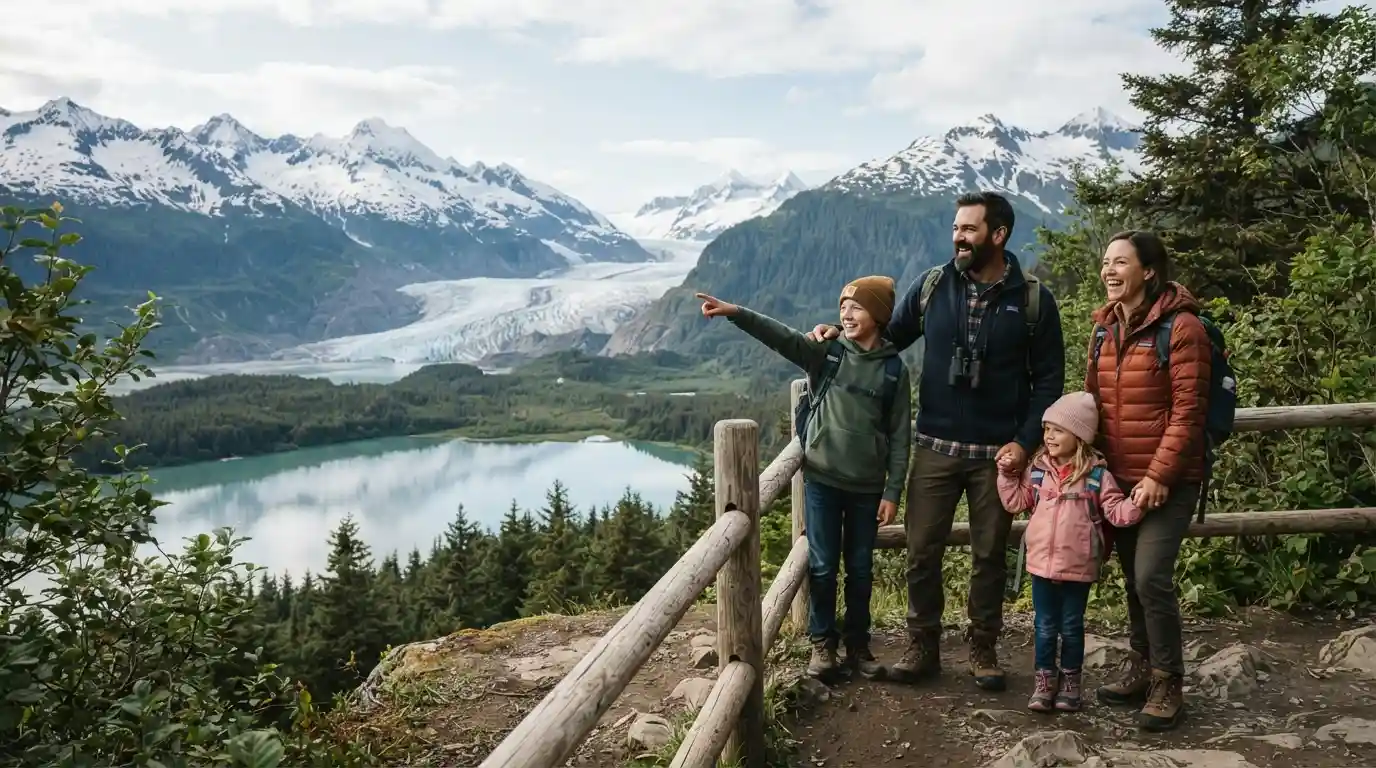
If you are looking for the best place to visit in Alaska with kids, several destinations stand out. Anchorage is an excellent base for families who want city conveniences and easy access to nature, while Denali offers wildlife and dramatic wilderness experiences. Seward, Fairbanks, Girdwood, Juneau, and other destinations provide different ways to experience Alaska without making every day of the trip overly demanding.
Families planning a U.S. vacation may also enjoy exploring other family-oriented destinations, such as these places to visit in the United States with family. However, Alaska offers a particularly memorable combination of wildlife, wilderness, and adventure.
What Makes Alaska a Great Family Destination?
Alaska works especially well for families who enjoy outdoor experiences. Children can see glaciers, watch wildlife, ride scenic trains, explore forests, visit museums, and experience long summer days that leave plenty of time for sightseeing.
The key is to choose activities based on your children’s ages and interests. Younger children may prefer short walks, wildlife viewing, boat tours, and interactive museums. Older children and teenagers may enjoy hiking, kayaking, rafting, fishing, and more adventurous excursions.
It is also useful to remember that Alaska is enormous. Instead of trying to see the entire state in one trip, choose one or two regions and explore them at a comfortable pace.
1. Anchorage
For many families, Anchorage is the best place to visit in Alaska with kids because it combines urban conveniences with easy access to outdoor attractions. Families can enjoy restaurants, hotels, museums, parks, and shopping while using the city as a base for day trips.
Anchorage is particularly useful for a first Alaska trip because families can adjust their schedule around children’s energy levels. A relaxed morning can be followed by an afternoon adventure without requiring a long relocation.
The city’s location also makes it convenient for exploring nearby mountains, coastal areas, and wildlife-rich destinations. Families who want a balance between adventure and convenience should strongly consider Anchorage.
2. Denali National Park
Denali National Park is one of Alaska’s most memorable destinations for families who want to experience wilderness and wildlife. The area is famous for dramatic mountain scenery and opportunities to see animals in their natural environment.
Children can find the scale of the landscape fascinating, especially when they see large mountains, open valleys, rivers, and wildlife during a guided outing. Families should choose activities according to age and weather conditions rather than trying to fit too much into one day.
If your children enjoy nature and wildlife, Denali can become one of the highlights of an Alaska itinerary. It also fits well into a broader national-park-focused travel plan, similar to trips centered around destinations such as Mount Rainier National Park.
3. Seward
Seward is an excellent choice for families who want dramatic coastal scenery and easy access to outdoor adventures. Its location on the Kenai Peninsula makes it a popular starting point for exploring Alaska’s coastline and nearby wilderness.
Families can consider boat excursions, wildlife viewing, scenic drives, and manageable outdoor activities. The town’s setting also makes the journey itself part of the experience, with mountains and water creating spectacular scenery along the way.
Seward is particularly appealing for children who enjoy animals and boats. Before booking an excursion, check its duration and age requirements so the experience matches your family’s needs.
4. Fairbanks
Fairbanks offers a different side of Alaska and can be a good option for families interested in northern culture, outdoor recreation, and seasonal experiences.
In summer, long daylight hours provide more opportunities for sightseeing. Families can explore museums, enjoy outdoor activities, and use Fairbanks as a base for exploring the surrounding region.
Winter brings a completely different atmosphere. Families visiting during colder months should prepare carefully for low temperatures and choose activities that are appropriate for children. Travelers interested in cold-weather destinations can also explore other snowy places to visit in the U.S.
5. Juneau
Juneau is another strong option for families looking for scenery, wildlife, and memorable outdoor experiences. As Alaska’s capital, it combines cultural attractions with access to mountains, forests, waterways, and glaciers.
Families can choose between active adventures and easier sightseeing. A glacier-focused excursion can be especially memorable for children, while scenic viewpoints and short walks offer options for families who prefer a slower pace.
Because Juneau is not connected to Alaska’s road system, transportation planning is particularly important. Families should organize flights, ferries, tours, and accommodation before arriving.
6. Girdwood
Girdwood is a smaller destination that works well for families who prefer a mountain setting rather than a large city. It is surrounded by forests and dramatic scenery and offers opportunities for outdoor recreation.
The destination can be particularly attractive for families who want a slower itinerary. Instead of moving between several cities every day, you can spend more time enjoying the landscape and choosing activities suitable for your children.
Girdwood can also work as part of a wider Alaska road trip, particularly for families beginning or ending their trip in Anchorage.
7. Kenai Peninsula
The Kenai Peninsula provides families with a broad selection of outdoor experiences. Depending on the itinerary, travelers can enjoy coastal scenery, forests, rivers, wildlife viewing, hiking, and water-based activities.
It is a good choice for families who want variety without spending the entire vacation in a major city. Parents can select shorter activities for younger children while giving older kids opportunities to try more adventurous experiences.
When planning your route, allow extra travel time. Distances that look manageable on a map can take longer than expected because of road conditions, sightseeing stops, and weather.
8. Talkeetna
Talkeetna offers families a charming small-town experience surrounded by Alaska’s spectacular landscape. Its relaxed atmosphere can provide a welcome change after spending time in larger destinations.
The town is also associated with views and activities connected to the Alaska Range. Families can explore local shops, enjoy food, walk around town, and select excursions that suit their schedule.
Talkeetna is especially useful for families who want to combine Alaska’s wilderness with a more relaxed community atmosphere.
9. Homer
Homer is another family-friendly destination on the Kenai Peninsula. Its coastal setting provides opportunities for scenic sightseeing, wildlife experiences, fishing-related activities, and exploring the distinctive Homer Spit.
Families should select activities based on children’s ages and comfort levels. A scenic coastal outing may be ideal for younger children, while older kids may enjoy longer excursions and outdoor adventures.
If your family enjoys coastal destinations, Homer can add variety to an itinerary that also includes inland mountains and national parks.
10. Valdez
Valdez is known for spectacular mountain and coastal scenery. Waterfalls, rugged landscapes, and surrounding wilderness make it an attractive destination for families who enjoy photography and nature.
The journey to Valdez can also be part of the adventure. Families should plan adequate time rather than treating the destination as a quick stop.
Because weather can influence outdoor activities, maintain some flexibility in your itinerary. Having alternative indoor or shorter activities can make the trip easier with children.
11. Sitka
Sitka provides a combination of Alaska’s natural beauty and cultural experiences. Families can explore the waterfront, forests, local history, and attractions that introduce children to the region’s heritage.
The destination is a good option for families who want more than outdoor adventure. Mixing cultural attractions with nature-based activities can keep children engaged throughout the trip.
12. Wrangell
Wrangell is a smaller Southeast Alaska destination that can appeal to families looking for a quieter experience. Its location offers access to forests, waterways, wildlife, and outdoor exploration.
Because smaller communities generally offer fewer services than major tourist hubs, families should plan accommodation, transportation, meals, and activities ahead of time.
Best Time to Visit Alaska With Kids
For most families, summer is the easiest season for an Alaska vacation. Longer daylight hours, generally more accessible roads, and a wide range of outdoor activities make June through August popular for family travel.
Summer can also be busy, so advance planning is important. Families should reserve accommodation and popular excursions early when possible.
Fall and winter create a different experience. Snow-covered landscapes can be beautiful, but colder temperatures and shorter daylight hours require more preparation. Travelers who enjoy winter scenery may also find inspiration in this guide to the best places to visit in winter.
How Many Days Do You Need in Alaska With Kids?
A family trip of about seven to ten days can provide a good introduction to Alaska without requiring an exhausting schedule. Longer trips allow families to combine destinations such as Anchorage, Denali, and the Kenai Peninsula at a more comfortable pace.
Instead of counting destinations, focus on travel time. Children generally enjoy vacations more when there is enough time to rest between major activities.
A well-planned itinerary might include several nights around Anchorage, time for Denali, and additional days on the Kenai Peninsula. Families with more time can add destinations such as Fairbanks, Juneau, or another Southeast Alaska community.
Family Travel Tips for Alaska
- Pack layers: Alaska weather can change quickly, so flexible clothing is essential.
- Plan around your children’s ages: Choose hikes, excursions, and tours that match their abilities.
- Allow extra travel time: Scenic roads often encourage spontaneous stops and weather can affect schedules.
- Book popular activities early: Summer demand can be high for accommodation and tours.
- Keep snacks available: Long drives and outdoor activities can make children hungry between meals.
- Do not overschedule: Leave free time for rest and unexpected discoveries.
- Prepare for changing weather: Bring waterproof layers and comfortable footwear.
- Carry essential travel items: Families can also review this guide to travel essentials to always bring before leaving home.
What Should Families Pack for Alaska?
A family packing list should include waterproof outer layers, warm mid-layers, comfortable walking shoes or hiking footwear, hats, gloves, sunscreen, sunglasses, reusable water bottles, and personal medications.
The exact packing list depends heavily on the season and itinerary. A summer trip focused on sightseeing requires different gear from a winter adventure.
Families who plan outdoor activities should also consider small backpacks, snacks, portable chargers, and weather-resistant bags for electronics.
How to Choose the Right Alaska Destination for Your Family
The right destination depends on what your family wants from the trip. Anchorage is ideal for convenience and variety. Denali is excellent for wilderness and wildlife. Seward and Homer are strong choices for coastal experiences, while Fairbanks offers a different northern Alaska experience.
If your children are young, prioritize destinations with shorter travel times and flexible activities. Families with teenagers may be able to include longer hikes, kayaking, rafting, fishing, or multi-hour wildlife excursions.
Parents can also compare Alaska with other U.S. family destinations before finalizing their plans. For example, families considering warmer-weather alternatives can explore these family places to visit in Florida.
Why Alaska Is Worth Visiting With Kids
Alaska gives children an opportunity to experience landscapes and wildlife that are difficult to replicate elsewhere. A family can see massive mountains in the morning, watch wildlife in the afternoon, and finish the day surrounded by forests or coastal scenery.
The experience can also encourage children to appreciate nature. Instead of simply visiting attractions, an Alaska vacation can become an opportunity to learn about wildlife, geography, conservation, local cultures, and outdoor safety.
Families who enjoy discovering unique destinations may also want to compare Alaska with other memorable U.S. locations, including the best places to visit in Montana, natural places to visit in California, and must-visit places in San Antonio.
Final Thoughts
The best place to visit in Alaska with kids ultimately depends on your family’s interests, travel style, children’s ages, and the season. Anchorage is one of the easiest all-around choices for a first trip, while Denali, Seward, Fairbanks, Juneau, and the Kenai Peninsula offer distinctive experiences for families who want more adventure.
The most important strategy is to avoid trying to see everything at once. Choose a manageable route, leave room for rest, prepare for changing weather, and focus on experiences your children will genuinely enjoy.
For families building a broader U.S. travel list, other LumePost guides such as the top places to visit in the world, the best places to visit in the Midwest, and places to visit in the United States with family can provide additional destination ideas.