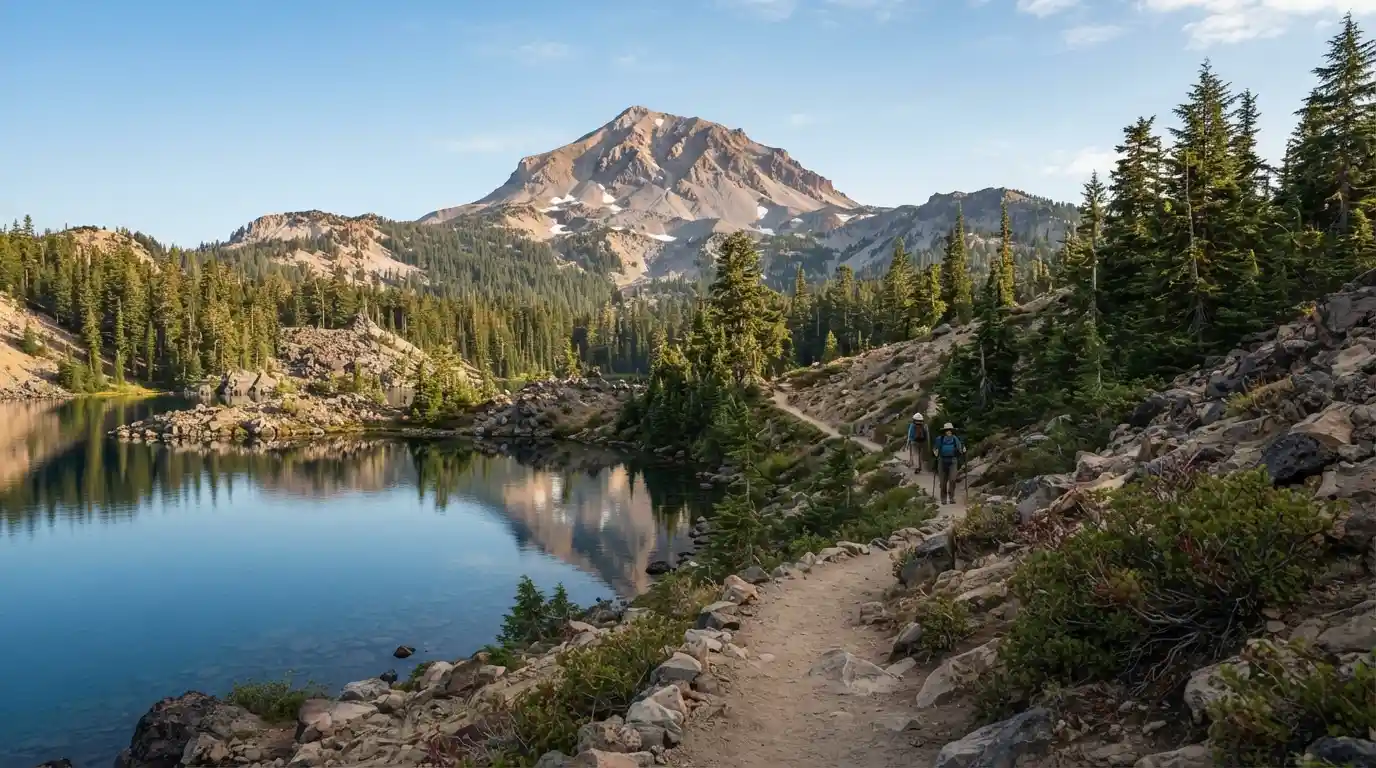
With more than 150 miles of hiking trails, scenic overlooks, lakes, meadows, volcanic formations, and a scenic park highway, Lassen is well suited to both short sightseeing trips and longer outdoor adventures. Whether you are planning a family road trip, a hiking-focused getaway, or a broader Northern California itinerary, knowing the best places to visit can help you make better use of your time.
This guide explores the best places to visit in Lassen Volcanic National Park, highlights scenic trails and natural features, and explains how to plan your visit around seasons, hiking conditions, and different types of outdoor experiences.
Why Visit Lassen Volcanic National Park?
Lassen stands apart from many California mountain destinations because several types of volcanic landscapes can be experienced in one park. Visitors can see volcanic peaks, cinder cones, lava formations, hydrothermal areas, alpine lakes, meadows, and forested mountain terrain.
The park is also an excellent destination for travelers interested in scenic road trips. The park highway provides access to many viewpoints, trailheads, lakes, and volcanic features, making it possible to experience Lassen even if you do not have time for a long hike.
For travelers researching natural places to visit in California, Lassen offers a combination of geology, scenery, hiking, and wildlife that is difficult to replicate elsewhere.
Best Places to Visit in Lassen Volcanic National Park
1. Lassen Peak
Lassen Peak is the park’s most recognizable landmark and one of its most impressive destinations. Rising above the surrounding landscape, the volcanic dome provides a dramatic focal point for photographs and hiking adventures.
The Lassen Peak Trail is a challenging high-elevation hike that rewards prepared hikers with expansive views across the surrounding volcanic terrain. Snow and weather conditions can significantly affect access, so visitors should check conditions before setting out.
For travelers who enjoy mountain destinations, Lassen Peak is one of the defining experiences of the park and a natural highlight to include in a Northern California itinerary.
2. Bumpass Hell
Bumpass Hell is one of Lassen’s most famous hydrothermal areas. The landscape features steaming vents, colorful ground, boiling pools, and other evidence of the volcanic heat beneath the surface.
A designated trail leads visitors toward the hydrothermal basin, where boardwalks provide access to the area while helping protect the fragile terrain. Visitors should remain on designated paths because hydrothermal ground can be unstable and dangerously hot.
The experience is particularly memorable for travelers interested in geology and unusual natural landscapes.
3. Manzanita Lake
Manzanita Lake is one of the park’s most accessible scenic destinations. Its calm waters create beautiful reflections of the surrounding mountains, making it a popular location for photography, fishing, paddling, relaxing, and short walks.
The area is also useful as a starting point for exploring several nearby trails and attractions. Visitors looking for an easier outdoor experience can enjoy the lake without committing to a strenuous mountain hike.
If you enjoy combining scenery with water-based destinations, you may also want to explore our guide to places to visit around Lake of the Ozarks for another lake-focused travel experience.
4. Cinder Cone
Cinder Cone offers a completely different volcanic experience. Rather than a massive mountain summit, this distinctive formation rises from the surrounding landscape as a steep cone of volcanic material.
The trail to the top is demanding because of the loose volcanic surface and steep climb, but reaching the summit provides striking views of the surrounding volcanic landscape, including nearby lakes and peaks.
It is an especially interesting destination for visitors who want to understand how volcanic activity has shaped Lassen’s terrain.
5. Devastated Area
The Devastated Area provides an opportunity to see evidence of the powerful volcanic forces that have shaped Lassen. An interpretive trail explains the landscape and helps visitors understand the effects of the 1915 Lassen Peak eruption.
The relatively short interpretive experience makes this an attractive stop for families, road-trippers, and visitors who want to learn about Lassen without committing to a long hike.
6. Sulphur Works
Sulphur Works is among the easiest hydrothermal attractions to access in the park. Visitors can observe steaming vents and bubbling features from a developed walkway close to the park highway.
Because of its accessibility, Sulphur Works can be an excellent choice when time is limited. It also provides an introduction to the hydrothermal activity that makes Lassen geologically fascinating.
7. Lake Helen
Lake Helen is a striking alpine lake located near Lassen Peak. The deep blue water, rugged volcanic surroundings, and high-elevation landscape create some of the park’s most dramatic scenery.
The lake is particularly impressive when viewed against the mountain backdrop. Weather can change rapidly at high elevations, however, so visitors should prepare accordingly.
8. Kings Creek Meadow and Falls
Kings Creek is another scenic area worth adding to a Lassen itinerary. The surrounding meadow landscape offers a softer contrast to the park’s volcanic peaks and hydrothermal areas.
Seasonal water flow, forest scenery, wildflowers, and nearby hiking opportunities make this area particularly attractive during the warmer months.
9. Chaos Crags and Chaos Jumbles
Chaos Crags and Chaos Jumbles provide a fascinating look at Lassen’s volcanic geology. The rugged formations and unusual terrain make the area an excellent stop for photography and scenic observation.
The landscape also demonstrates how volcanic activity and subsequent natural processes have shaped the mountains and valleys of the park.
10. Lily Pond Nature Area
The Lily Pond area provides a shorter and more accessible nature experience. Its interpretive setting allows visitors to observe plants, wildlife, and the relationship between water and the surrounding volcanic environment.
It can be a good option for travelers who want a quieter experience rather than a demanding summit hike.
Best Scenic Trails in Lassen Volcanic National Park
One of Lassen’s greatest strengths is its variety of hiking experiences. The park contains trails ranging from short interpretive walks to challenging high-elevation routes.
Manzanita Lake Loop
The Manzanita Lake Loop is an accessible option for visitors who want scenic views without a major elevation challenge. The route provides opportunities to see the lake, surrounding forest, mountains, and wildlife.
Devastated Area Interpretive Trail
This short trail combines scenery with education. Interpretive information helps explain the area’s volcanic history and the effects of Lassen Peak’s eruption.
Bumpass Hell Trail
The Bumpass Hell Trail is one of the park’s signature hikes. The route leads visitors toward one of Lassen’s largest hydrothermal areas and provides an up-close view of the volcanic processes still shaping the landscape.
Lassen Peak Trail
For experienced hikers seeking a major challenge, the Lassen Peak Trail provides access to one of the park’s most iconic summits. The high elevation means conditions can remain challenging even when lower portions of the park are comfortable.
Cinder Cone Trail
The Cinder Cone Trail provides another demanding volcanic adventure. Its steep climb and loose surface require preparation, but the summit offers a broad perspective across the surrounding landscape.
Travelers who enjoy scenic mountain destinations may also appreciate our guide to places to visit in Mount Rainier National Park, another destination known for volcanic mountain scenery.
Volcanic and Hydrothermal Features to See
Lassen is not simply a mountain park. Its volcanic identity can be seen throughout the landscape.
- Volcanic peaks: Lassen Peak and other formations showcase different stages and types of volcanic activity.
- Hydrothermal areas: Steam vents, boiling pools, mudpots, and altered ground reveal heat beneath the surface.
- Cinder cones: Volcanic cones such as Cinder Cone demonstrate how eruptions have built new landforms.
- Lava formations: Hardened lava flows and volcanic deposits help explain the area’s geological history.
- Alpine lakes: Lakes such as Manzanita Lake and Lake Helen add dramatic color and contrast to the volcanic landscape.
If you are interested in unique geological destinations across the United States, our guide to nerdy places to visit in the United States offers additional ideas for science and history-focused travel.
Scenic Drives Through Lassen
Not every Lassen experience requires a long hike. The park highway provides access to many of the area’s major viewpoints and attractions.
A scenic drive can be especially useful for families, photographers, older travelers, and visitors working with limited time. Pullouts and designated viewpoints allow travelers to stop and appreciate the landscape without spending the entire day on a trail.
For more scenic road-trip inspiration, explore places to visit in the USA from Canada and our guide to places to visit in Washington State with kids.
Best Time to Visit Lassen Volcanic National Park
The best time to visit depends heavily on what you want to do. Summer and early fall generally provide the broadest access to roads, trails, lakes, and higher-elevation attractions, although snow can remain at higher elevations.
Fall can bring cooler temperatures and changing foliage, while winter transforms the park into a snow-covered destination suited to winter recreation. Spring can still have substantial snow at higher elevations even while lower areas begin to show signs of the new season.
If you are planning a cold-weather trip, our broader guide to the best places to visit in winter can help with additional seasonal travel ideas. You can also explore West Coast places to visit in winter for other regional destinations.
Lassen Volcanic National Park in Fall
Fall can be a beautiful time to explore Lassen. Cooler temperatures can make hiking more comfortable at lower elevations, while seasonal changes add color to forests and meadows.
However, higher-elevation trails may experience early snow or changing conditions. Travelers should check current road and trail conditions before planning a hike.
For additional autumn travel inspiration, see places to visit in Tennessee during fall and Tennessee places to visit in fall.
Winter in Lassen Volcanic National Park
Winter creates an entirely different Lassen experience. Snow covers volcanic slopes, forests, roads, and meadows, creating opportunities for snowshoeing, skiing, and other winter activities.
Road access is significantly more limi