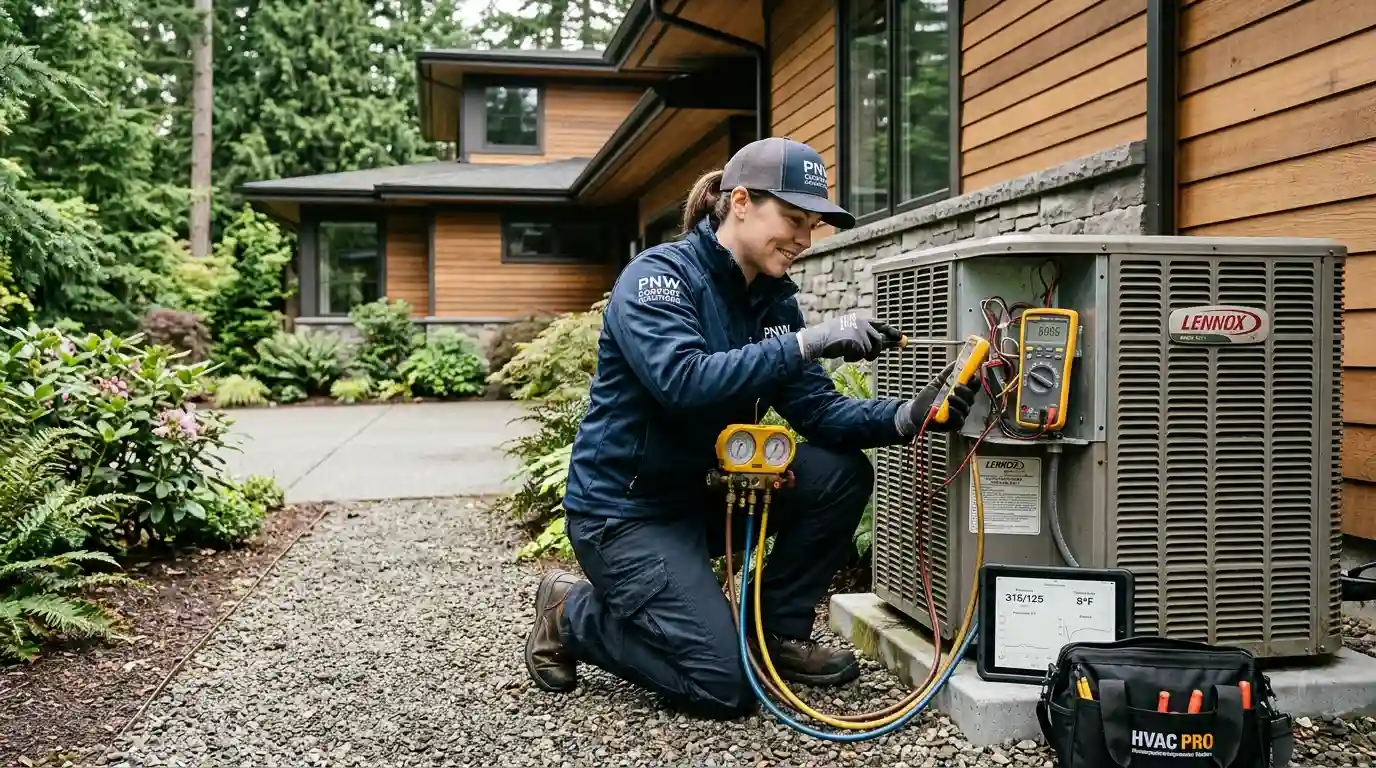
When an air conditioner stops cooling properly, even an ordinary day at home can become uncomfortable. Rooms may feel warmer than usual, airflow can weaken, and unusual noises may signal a problem that needs attention. For homeowners seeking air conditioning repair services in Redmond, Washington, understanding what happens during a repair can make the experience less stressful.
Recognizing the First Signs of an Air Conditioning Problem
An air conditioning issue often develops before the system stops working completely. You might notice warm air coming from the vents, inconsistent temperatures between rooms, longer cooling cycles, water near the indoor unit, or an unexpected increase in electricity use.
Some problems are relatively straightforward, such as a dirty air filter restricting airflow. Others may involve electrical components, thermostat settings, a blocked condensate drain, refrigerant problems, or a malfunctioning compressor. Similar symptoms can have different causes, so replacing parts without proper diagnosis can waste time and money.
Homeowners can begin with a few safe observations. Check that the thermostat is set to cooling, confirm that the temperature setting is appropriate, and inspect the accessible air filter. Make sure supply vents are not blocked by furniture. If the system repeatedly trips a breaker, produces a burning smell, or shows signs of electrical damage, switch it off when safe and arrange professional assistance.
Comfort also depends on the wider condition of the home. For example, practical improvements discussed in this home improvement guide can complement a well-maintained cooling system by helping homeowners assess their living spaces more effectively.
Stage One: Scheduling an Air Conditioning Inspection
The repair timeline begins when a homeowner contacts an HVAC professional and explains what is happening. Useful details include when the problem started, whether the air conditioner runs continuously, whether certain rooms are warmer than others, and whether any unusual sounds or smells have appeared.
Sharing these observations can help the technician prepare for the appointment. During periods of high cooling demand, appointment availability may be limited, so the time between booking and arrival can vary.
Before confirming a visit, ask what the diagnostic fee covers, whether it is credited toward an approved repair, and how additional work will be priced. Request a realistic arrival window and clarify whether urgent appointments carry additional charges.
If the problem appears to involve more than the cooling equipment, a broader home-service assessment may also be useful. The overview of household home services provides another perspective on coordinating maintenance needs around the property.
Stage Two: Diagnosing the Cause
Once the technician arrives, the next step is to determine why the air conditioner is not operating as expected. A professional assessment may include checking thermostat operation, inspecting filters and accessible airflow pathways, examining electrical connections, measuring operating temperatures, and evaluating the outdoor condenser and indoor evaporator components.
Depending on the symptoms, the technician may also investigate refrigerant-related issues, condensate drainage, fan operation, or control-system faults. Refrigerant handling should be left to appropriately qualified professionals. Homeowners should not attempt to open refrigerant lines or repair electrical components themselves.
Diagnosis is important because the visible symptom does not always identify the failed component. Weak cooling, for example, may result from restricted airflow, a dirty coil, a control problem, or a refrigerant fault. Each requires a different response.
After identifying the likely cause, the technician should explain the findings in clear language, outline the proposed work, and provide a cost estimate before proceeding. Ask whether the repair is expected to restore normal operation and whether any separate maintenance concerns were discovered.
Stage Three: Approving the Repair and Obtaining Parts
The time required to complete an air conditioning repair depends largely on the fault. A simple adjustment or accessible component replacement may be completed during the initial visit when the necessary tools and parts are available. More complicated electrical, mechanical, drainage, or refrigerant-related repairs may require additional diagnostic work.
Some repairs cannot be completed immediately because the correct component must be ordered. Older equipment may require extra time to identify compatible parts, while uncommon components can affect the schedule.
Before authorizing work, ask the technician to distinguish essential repairs from optional improvements. Request an itemized estimate that explains labor, parts, diagnostic charges, and any additional fees. If replacement is recommended, ask why repairing the existing system may not be the most practical choice.
For context, the article about air conditioning repair services in Berwick explores the same general service category from another location. Comparing repair considerations can help readers understand why the actual scope of work depends on each system’s condition.
Stage Four: Completing the Repair
After receiving approval, the technician carries out the agreed work. Depending on the diagnosis, this could involve correcting a control issue, replacing a failed capacitor or fan component, clearing a condensate drain, improving accessible airflow, or addressing another confirmed fault.
Not every air conditioner requires the same repair sequence. A system with restricted airflow may need a different solution from one with an electrical failure. The technician should follow the equipment manufacturer’s requirements and applicable safety procedures rather than relying on a one-size-fits-all approach.
During this stage, homeowners should keep the work area accessible and let the technician know about recurring symptoms or previous repairs. If the proposed work changes after a component is inspected, ask for an explanation and an updated estimate before approving additional charges.
Air conditioning performance can also be affected by the surrounding indoor environment. Homeowners reviewing wider household upkeep can explore home cleaning considerations and how smart-home devices support daily living. These topics are complementary to HVAC care, although neither replaces a professional mechanical repair.
Stage Five: Testing the System and Confirming Comfort
Completing the repair is not the final step. The technician should test the air conditioner to check whether it operates as expected after the work. Depending on the system and the repair, this may include confirming thermostat response, checking airflow, observing operating temperatures, inspecting for abnormal noise, and verifying that the equipment starts and runs properly.
Some systems need time to stabilize before their performance can be evaluated accurately. A technician can explain which readings were checked and whether any limitations remain. Homeowners should avoid assuming that a unit is fully repaired simply because it switches on.
Before the appointment ends, ask what caused the fault, which parts or components were serviced, whether any follow-up work is recommended, and what warranty applies to the repair. Keep the invoice and service notes for future maintenance visits.
If the original complaint persists, describe exactly what remains wrong. Continuing symptoms may mean the system needs further testing or that another issue is affecting performance.
How Long Does Air Conditioning Repair Usually Take?
There is no single repair timeline that applies to every home in Redmond. The following ranges are illustrative planning estimates, not guaranteed service durations. Actual times depend on the equipment, fault, technician’s findings, and availability of parts.
| Repair stage | What happens | Typical planning consideration |
|---|---|---|
| Initial booking | Symptoms are discussed and a visit is arranged. | Availability may range from same-day appointments to a later date. |
| Inspection and diagnosis | The technician checks the system and identifies likely causes. | A straightforward assessment may take around 30–90 minutes; complex faults may take longer. |
| Repair approval | The homeowner reviews the findings and estimate. | Timing depends on the scope of work and the homeowner’s decision. |
| Repair work | The agreed fault is corrected. | Simple repairs may take under a few hours; complex work or parts orders can extend the timeline. |
| Final testing | The technician checks operation after the repair. | Testing time depends on the equipment and the repair performed. |
These estimates should be treated as general guidance rather than a promise from a particular Redmond service provider. A qualified technician can provide a more realistic schedule after inspecting the system.
When Repair May Be Better Than Replacement
Repair is often worth considering when the fault is limited, replacement parts are available, and the equipment has otherwise been reliable. Replacement may deserve closer consideration when the air conditioner experiences repeated expensive breakdowns, struggles to cool the home despite proper servicing, or requires a major component repair on an older system.
Compare the expected repair cost with the age and condition of the equipment, likely future maintenance, energy performance, and the cost of installing a suitable replacement. A larger or newer system is not automatically the right choice; correct sizing and installation matter too.
Homeowners can also consider the broader benefits of improving their living environment. The guide to building a safer, smarter home offers related home improvement context, while coordinating household services may help when several property issues need attention.
Preventing Future Air Conditioning Breakdowns
Routine maintenance can help identify developing problems before they cause an unexpected shutdown. Homeowners should check the air filter at the interval recommended for their equipment and household conditions, keep accessible supply and return vents unobstructed, and maintain reasonable clearance around the outdoor unit.
Professional maintenance may include inspecting electrical connections, checking condensate drainage, evaluating coils and airflow, and reviewing system operation. The appropriate schedule depends on equipment type, usage, manufacturer guidance, and the condition of the installation.
Pay attention to changes in performance. Increasingly long cooling cycles, repeated shutdowns, unusual vibration, water leaks, or persistent differences between room temperatures are reasons to arrange an assessment rather than continually adjusting the thermostat.
Household maintenance can also be coordinated with other practical improvements. Readers interested in property upkeep may find the discussion of home improvement planning and the overview of home cleaning services useful for organizing separate tasks around the home.
Choosing Air Conditioning Repair Services in Redmond
When comparing HVAC providers, look for appropriate licensing, relevant experience, clear estimates, and a willingness to explain the diagnosis. Ask whether the company services your type of equipment, what its diagnostic process includes, and whether parts and labor are covered by a written warranty.
It is also sensible to confirm the appointment window, potential additional fees, and whether the technician will test the system after completing the repair. Be cautious of recommendations that pressure you into immediate replacement without explaining the condition of the existing equipment and the available alternatives.
Redmond homeowners may also be interested in the separate article on air conditioning repair services in Boone Grove. Although service conditions differ by location, it provides another point of comparison for understanding the repair process.
Restoring Comfort With a Clear Repair Plan
A successful air conditioning repair is a sequence of informed decisions rather than simply getting the equipment to switch on again. Recognizing symptoms early, arranging a thorough diagnosis, approving a clearly explained repair, and confirming performance afterward can help homeowners understand what has been done and what to expect next.
For residents seeking air conditioning repair services in Redmond, the most useful approach is to choose a qualified professional who explains the problem, communicates realistic timing, and tests the system after the work is completed. Regular maintenance and attention to changing performance can also help reduce avoidable disruptions and keep the home more comfortable through the cooling season.