You do not need a gym membership, a rack of dumbbells, or a spare room full of machines to get in shape. Some of the fittest people you will ever meet built their strength in a living room with nothing but floor space, their own body weight, and a little consistency. That is exactly why home workouts for beginners work so well: they remove every excuse. There is no commute, no waiting for equipment, no monthly fee, and no audience watching while you learn.
This guide gives you everything you need to start today. You will learn the five foundational bodyweight moves, a simple weekly schedule, an easy warm-up and cool-down, and clear ways to make every exercise harder as you get stronger. If you have spent weeks wondering how to start exercising after months or years away from fitness, this is the gentlest on-ramp you will find.
Why Home Workouts for Beginners Work So Well
First of all, convenience beats intensity for beginners. Research on exercise habits keeps landing on the same conclusion: the best workout plan is the one you actually repeat. A twenty-five minute session at home fits before work, on a lunch break, or after the kids go to bed. When a workout is this easy to start, you stop skipping it, and consistency is where real results come from.
Second, bodyweight training scales naturally. Your own body provides the resistance, so the load grows as you do. The same squat that challenges you today can be made much harder later with a slower tempo, a pause at the bottom, or a single-leg variation. You never outgrow the basics; you just perform them better.
Finally, training at home is a safer place to learn form. Moving slowly without external weight lets you master balance, posture, and joint alignment first. That foundation pays off later if you graduate to strength training for beginners with dumbbells or a gym membership, because your movement patterns will already be solid.
What You Need Before Your First Workout
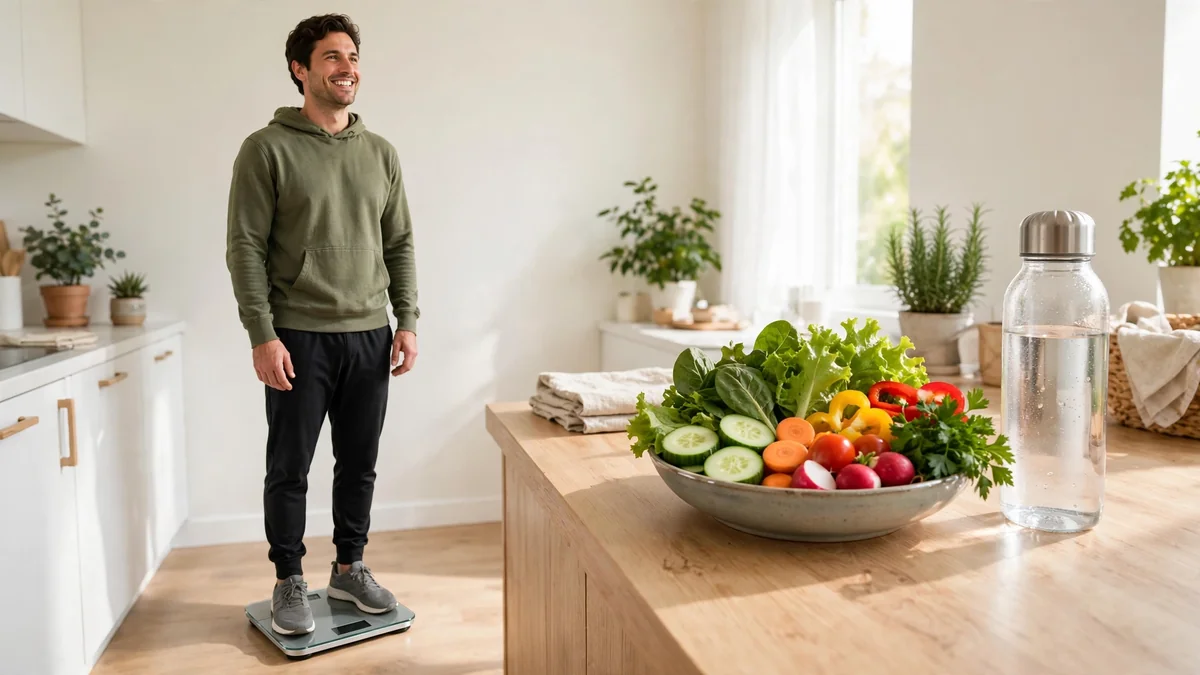
The shopping list is delightfully short. Clear a space of roughly six feet by six feet so you can lie down and extend your arms without hitting furniture. A yoga mat or a carpeted floor protects your knees and elbows. Keep a water bottle nearby, because hydration genuinely affects performance; if plain water feels like a chore, these tips on how to drink more water will help you build the habit.
Wear comfortable clothes and either supportive shoes or bare feet on a non-slip surface. A phone timer is useful for rest periods and planks. That is genuinely all you need. One important note: if you have a heart condition, joint problems, dizziness, or you are returning after an injury or surgery, talk with your doctor before starting any new exercise program. Most beginners are cleared for gentle bodyweight work, but your situation deserves personal advice.
The 5 Foundational Bodyweight Moves
Nearly every home routine is built from a handful of movement patterns: squat, push, hinge, core stability, and single-leg work. Master these five moves and you have a complete program.
1. Bodyweight Squat
Stand with your feet about shoulder-width apart and your toes turned slightly out. Push your hips back as if sitting into a chair, keep your chest tall, and let your knees track over your toes. Go as low as you comfortably can while your heels stay on the floor, then stand tall and squeeze your glutes. Aim for ten to fifteen smooth reps. If balance is tricky, lightly touch a chair back for support.
2. Push-Up (With Easier Options)
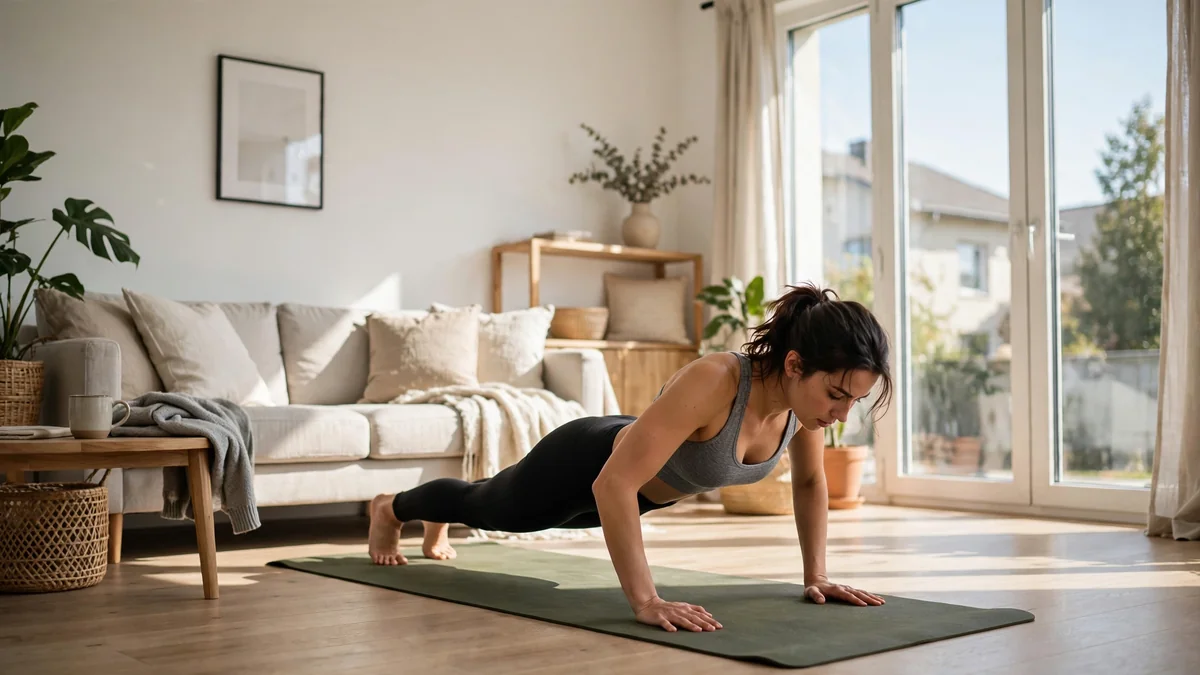
The push-up builds your chest, shoulders, arms, and core in one move. Start in a plank with your hands under your shoulders and your body in one straight line. Lower with control until your chest is a few inches from the floor, then press back up. Too hard right now? No problem. Start with wall push-ups, then countertop push-ups, then knee push-ups. Each step builds real strength, and most beginners reach full push-ups within a few weeks of steady practice.
3. Glute Bridge
Lie on your back with your knees bent and feet flat, close to your hips. Press through your heels, lift your hips until your body forms a straight line from shoulders to knees, squeeze your glutes hard for one second, and lower slowly. This move wakes up the muscles that protect your lower back and power your walking, climbing, and lifting. Aim for twelve to fifteen reps.
4. Bird Dog and Plank
Start on all fours. Extend your right arm forward and your left leg back at the same time, keeping your hips level and your back flat, then switch sides. The bird dog trains deep core stability without crunching your spine. Pair it with a forearm plank, starting at fifteen to twenty seconds and building toward a minute. Strong core muscles make every other exercise, and everyday life, feel easier.
5. Reverse Lunge
From standing, step one foot backward and lower until both knees are bent at roughly ninety degrees, then press through the front foot to stand back up. Reverse lunges are friendlier to the knees than forward lunges, and they build single-leg strength and balance. Hold a chair or wall at first if you feel wobbly. Perform six to ten reps per side.
Your First Week: A Simple Beginner Schedule
Here is a friendly structure for week one. On Monday, Wednesday, and Friday, do the five moves above as a circuit: one set of each exercise in order, resting thirty to sixty seconds between moves. Complete two rounds in week one, and add a third round when two rounds feel manageable. The whole session takes about twenty to twenty-five minutes including your warm-up.
On Tuesday, Thursday, and the weekend, keep moving gently. Walking is the perfect partner to home workouts for beginners, and the benefits of walking 10000 steps include better mood, better blood sugar control, and faster recovery between sessions. If mornings are your free time, combining your workout with a morning routine for energy makes the habit almost automatic. Take at least one full rest day each week; your muscles rebuild on rest days, not during the workout itself.
How to Progress Without Any Equipment
Progress does not require heavier weights. It requires a slightly bigger challenge. You have several levers to pull, one at a time. Add reps until you reach the top of the range. Add a round to your circuit. Slow the lowering phase down to three full seconds. Pause for two seconds at the hardest point of the move. Or upgrade the variation: squats become split squats, knee push-ups become full push-ups, and glute bridges become single-leg bridges.
Change only one lever per week so you can tell what is working. Also, write your workouts down in a notebook or phone app. Seeing last week’s numbers gives you a target to beat and proof that you are improving. After four to six weeks of comfortable circuits, some beginners enjoy adding outdoor cardio like starting to run as a beginner on non-workout days, but it is completely optional.
Warm Up and Cool Down the Simple Way
Never skip the warm-up. Five minutes is enough: march in place for a minute, roll your shoulders and circle your arms, open and close your hips in a gate pattern, and do five slow, easy squats. You should feel warm and slightly breathless, with your joints moving freely.
Cooling down matters just as much. Walk slowly for a minute to bring your heart rate down, then stretch the muscles you used: calves against a wall, a standing thigh stretch, a chest opener in a doorway, and a gentle figure-four stretch for your hips. If you want a deeper routine, a short stretching routine for beginners on rest days will speed up your flexibility progress noticeably.
Common Mistakes Beginners Make at Home
The first mistake is doing too much too soon. Soreness that lasts four days means you overdid it; scale back and build gradually instead. The second is racing through reps with sloppy form. Slow, controlled reps build more strength and protect your joints. The third is skipping sleep and then wondering why progress stalls. Muscles repair during sleep, so check honestly whether you are getting how much sleep you need for your age.
The fourth mistake is having no plan at all. Random workouts produce random results. Follow the weekly schedule above for at least four weeks before you change anything. Finally, avoid comparing yourself with fitness influencers. Their job is to look extreme; your job is to be a little stronger than last month.
How to Stay Consistent When Motivation Fades
Motivation starts the journey, but systems finish it. Put your workouts on your calendar like appointments and protect them. Lay out your clothes the night before. Attach the session to an existing habit, such as right after your morning coffee, because anchoring new behaviors to old ones is a proven trick in building healthy habits that stick.
Expect imperfect weeks. A ten-minute version of your workout still counts and keeps the streak alive. Many beginners also enjoy alternating strength circuits with gentle yoga for beginners sessions, which keeps training fresh and supports flexibility. Above all, remember the advice behind every success story in staying consistent with exercise: never miss twice. One missed workout is life happening; two in a row is a new habit forming in the wrong direction.
Conclusion
Home workouts for beginners prove that fitness does not require money, equipment, or a commute. It requires five good moves, a simple schedule, and the patience to progress one small step at a time. Start with two rounds of the circuit this week, walk on your off days, sleep well, and track everything. In six weeks you will move better, feel stronger, and wonder why you waited so long to begin. Your living room is officially a gym now, so go use it.