You already know you should drink more water. Knowing is not the problem — remembering is. Between work, screens, coffee, and a day that never slows down, most adults run mildly dehydrated without noticing: a little more tired, a little more snacky, a headache by 4 p.m. The good news is that learning how to drink more water is less about willpower and more about setup. This guide covers how much you actually need, the signs you are falling short, and simple tricks that make hydration happen almost automatically.
Why Water Matters More Than You Think
Water makes up about 60 percent of your body, and nearly every system depends on it. It carries nutrients to cells, removes waste, cushions joints, regulates temperature through sweat, and keeps digestion moving. Even mild dehydration — losing just 1 to 2 percent of body water — measurably affects mood, concentration, and physical performance in studies.
Hydration also supports your digestive system in ways people overlook. Your gut needs water to move food along and to let fiber do its job without bloating or constipation, which is why staying hydrated appears in every serious look at gut health explained basics. And if you are working on weight, water quietly helps there too: people often mistake thirst for hunger and snack when a glass of water was what the body wanted.
How Much Water Do You Actually Need?
The famous “eight glasses a day” rule is a rough memory aid, not a scientific law. The U.S. National Academies suggest an adequate total water intake of about 3.7 liters (125 oz) per day for men and 2.7 liters (91 oz) for women — from all beverages and food combined. Roughly 20 percent usually comes from food, especially fruits and vegetables, so actual drinking needs are lower than those headline numbers.
A practical personal target: drink about half an ounce to one ounce of water per pound of body weight daily, adjusting upward when you exercise, work in heat, are ill, or are pregnant or breastfeeding. Your best built-in gauge is urine color — pale yellow means you are on track; consistently dark yellow means drink more. Thirst works too, but it lags a little, particularly in older adults.
Signs You Are Not Drinking Enough
- Afternoon headaches that fade after you drink
- Fatigue and brain fog despite decent sleep
- Dry mouth, dry skin, or chapped lips
- Dark yellow urine and infrequent bathroom trips
- Constipation and sluggish digestion
- Sudden “hunger” and sugar cravings between meals
- Muscle cramps during or after exercise
None of these proves dehydration on its own, but if several sound familiar, hydration is the cheapest experiment you can run. Give it two consistent weeks before judging.
12 Simple Tricks to Drink More Water Every Day
- Start with a glass before coffee. You wake up mildly dehydrated. A full glass of water first thing anchors the habit to your morning routine for energy and front-loads your intake.
- Keep a bottle in sight. Out of sight really is out of mind. A bottle on your desk, in your car, and by your bed removes the friction.
- Use the “one-for-one” rule. Every coffee, soda, or tea gets matched with a glass of water.
- Drink a glass before every meal. Three meals means three glasses without thinking. It also supports digestion and curbs overeating slightly.
- Set gentle phone reminders. For the first two weeks, a nudge every couple of hours builds the pattern; after that, habit takes over.
- Mark time goals on your bottle. Simple lines — 10 a.m., noon, 2 p.m. — turn drinking into a low-key game you can win daily.
- Eat your water. Cucumbers, oranges, melons, soups, and yogurt all hydrate. Pair them with ideas from healthy snacks that fill you up.
- Carry water when you move. Whether it is a walk delivering the benefits of walking 10000 steps or a workout, drink before, during, and after.
- Flavor it naturally. Lemon, cucumber, mint, or frozen berries make plain water appealing without sugar.
- Upgrade your glassware. A bigger glass and a straw genuinely increase intake — small environmental tweaks beat motivation.
- Link water to existing habits. After brushing your teeth, after each meeting, after every bathroom break — piggybacking is the core trick behind how to build healthy habits that last.
- End the day with a small glass. Not a huge one — just enough to avoid waking up parched, without wrecking your sleep with bathroom trips.
Does Coffee and Tea Count?
Yes. Despite the old myth, moderate coffee and tea hydrate you overall — the mild diuretic effect does not cancel out the fluid they provide. What does not help your hydration goals is alcohol, which genuinely increases fluid loss, and sugary drinks, which add empty calories. If soda is your main fluid source, swapping even half of it for water cuts sugar fast — a change that matters when you check it against how much sugar per day recommendations.
Sparkling water counts fully, by the way. If the fizz is what you like about soda, sparkling water with a squeeze of citrus is the easiest swap in this entire guide.
The Best Times to Drink Water
- On waking: replaces overnight losses and kick-starts digestion
- 30 minutes before meals: supports digestion and appetite control — useful alongside healthy breakfast ideas and balanced lunches
- Before, during, and after exercise: replaces sweat losses; add electrolytes for sessions over an hour in heat
- When a headache starts: dehydration is a common, overlooked trigger
- During focused work: even slight dehydration dulls concentration, so keep water nearby when applying how to improve focus strategies
Can You Drink Too Much Water?
It is possible but rare. Drinking extreme amounts far beyond thirst — several liters in a short window — can dilute blood sodium, a dangerous condition called hyponatremia. It mainly affects endurance athletes who force fluids on a schedule. For everyday life, drinking to thirst plus the habit tricks above lands you in the safe zone. People with kidney or heart conditions, or on certain medications, may have specific fluid limits — follow your doctor’s advice over any general guide, including this one.
What Better Hydration Does for Your Skin, Joints, and Kidneys
Beyond energy and headaches, steady hydration pays quiet dividends in places people rarely connect to water. Your kidneys filter your blood all day, and adequate fluid helps them clear waste and lowers the risk of kidney stones — one of the most painful, and most preventable, common health problems. Cartilage in your joints is mostly water, and staying hydrated helps it cushion movement, which matters if you are starting out with how to start exercising or increasing daily steps. Skin is more nuanced: drinking water will not erase wrinkles, but chronically low intake does leave skin drier and less elastic, and many people notice their skin simply looks better after a few well-hydrated weeks.
There is a mental side too. Mild dehydration measurably increases perceived effort — tasks feel harder, workouts feel longer, and patience runs shorter. During demanding periods, keeping a bottle within reach is one of the cheapest supports you can pair with how to reduce stress strategies.
Building a Hydration System at Work
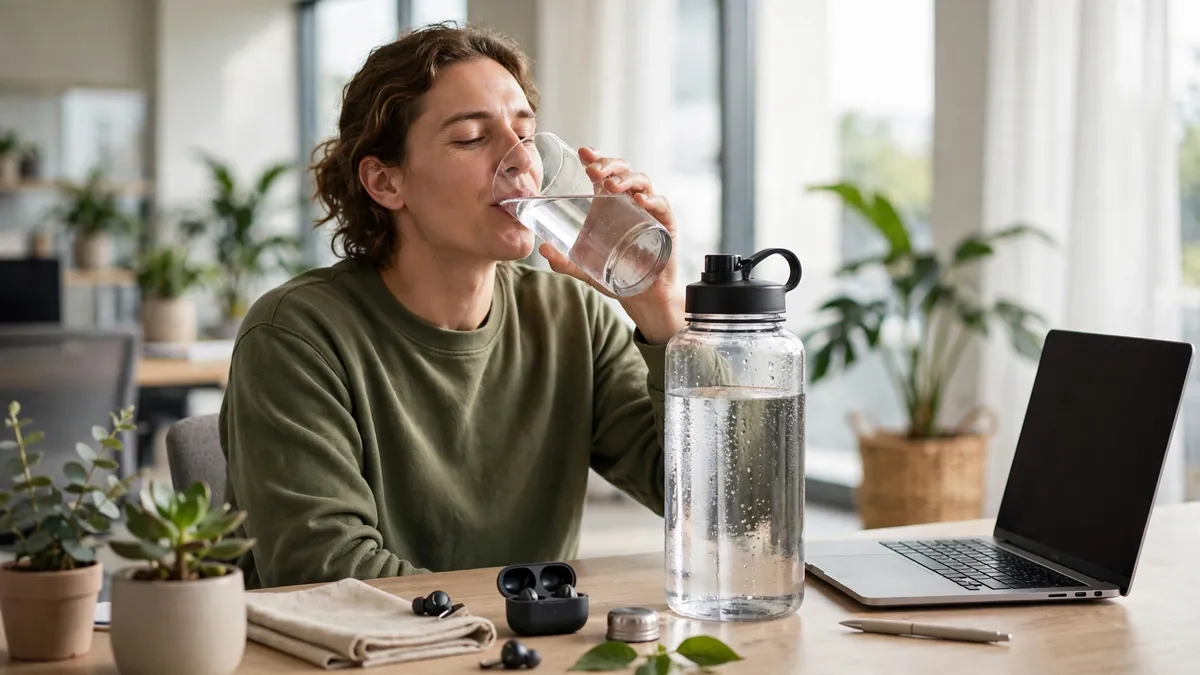
Most adults lose the hydration battle between 9 and 5, so design the workday instead of relying on memory. Fill a large bottle before your first task and set a simple rule: it must be empty by lunch, refilled, and empty again before you leave. Keep a second glass at your desk for the stretches when the bottle is in another room — redundancy beats intention. In meetings, bring water the way you bring your laptop; it normalizes drinking for everyone and gives you something to do besides reaching for coffee number four.
If your job is physical or outdoors, treat hydration as scheduled maintenance: drink before your shift, at every break whether you feel thirsty or not, and weigh yourself occasionally on very hot days — losing more than about 2 percent of body weight in a shift means your intake plan needs to grow. Supervisors increasingly recognize heat illness as a real risk, and the prevention is unglamorous: water, rest, and shade, in that order.
What About Kids and Older Adults?
Children need water scaled to their size and activity, and they copy what they see far more than what they are told — a parent with a bottle on the counter raises kids who reach for water by default. Keep water the default drink at meals, send a bottle to school, and remember that milk and whole fruits contribute real fluid too. Older adults face the opposite problem: the thirst signal dulls with age, so waiting for thirst is unreliable. For grandparents, scheduled drinking — a glass with medications, a glass with every meal, a glass mid-morning and mid-afternoon — works far better than intuition. If an older family member keeps getting urinary infections, dizzy spells, or confusion on hot days, hydration belongs near the top of the list to discuss with their doctor.
The Bottom Line
You do not need a gallon-a-day challenge or a smart bottle that glows. You need water visible, water attached to routines you already have, and a target matched to your body and your day. Start with the morning glass and the before-meals rule this week — two changes, that is all — and notice what happens to your energy, headaches, and cravings. And if you are building a broader budget-friendly health routine, the shopping strategies in healthy eating on a budget pair perfectly: tap water is the cheapest healthy drink on earth. Small sips, steady days, real results.