Note: this article is for general wellness information only and is not medical advice. Cold water immersion stresses the cardiovascular system — talk to your doctor before starting, especially if you have a heart condition, high blood pressure, or are pregnant.
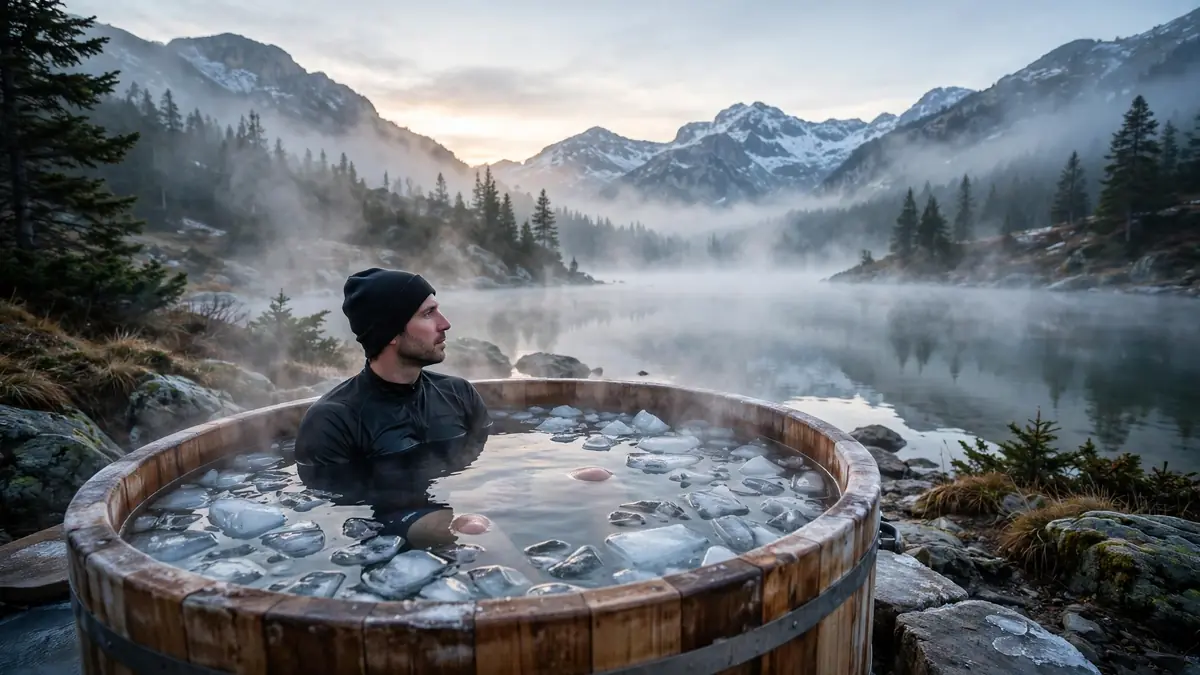
Scroll any fitness feed in 2026 and you will find someone climbing into a tub of ice water at dawn, insisting it changed their life. The cold plunge — deliberate immersion in cold water, usually 50–59°F (10–15°C) for a few minutes — has gone from an elite-athlete ritual to a mainstream wellness trend, with backyard plunge tubs now a common sight across America.
But what do cold plunge benefits actually amount to, once you separate the science from the social-media hype? Researchers have studied cold water immersion for decades, and the honest answer is nuanced: some benefits are well supported, others are promising but preliminary, and a few popular claims outrun the evidence. Here is what the science says in 2026 — plus how to start safely if you decide to try it.
What Is a Cold Plunge?
A cold plunge is simply sitting in cold water — a dedicated plunge tub, a bathtub filled with ice, or a cold lake — for a short, controlled period. Typical protocols in studies and practice:
- Temperature: 50–59°F (10–15°C) is the commonly studied range; colder is not necessarily better.
- Duration: 1–5 minutes for beginners; most research uses 2–10 minutes.
- Frequency: 2–4 times per week in most wellness routines.
- Depth: chest-deep immersion for the full-body effect; some people start with waist-deep.
It is the cold counterpart to heat therapy — and many enthusiasts alternate the two. If you are curious about the hot side, sauna health benefits covers what research says about regular sauna use.
Cold Plunge Benefit 1: Faster Exercise Recovery
This is the best-supported benefit. Multiple studies and meta-analyses find that cold water immersion after intense exercise reduces perceived muscle soreness and helps restore muscular power faster than passive recovery. The proposed mechanism: cold constricts blood vessels and reduces tissue temperature, which may limit inflammation and swelling in damaged muscle.
The effect is most relevant after endurance exercise (running, cycling) and high-intensity training — exactly the workouts where soreness lingers. Strength athletes should note a nuance: some research suggests frequent post-workout cold immersion may slightly blunt long-term muscle and strength gains, so lifters often plunge on rest days or after cardio rather than immediately after lifting.
Recovery is a system, not a single trick. Cold plunges work best alongside the fundamentals: sleep, nutrition, and sensible programming. What is Zone 2 cardio explains the low-intensity training that pairs naturally with recovery-focused routines.
Cold Plunge Benefit 2: Mood and Alertness Boost
Ask regular plungers why they keep doing it and most will not mention muscles — they will mention mood. The cold shock triggers a surge of norepinephrine and endorphins, and studies have documented improved alertness and self-reported mood after cold water immersion, with some researchers investigating effects lasting hours.
The evidence for lasting antidepressant effects is still preliminary — small studies, not the large trials that would settle the question. But the short-term effect is one of the most consistently reported in the literature: people feel more awake, focused, and positive after a plunge. That subjective boost is real even if the mechanisms are still being mapped.
Cold exposure is best viewed as one tool among many for mental well-being, not a treatment. Regular movement, sleep, and stress management carry the heaviest evidence — see ways to reduce daily stress and how self-talk impacts mental health for the foundational habits.
Cold Plunge Benefit 3: Possible Immune Support
Cold water swimming studies have observed increases in certain white blood cells and other immune markers after immersion. This is genuinely interesting — but it is a long way from proving that plunging prevents colds or flu. Immune “markers” moving in a lab test is not the same as fewer sick days, and the clinical evidence for illness reduction remains thin.
Treat this benefit as plausible but unproven. The boring, proven immune supporters — sleep, exercise, nutrition, stress control — still do the heavy lifting. Benefits of morning exercise covers one of the most reliable ones.
Cold Plunge Benefit 4: Better Sleep (for Some People)
Many plungers report sleeping better, particularly when they plunge earlier in the day. The proposed link: the post-plunge rebound in body temperature and the parasympathetic “calm down” response afterward may ease the transition to sleep. However, plunging right before bed can backfire — the stimulating cold shock too close to bedtime may make falling asleep harder.
If sleep is the goal, plunge in the morning or afternoon, and keep your evenings for proven sleep habits: a cool dark room, consistent schedule, and limited late screens. How to sleep better at night has the full evidence-based playbook.
Cold Plunge Benefit 5: Metabolism and Brown Fat
Cold exposure activates brown adipose tissue — “brown fat” — which burns calories to generate heat. Studies confirm this activation happens, and regular cold exposure can increase brown fat volume over weeks. The catch: the actual calorie burn is modest, roughly comparable to a short walk, and there is no strong evidence that cold plunging alone produces meaningful fat loss.
Think of it as a small metabolic nudge, not a weight-loss strategy. Sustainable fat loss still comes from nutrition and consistent activity — fit exercise into a busy routine shows how to build the exercise side without overhauling your life.
Cold Plunge Benefit 6: Mental Resilience and Discipline
Deliberately doing something uncomfortable builds a skill that transfers: the ability to stay calm under stress. Psychologists call this stress inoculation — controlled exposure to a stressor (cold) trains a calmer response to uncontrolled ones (deadlines, conflict). Many plungers describe this as the deepest benefit, and while it is hard to measure in a lab, the mechanism is well established in behavioral science.
Risks and Who Should Skip the Cold Plunge
Cold water immersion is a genuine physiological stressor. Take these risks seriously:
- Cardiovascular strain: the cold shock spikes heart rate and blood pressure. People with heart conditions, uncontrolled high blood pressure, or arrhythmias should get medical clearance first.
- Hypothermia: stays that are too long or water that is too cold can drop core temperature dangerously. Start short and never plunge alone.
- Drowning risk: the gasp reflex on sudden immersion is real. Enter gradually, keep your head above water, and always have someone nearby.
- Afterdrop: core temperature can keep falling after you get out — warm up gradually with dry clothes and movement, not a scalding shower.
- Pregnancy, Raynaud’s, and cold urticaria: all are reasons to skip plunging or consult a doctor first.
How to Start Cold Plunging Safely: A Beginner Routine
If your doctor gives the green light, ease in:
- Start with cold showers. End your normal shower with 30–60 seconds of cold water for a week or two. It builds tolerance with zero equipment.
- Try 55–59°F water first. You do not need ice on day one — cool tap water in a tub works.
- Begin with 1–2 minutes. Set a timer. Breathe slowly through the nose; the urge to gasp passes within 30–60 seconds.
- Immerse to the chest. Keep hands and head out at first — extremities get cold fastest.
- Never plunge alone. Have someone nearby, especially outdoors or in deep water.
- Warm up gradually. Dry off, dress warmly, and move around. Avoid jumping straight into a hot shower or sauna immediately after.
- Build to 2–4 sessions per week. Consistency beats heroic single sessions.
Equipment ranges from a $100 stock tank to $5,000+ chilled plunge tubs with filtration. Start cheap — a bathtub and bags of ice will teach you whether you actually enjoy the practice before you invest.
Cold Plunge vs Sauna: Should You Do Both?
Contrast therapy — alternating hot and cold — is popular and has some supportive evidence for perceived recovery and relaxation. A common protocol: 10–15 minutes of heat, 2–3 minutes of cold, repeated 2–3 times, ending on cold. The research base is smaller than for either modality alone, but the practice is generally considered safe for healthy adults and many people find the combination more enjoyable than cold alone.
Cold Plunge FAQ
How long should you stay in a cold plunge?
Beginners: 1–3 minutes at 55–59°F. Experienced plungers: up to 5–10 minutes. Longer is not better — benefits plateau while risks (hypothermia, afterdrop) keep rising.
What is the best time of day to cold plunge?
Morning or early afternoon for most people — it boosts alertness without interfering with sleep. Avoid plunging immediately after heavy strength training if maximizing muscle growth is your goal.
Do cold plunges burn fat?
They activate calorie-burning brown fat, but the effect is modest — not a weight-loss method on its own. Nutrition and exercise drive fat loss.
Are cold plunges safe for your heart?
For healthy adults, brief plunges are generally considered safe, but the cold shock significantly raises heart rate and blood pressure. Anyone with a cardiovascular condition should consult a doctor first — this is non-negotiable.
Conclusion: Are Cold Plunges Worth It in 2026?
The honest summary of cold plunge benefits: recovery and mood effects have the best support, metabolic and immune effects are plausible but modest or preliminary, and the discipline dividend is real but personal. It is a worthwhile wellness practice for healthy adults who enjoy it — not a miracle, and not a substitute for sleep, exercise, and nutrition.
If the ritual appeals to you, start with cold showers, keep sessions short, never plunge alone, and check with your doctor if you have any health conditions. And remember that cold exposure is one thread in a larger fabric of holistic wellness — the people who get the most from it are the ones also investing in the fundamentals that transform your health and wellness over the long term.