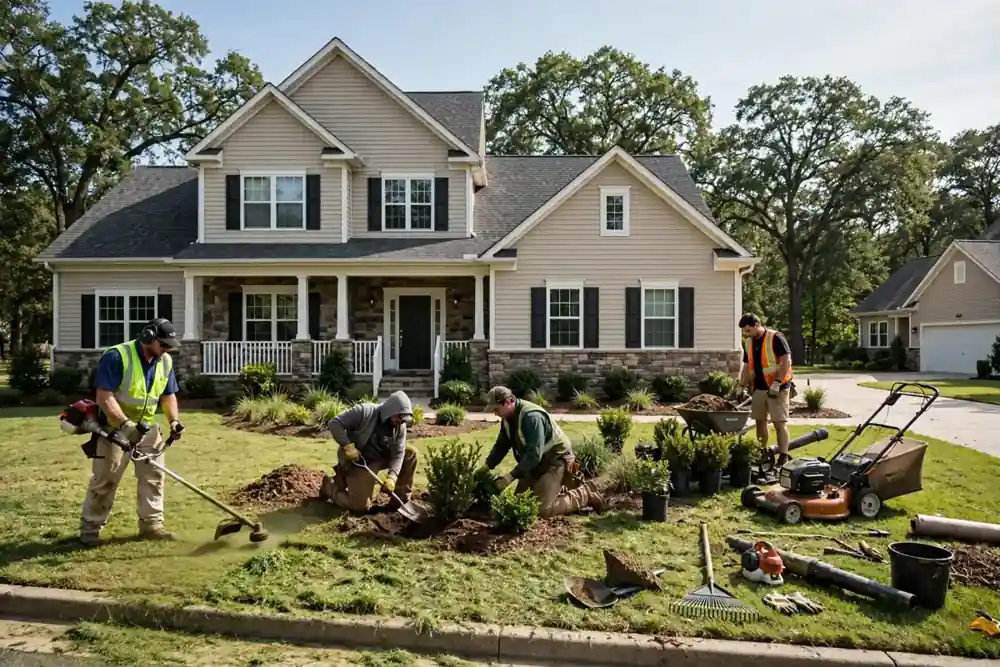
If you love working outdoors, enjoy visible results, and want a business you can start without a college degree or a huge loan, a landscaping business may be one of the smartest service businesses you can build in America in 2026. Every suburb, office park, apartment complex, and new housing development in the United States needs someone to mow, trim, plant, and maintain its grounds. That demand does not disappear in a recession the way luxury spending does, because overgrown lawns, dead shrubs, and unsafe walkways quickly become problems that property owners must fix.
This guide walks you through how to start a landscaping business step by step: the real startup costs, the equipment you actually need, how to price jobs, how to find your first customers, and how to grow from a one-person crew into a profitable company. You will also learn the common mistakes that sink new landscapers in their first year, and how to avoid them.
What a Landscaping Business Really Does
A landscaping business covers far more than mowing lawns. Most successful companies offer a mix of recurring maintenance work and higher-paying project work. Maintenance includes mowing, edging, fertilizing, weed control, leaf cleanup, and seasonal cleanups. Project work includes planting beds, installing mulch and stone, building patios and walkways, installing irrigation, and designing outdoor spaces. The smartest beginners start with maintenance, because it creates steady weekly income, and then add project services as their skills and equipment grow.
Think of maintenance as your base salary and projects as your bonuses. A route of forty weekly mowing customers can cover your bills even in a slow month, while a few landscape installation jobs each month can push your profit much higher. Like any service business, the goal is to build a customer list that pays you again and again, not to chase one-off jobs forever.
Landscaping Business vs. Lawn Care Business
People often use these terms interchangeably, but there is a useful difference. Lawn care focuses mainly on grass: mowing, fertilizing, and weed control. Landscaping is broader and includes design, planting, hardscaping, and full property care. You can start with lawn care and grow into landscaping, and many owners do exactly that. Starting narrow keeps your costs low, and expanding later lets you charge more per customer without finding entirely new clients.
How Much Does It Cost to Start a Landscaping Business?
Startup costs vary widely, and that is good news, because you can start small and scale. A solo operator who already owns a truck can often launch for $3,000 to $10,000, covering a commercial mower, trimmer, blower, basic hand tools, insurance, and marketing. A two-person crew with a trailer, a zero-turn mower, and professional equipment may invest $15,000 to $30,000. A larger operation with multiple crews, a dump trailer, and a skid steer can easily pass $50,000, but you do not need that on day one.
The biggest cost mistake beginners make is buying too much equipment before they have customers. Buy the tools that earn money this week, rent specialized equipment for occasional jobs, and reinvest profits into better gear. A used commercial mower in good condition will make you far more money than a shiny new machine sitting in your garage while you search for clients.
If you are weighing how to fund the launch, compare your options carefully before borrowing. Learning how small business loans work can help you decide whether financing makes sense or whether starting lean is smarter. Many landscapers also start part-time while keeping a day job, which is a proven way to start a side business without risking your household income.
Landscaping Business Equipment Checklist
You do not need a warehouse full of gear. Focus on reliable, commercial-grade basics that handle daily work without breaking down.
- Mower: a walk-behind or zero-turn commercial mower, depending on property sizes in your area.
- String trimmer and edger: for clean edges along sidewalks, driveways, and beds.
- Blower: a backpack blower saves enormous time on cleanup.
- Hand tools: rakes, shovels, pruners, loppers, wheelbarrow, and tarps.
- Trailer and truck: a reliable truck and an open trailer are usually enough to start.
- Safety gear: eye and ear protection, gloves, boots, and sun protection.
As you grow, add a hedge trimmer, a chainsaw for small tree work, a spreader for fertilizer, and eventually a dump trailer for mulch and debris. Each purchase should pay for itself within one season, or it can wait.
How to Legally Set Up Your Landscaping Business
Legal setup sounds boring, but it protects your personal assets and makes you look professional to commercial clients. Most landscapers start as a sole proprietor or an LLC. Understanding sole proprietorship vs LLC will help you choose the structure that fits your risk and tax situation, and checking the best states to start an LLC is useful if you operate near a state border or plan to expand.
You will also need a business license in most cities, an EIN from the IRS, a business bank account, and general liability insurance. Many states require a pesticide applicator license if you apply herbicides or fertilizers, so check your state agriculture department before offering those services. Commercial clients, HOAs, and property managers will ask for proof of insurance before they hire you, so do not skip this step.
Writing a simple plan keeps you focused. Even a one-page document that lists your services, prices, target customers, and monthly costs is valuable. For a fuller framework, read how to write a business plan and adapt it to a service business, and review how to start a small business in the USA for the registration and tax steps that apply in every state.
How to Price Landscaping Jobs
Pricing is where many new landscapers lose money. They charge what the cheapest competitor charges, work long hours, and still barely break even. Instead, price based on your costs plus profit. Add up labor, fuel, equipment wear, disposal fees, insurance, and travel time, then add a profit margin of at least 20 to 30 percent. If a job takes three hours for two people, it must pay for six labor hours plus overhead, not just three.
For recurring mowing, most companies charge per visit based on lawn size, obstacles, slopes, and cleanup time. For projects, quote a fixed price after a site visit, and put the scope in writing: what is included, what is not, the timeline, and the payment schedule. Never start a large project without a deposit, usually 30 to 50 percent, to cover materials. Clear quotes protect you and build trust with customers who have been burned by vague verbal estimates before.
Pricing Mistakes to Avoid
Do not offer free estimates that turn into free design work. A quick quote is free, but a detailed design plan is a paid service. Do not underprice to win every job, because low prices attract the hardest customers and leave no money to fix mistakes. And do not forget seasonal work: fall cleanups, spring mulching, and snow removal in colder states can fill gaps when mowing slows down.
How to Get Your First Landscaping Customers
Your first ten customers usually come from people who already know you. Tell friends, family, neighbors, and local business owners that you have started. Offer a polished flyer, a Google Business Profile, and before-and-after photos of every job, even if the first jobs are for relatives at a fair price. Photos are your best marketing in this business, because customers buy the result they can see.
Next, target one neighborhood and become visible there. A clean truck, matching shirts, and yard signs on active job sites do more than expensive ads. Knock on doors near a job you just finished and offer a free quote while your crew is already in the area. Property managers and real estate agents are also excellent referral sources, because they manage many properties and need reliable vendors.
Online, focus on Google Business Profile reviews and local search before spending on social media ads. Ask every happy customer for a review, respond to every review, and post photos weekly. Service businesses that look active and trusted online win the calls that competitors miss. For broader inspiration, explore small business ideas for 2026 to see how other owners package and market similar services.
Landscaping Business Services That Make the Most Money
Not all services earn equally. Mowing brings steady income but thin margins. Fertilization and weed control, offered as a seasonal program, bring recurring revenue with lower labor. Mulch installation, planting, and bed renovation pay well and are easy to upsell to existing mowing customers. Hardscape work like patios and retaining walls pays the most, but requires skill, proper drainage knowledge, and sometimes a contractor license, so learn it carefully or partner with an experienced installer at first.
Related service businesses follow the same pattern of starting with a core service and expanding. For example, learning how to start a pressure washing business can add a profitable add-on service for driveways and patios, while studying how to start a car detailing business shows how another mobile service business builds repeat customers. Even how to start a junk removal business is a useful comparison, because it shows how hauling and cleanup services price by volume and route density, just like landscaping routes.
How to Grow Your Landscaping Business
Growth comes from systems, not just harder work. Build a route that keeps crews in one area each day to cut driving time. Use simple scheduling and invoicing software so no customer is forgotten and no invoice is late. Track which services make money and which lose money, and drop or reprice the losers. Hire slowly: your first employee should be someone reliable who can work without constant supervision, and pay fairly, because good landscapers are hard to replace in peak season.
Seasonality is the biggest challenge. In northern states, winter means planning, equipment maintenance, and possibly snow services. In southern states, summer heat means early starts and hydration plans for crews. Save money during peak months to cover slow months, and use the off-season to market, train, and renew contracts. Owners who plan for seasons last; owners who spend every dollar in summer struggle in winter.
Financing growth is another decision point. When you need a second mower or a dump trailer, check whether SBA loans explained in plain language can help you borrow at a reasonable rate, rather than using high-interest credit cards. And if you started with little capital, the lessons in how to start a business with no money still apply at every stage: sell the job first, collect a deposit, and let customer revenue fund your next step.
Conclusion: Is a Landscaping Business Right for You?
A landscaping business rewards people who are dependable, physically capable, and willing to learn both the outdoor craft and the business side. It will not make you rich overnight, but it can replace a full-time income within one to two seasons for owners who price correctly, show up on time, and treat customers well. Start lean, build a dense route, document your work with photos, and expand services only when your core work is profitable. If you do that, your landscaping business can grow from a mower in a truck into a company that supports your family, employs your neighbors, and transforms the neighborhoods you serve.