
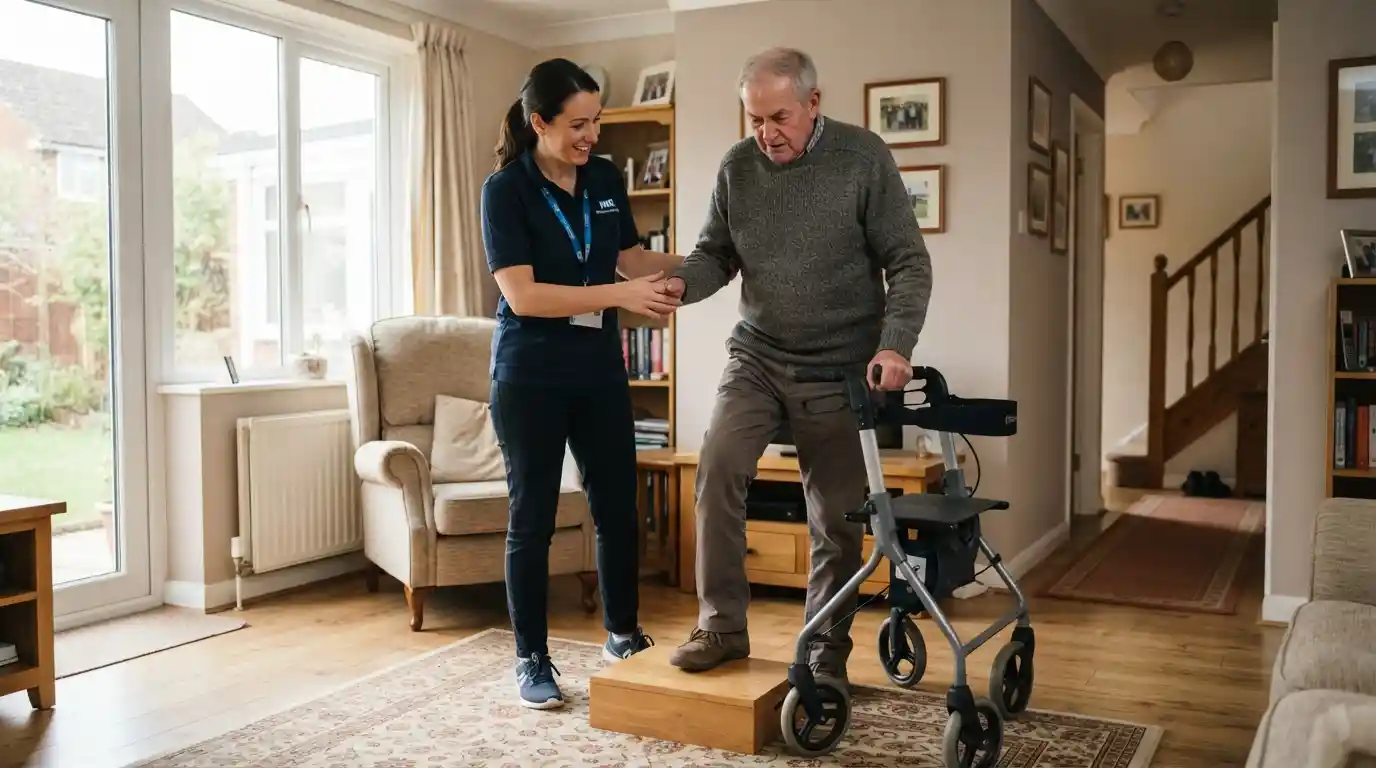
Home-based rehabilitation is not simply about doing exercises at home. It can involve physiotherapy, occupational therapy, mobility support, functional training, rehabilitation planning, progress reviews, and practical adjustments that help a person become more confident and independent in daily life.
This guide explains how home rehabilitation works, who may benefit, what types of support can be available, how to prepare a home for recovery, and what to consider when choosing a suitable service in Britain.
What Are British Home Rehabilitation Services?
British home rehabilitation services are professional rehabilitation services delivered within a person’s home rather than relying entirely on hospital, clinic, or rehabilitation-centre appointments.
The exact support depends on the individual’s condition, goals, mobility, daily routine, and recommendations from appropriately qualified professionals. A programme may focus on improving movement, rebuilding strength, increasing independence, managing everyday activities, or restoring confidence after a period of reduced physical ability.
The home environment can also provide useful information that may not be obvious in a clinical setting. Stairs, bathrooms, narrow spaces, furniture, entrances, kitchens, and everyday routines can all influence how successfully someone manages their recovery.
Why Consider Rehabilitation at Home?
Traditional rehabilitation remains important for many people, but travelling to regular appointments can create additional difficulties during recovery. Transportation, limited mobility, fatigue, work responsibilities, family commitments, and reduced confidence may all make frequent clinic visits challenging.
Home rehabilitation can reduce some of these practical barriers while allowing rehabilitation goals to be connected directly to everyday activities.
Greater Convenience
One of the clearest advantages of home-based rehabilitation is convenience. Instead of arranging transport and spending additional time travelling, the individual can receive suitable support within their normal living environment.
This can make it easier to establish a consistent routine, particularly when recovery involves repeated sessions over several weeks or months.
Rehabilitation in a Familiar Environment
Recovering at home allows rehabilitation professionals to consider the situations a person encounters every day. Moving between rooms, using stairs, getting into a chair, preparing food, or accessing the bathroom may all become meaningful rehabilitation goals.
This practical approach can make rehabilitation feel more relevant because progress is connected to real-life activities rather than only exercises performed in a clinical environment.
Personalised Recovery Goals
Every recovery journey is different. A useful rehabilitation plan should reflect the individual’s current abilities, limitations, lifestyle, priorities, and progress.
For one person, the main objective may be walking safely around the house. For another, it may involve returning to work, managing personal care independently, using stairs confidently, or gradually returning to normal activities.
Who May Benefit From Home Rehabilitation?
Home rehabilitation may be considered for people with a wide range of recovery needs. The suitability of a particular service should always be assessed by an appropriately qualified healthcare professional.
Potential users may include people recovering from surgery or injury, individuals experiencing reduced mobility, older adults who need help maintaining independence, and people managing longer-term physical limitations.
It may also be particularly useful for someone whose condition makes regular travel difficult or exhausting.
People looking at broader home-based care may also find our guide to home health services useful when considering how different forms of professional support can fit into everyday life.
Types of Home Rehabilitation Support
Home rehabilitation can involve different professionals and approaches depending on the person’s circumstances. The objective is to create appropriate support around the individual’s functional needs rather than applying the same programme to everyone.
Physiotherapy
Physiotherapy can address areas such as movement, strength, flexibility, balance, physical function, and mobility confidence.
A physiotherapy programme may include professionally selected exercises and movement activities that are adjusted as the person’s abilities change. The specific exercises should always be appropriate to the individual’s condition and followed according to professional guidance.
People who are interested in the relationship between physical activity and everyday routines can also explore our guide on fitting exercise into a busy daily routine.
Occupational Therapy
Occupational therapy can focus on helping an individual manage important daily activities more independently.
This may involve looking at personal care, household tasks, movement around the home, work-related activities, or other routines that are important to the person’s quality of life.
The emphasis is often broader than physical exercise because the goal is to help the individual function as effectively as possible in everyday situations.
Mobility and Independence Support
Some programmes place particular emphasis on safe movement and independence. This may involve practising functional movements, identifying barriers around the home, and helping an individual understand how to use appropriate mobility equipment safely when recommended by a professional.
The focus should remain on helping the person perform meaningful activities as safely and independently as their circumstances allow.
How Does Home Rehabilitation Usually Work?
A structured home rehabilitation programme generally begins with understanding the individual’s current situation rather than immediately introducing a standard exercise routine.
1. Initial Assessment
The first stage is usually an assessment of the person’s needs, current abilities, limitations, daily challenges, and rehabilitation goals.
The professional may also consider how the individual moves around the home and whether particular areas create difficulties.
2. Establishing Practical Goals
Clear goals can make rehabilitation easier to understand and measure. Rather than relying on vague objectives, useful goals can be connected to meaningful daily activities.
Examples might include moving safely between rooms, managing stairs with greater confidence, improving independence with personal care, or returning gradually to normal household routines.
3. Creating a Personalised Programme
After assessment and goal setting, an appropriate programme can be developed around the person’s circumstances.
Depending on the individual, this could involve supervised exercises, movement practice, functional activities, education, routine adjustments, or other suitable interventions.
The programme may also need to change as recovery progresses. A task that is difficult during the early stages may become easier later, while new challenges may emerge as independence improves.
4. Reviewing Progress
Regular reviews help determine whether the rehabilitation plan remains appropriate.
If an individual is achieving a particular goal, the programme may be adjusted to introduce an appropriate new challenge. If a person is struggling, the approach can be reconsidered rather than simply expecting them to continue with an unsuitable activity.
Preparing Your Home for Recovery
The physical environment can influence how safely and comfortably someone manages everyday activities during rehabilitation.
Simple changes may include keeping frequently used areas clear, creating easier access to essential rooms, placing commonly used items within practical reach, and reducing unnecessary obstacles.
Depending on individual circumstances, a qualified professional may also identify whether equipment, adaptations, or changes to daily routines could support greater independence.
Readers interested in creating a safer and more practical living environment can also explore how smart home devices can improve daily living and our guide to building a safe and smart home environment.
The Role of Consistency in Recovery
Rehabilitation is usually a gradual process. Progress may not be obvious every day, which makes consistency particularly important.
Following the programme provided by a qualified professional and communicating openly about difficulties can help keep expectations realistic.
It is also important to avoid comparing one person’s recovery timeline with another’s. Different conditions, starting abilities, lifestyles, and personal circumstances can result in very different rates of progress.
Building manageable routines can help support consistency. Our article on building sustainable daily habits provides additional ideas for making positive routines easier to maintain.
How Family Members and Carers Can Help
Family members and carers can provide valuable encouragement during home rehabilitation, but support should not unnecessarily replace tasks that the recovering person can safely complete themselves.
The objective should be to provide appropriate assistance while allowing the individual to build confidence and independence.
Family members may help by keeping the home organised, supporting agreed routines, providing encouragement, and communicating relevant changes or concerns to the appropriate healthcare professional.
People who require wider support at home can also explore information about home care services for loved ones as part of their broader care planning.
Supporting Emotional Wellbeing During Rehabilitation
Recovery is not only a physical process. A period of limited mobility or increased dependence can affect confidence, motivation, routine, and emotional wellbeing.
Small, realistic goals can make a long recovery journey feel more manageable. Recognising gradual improvements can also help maintain motivation when progress feels slow.
For broader wellbeing considerations, readers can explore simple ways to reduce daily stress and how unkind self-talk can affect mental health.
Additional approaches to maintaining overall wellbeing are discussed in our guide to holistic health and wellness and our coverage of health and wellness lifestyle support.
Home Rehabilitation After Surgery or Injury
Recovery following surgery or an injury can involve changes in mobility, strength, confidence, and the ability to perform everyday tasks.
Home rehabilitation may help connect professional guidance with the practical activities an individual needs to perform at home.
The exact rehabilitation approach depends on the procedure or injury, the individual’s health status, professional recommendations, and recovery goals. For example, someone recovering from a procedure affecting mobility may have very different rehabilitation requirements from someone recovering from an upper-body injury.
Readers interested in developments related to mobility and recovery can also explore our article covering advances in ankle replacement technology.
Home Rehabilitation and Long-Term Independence
The goal of rehabilitation is not necessarily to complete a fixed list of exercises. For many people, the broader objective is to improve function, confidence, and independence in everyday life.
That could mean becoming more comfortable moving around the house, managing personal routines more independently, returning to hobbies, or gradually participating in activities outside the home.
A well-planned programme can therefore become part of a broader approach to maintaining independence and wellbeing over the longer term.
People interested in wider health information can also explore resources such as the health resources covered in our Chicago Health Atlas guide and community health and wellness resources.
How to Choose British Home Rehabilitation Services
Choosing an appropriate home rehabilitation service requires more than simply finding a provider that offers appointments at home.
Consider the type of rehabilitation required, the qualifications and professional registration of the practitioners, the geographical area covered, appointment arrangements, communication processes, and how progress will be assessed.
It is also important to understand how the provider develops personalised plans. A suitable service should take the individual’s circumstances and goals into account rather than treating every person in exactly the same way.
When comparing healthcare providers, it can also be useful to understand the wider role of different healthcare professionals and services. Our article about health-related professional careers provides additional context about the broader healthcare field.
Questions to Ask Before Starting Home Rehabilitation
Before arranging a home rehabilitation service, consider asking the following questions:
- What type of rehabilitation support is available?
- Which qualified professionals provide the service?
- Does the provider cover my location?
- How is the initial assessment carried out?
- How will my rehabilitation goals be established?
- How frequently will progress be reviewed?
- Can the programme be adjusted as recovery develops?
- What role can family members or carers play?
- Are additional services or equipment likely to be recommended?
- How should concerns or changes in symptoms be communicated?
Creating a Practical Daily Recovery Routine
A structured daily routine can make rehabilitation easier to manage. The exact routine should follow the guidance provided by the relevant healthcare professional, particularly when exercises or physical activities are involved.
It can be useful to connect rehabilitation activities with existing daily habits instead of treating every session as a completely separate task.
For example, a person may organise appropriate activities around normal parts of their day while leaving enough time for rest and recovery.
Realistic expectations are equally important. Recovery can involve both progress and setbacks, and a temporary difficulty does not automatically mean that the overall programme has failed.
Building a Healthier Lifestyle After Rehabilitation
Rehabilitation can provide an opportunity to establish healthier long-term routines. Once appropriate movement and activity become part of everyday life, an individual may gradually develop habits that support continued independence and wellbeing.
The objective should be sustainable progress rather than trying to make major changes all at once.
Readers interested in broader lifestyle and wellbeing topics can also explore practical lifestyle choices for the home and other health and wellness content available across LumePost.
When to Seek Professional Guidance
Home rehabilitation should be based on the individual’s circumstances and appropriate professional guidance. A person should not assume that an exercise or rehabilitation technique is suitable simply because it worked for someone else.
If recovery needs change, a person experiences difficulties with an existing programme, or there are concerns about safety, those issues should be discussed with the relevant healthcare professional.
Professional assessment is especially important when rehabilitation follows surgery, a significant injury, or a condition that affects mobility and everyday function.
Final Thoughts
British home rehabilitation services can provide a practical pathway for people who need rehabilitation support while recovering in their own environment. Bringing appropriate professional support into the home can make it easier to connect rehabilitation goals with everyday activities and routines.
The most useful approach is personal, realistic, and adaptable. Whether the goal is improving mobility, rebuilding confidence, increasing independence, or returning to everyday activities, rehabilitation should reflect the individual’s circumstances and progress.
For anyone considering home rehabilitation, an appropriate starting point is to discuss their needs with a qualified healthcare professional and evaluate services based on their expertise, suitability, communication, and approach to personalised care.