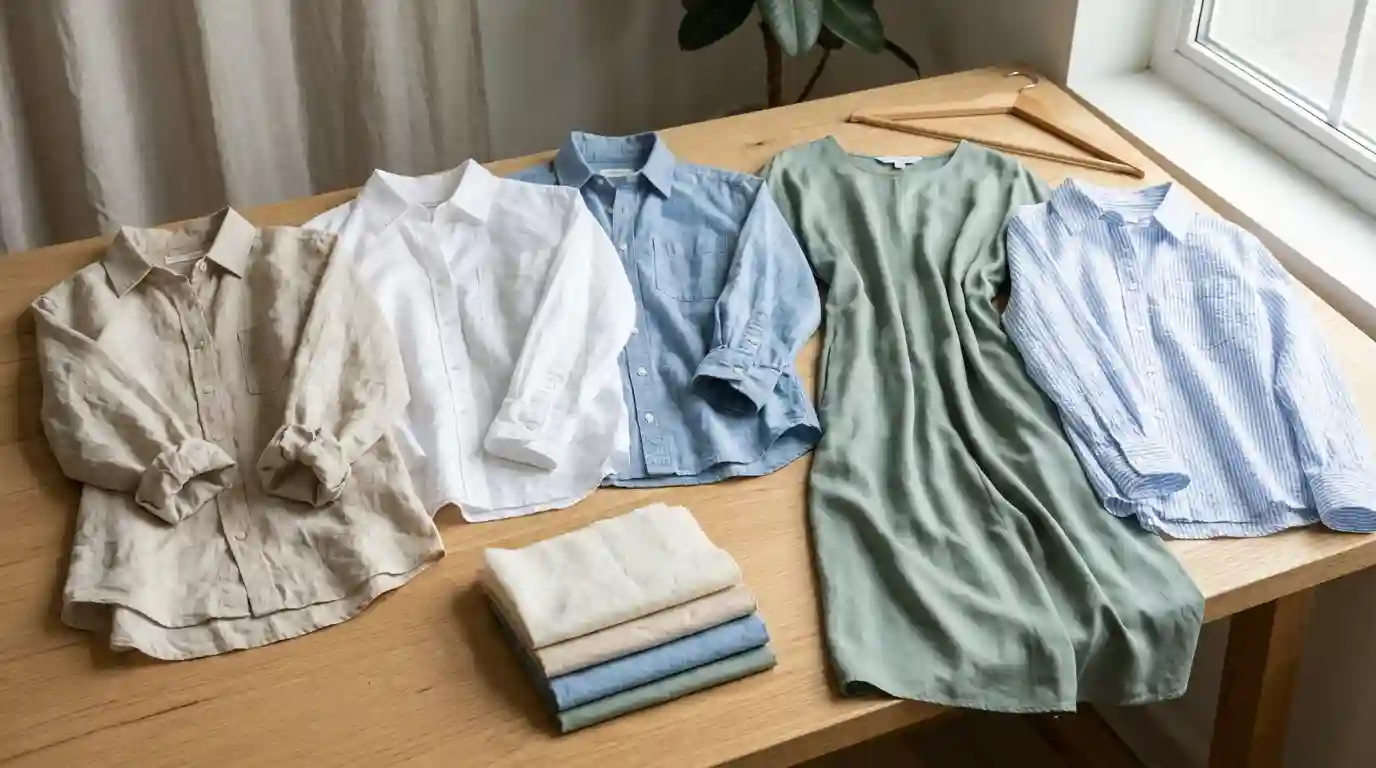
Choosing the best fabrics for summer clothing can make a noticeable difference in how comfortable you feel during hot weather. The right material allows air to circulate, manages moisture, feels comfortable against your skin, and helps prevent clothing from becoming heavy or clingy throughout the day.
Lightweight cotton, linen, chambray, seersucker, rayon, lyocell, and selected performance fabrics are all worth considering. However, no single material is ideal for every situation. Your best choice depends on the temperature, humidity, activity level, garment design, and how much care you want to give your clothes.
Whether you are choosing everyday outfits, office clothing, activewear, or a travel wardrobe, understanding how different fabrics perform will help you make more practical decisions.
What Makes a Fabric Good for Summer?
A summer-friendly fabric should feel light, allow airflow, and manage perspiration effectively. Fibre content matters, but the weave, thickness, finish, and fit of the finished garment can be equally important.
- Breathability: Fabrics that allow air to move through them can feel more comfortable in warm weather.
- Moisture management: Some materials absorb perspiration, while others move moisture towards the fabric surface to support evaporation.
- Lightweight construction: Thin, appropriately woven fabrics generally feel less bulky than heavy materials.
- Comfort: Soft textures and relaxed fits can reduce friction and the uncomfortable feeling of fabric sticking to damp skin.
- Easy care: Washable, durable fabrics are useful for clothing worn frequently during summer.
Fabric selection also connects with wider developments in eco-friendly sportswear, where material choices can influence comfort, durability, and environmental impact.
8 Best Fabrics for Summer Clothing
1. Cotton: A Versatile Everyday Choice
Cotton is one of the most practical materials for everyday summer clothing. It feels soft against the skin, comes in a wide range of weights, and is available in everything from casual T-shirts to structured shirts and dresses.
Lightweight cotton poplin, lawn, voile, and gauze can be particularly comfortable because their construction allows airflow. Cotton is also easy to wash, making it suitable for regular wear.
Best for: T-shirts, casual shirts, summer dresses, skirts, and everyday trousers.
Potential drawback: Cotton can retain moisture and become heavy when saturated with sweat. Choose a suitable lightweight weave and allow damp garments to dry properly.
2. Linen: Excellent for Hot Weather
Linen is made from flax fibres and is valued for its airy texture and breathability. Its natural texture helps create a relaxed appearance, while lightweight linen garments can allow air to circulate around the body.
Linen shirts, trousers, shorts, and dresses work particularly well for warm days when you want comfortable clothing with a polished appearance. It also pairs well with simple accessories and neutral colours.
Best for: Hot-weather shirts, relaxed trousers, summer dresses, and smart-casual outfits.
Potential drawback: Linen wrinkles easily and may feel slightly crisp before repeated washing softens it. Linen blends can offer a different balance of drape, texture, and crease resistance.
3. Chambray: A Lightweight Alternative to Denim
Chambray resembles denim visually but is commonly made with a lighter construction. This makes it a useful option when you want a casual, structured appearance without the weight of traditional denim.
Lightweight chambray shirts, dresses, and shorts can be useful additions to a warm-weather wardrobe. Check the fabric weight before buying because thicker versions may feel less comfortable in extreme heat.
Best for: Casual shirts, relaxed dresses, lightweight shorts, and everyday outfits.
Potential drawback: Its performance depends on the weave and thickness, so not every chambray garment will feel equally cool.
4. Seersucker: Naturally Textured and Airy
Seersucker has a characteristic puckered surface that helps keep portions of the fabric away from the skin. This texture can improve airflow and reduce the feeling of a smooth fabric clinging to the body.
It is a useful choice for summer shirts, lightweight suits, dresses, and warm-weather formal occasions. The distinctive texture also gives outfits visual interest without requiring heavy embellishments.
Best for: Summer blazers, shirts, dresses, and smart-casual clothing.
Potential drawback: Its texture and structure vary by fibre composition. Check the label rather than assuming every seersucker garment is made from breathable cotton.
5. Rayon and Viscose: Soft, Flowing Comfort
Rayon, including viscose, is valued for its soft feel and fluid drape. These materials can be useful when you want summer clothing that moves easily and creates a relaxed silhouette.
They are often used in dresses, blouses, skirts, and loose-fitting trousers. Lightweight constructions can feel comfortable in warm weather, although their moisture behaviour varies with the fibre, weave, and finishing.
Best for: Flowy dresses, loose blouses, skirts, and relaxed evening outfits.
Potential drawback: Some viscose garments can shrink, stretch, or lose their shape when wet. Follow the garment’s care label and avoid assuming that every rayon fabric dries quickly.
6. Lyocell: Smooth and Comfortable
Lyocell is a regenerated cellulosic fibre known for its smooth feel and attractive drape. Depending on its construction, it can provide a comfortable option for people who prefer soft clothing with a less rigid appearance.
Lyocell is used in shirts, dresses, lightweight trousers, and casual separates. It can also appear in blends designed to combine softness with other useful fabric properties.
Best for: Soft shirts, lightweight dresses, trousers, and travel clothing.
Potential drawback: Durability, drying time, and care requirements depend on the specific fabric and blend. Check washing instructions before purchasing.
7. Silk: A Lightweight Option for Special Occasions
Lightweight silk can feel smooth against the skin and offers an elegant appearance for summer events. Silk blouses, dresses, scarves, and selected linings can provide a refined alternative to heavier formal fabrics.
Its suitability for hot weather depends on the weave, garment construction, and amount of layering. A lightweight silk garment may feel comfortable, but a lined or tightly fitted design can reduce airflow.
Best for: Special-occasion outfits, lightweight blouses, scarves, and dressy summer clothing.
Potential drawback: Silk can be expensive, may show perspiration, and often requires more careful cleaning than everyday cotton.
8. Moisture-Wicking Performance Fabrics
For exercise, walking, cycling, and other active pursuits, performance fabrics can be a practical choice. Polyester and nylon fabrics engineered with moisture-wicking finishes, mesh panels, or ventilated construction can help move sweat away from the skin and dry relatively quickly.
These materials are not automatically cooler than natural fibres. Dense, non-ventilated synthetic fabrics can feel hot, so look for lightweight construction and features designed for your activity.
Best for: Workout shirts, running clothes, sportswear, and active travel.
Potential drawback: Odour retention and breathability vary considerably between fabrics. Compare construction and care requirements rather than judging by fibre name alone.
Which Summer Fabric Is Best for Different Clothing?
The most suitable material depends on what you plan to wear and how you will use it.
- T-shirts: Lightweight cotton jersey or a breathable cotton blend is a versatile starting point.
- Shirts: Linen, cotton poplin, and lightweight chambray offer different levels of structure and airflow.
- Dresses: Cotton voile, linen, and lightweight viscose can provide comfortable options with different drapes.
- Office clothing: Linen blends, lightweight cotton, and suitable seersucker can balance comfort with a neat appearance.
- Workout clothing: Lightweight technical fabrics with moisture management and ventilation are worth considering.
- Travel outfits: Choose washable, versatile materials that suit the destination, planned activities, and available laundry facilities.
Personal style also matters. Readers exploring luxury fabrics and fashion, avant-garde fashion for men, or men’s occasion wear can apply the same principle: choose a fabric that suits both the look and the weather.
How to Choose Fabric for Hot and Humid Weather
Hot and humid conditions require a little more attention because perspiration evaporates less readily when the air already contains substantial moisture. A fabric that feels comfortable in dry heat may feel clingy in humid weather.
Use these practical guidelines when comparing garments:
- Choose lightweight fabrics with a breathable weave or knit.
- Prefer a relaxed fit that allows air to circulate around the body.
- Check whether the garment contains a lining that could add warmth.
- Consider how the fabric feels when damp, not only when it is new and dry.
- Choose clothing that can be washed and dried according to your routine.
- For prolonged outdoor exposure, consider coverage and appropriate sun protection as well as comfort.
Light-coloured clothing can reflect more sunlight than dark clothing in many circumstances, although fabric thickness, weave, and surface properties also influence heat transfer. Colour alone does not guarantee that a garment will keep you cool.
Summer Clothing Tips for Travel
When packing for a summer trip, choose a small group of garments that can be worn in different combinations. A lightweight shirt, comfortable trousers, breathable tops, and one suitable outfit for an evening occasion can make packing simpler.
Think about your itinerary before choosing fabrics. Outdoor sightseeing, long journeys, family activities, and formal events may require different combinations of comfort, coverage, and durability. These considerations are useful when planning travel with children or deciding which travel essentials to pack.
For inspiration, you can also explore summer travel in Tokyo, summer destinations in New York State, and places to visit in Ohio during summer. Each destination can involve different temperatures, activities, and clothing needs.
Other itinerary ideas include summer destinations in Europe, family trips in Washington State, and US destinations for couples. Check the expected weather for your actual travel dates before deciding what to pack.
If your plans include a city break, nature excursion, or longer holiday, these guides to South America for first-time visitors, unique places in New Zealand, and places to visit in the Philippines can help you consider the range of activities your clothing needs to accommodate.
For family-oriented planning, see also places to visit in the United States with family, family destinations in Florida, and Washington State destinations with children. For a warmer-city itinerary, the guide to visiting Dubai offers another destination to consider when planning suitable outfits.
Fabrics to Use Carefully in Summer
No fibre needs to be ruled out in every situation, but some garments are less comfortable in heat because of their weight, weave, or finish.
- Heavy denim: Thick denim can restrict airflow and feel bulky during hot weather.
- Dense synthetic fabrics: Some tightly constructed polyester and nylon garments retain heat, although performance versions can work well for exercise.
- Thick knits: Heavy jersey and dense knitwear may feel warm, especially when fitted closely to the body.
- Heavily lined garments: Additional layers can reduce ventilation even when the outer fabric is lightweight.
Instead of avoiding an entire fibre category, examine the finished garment. A lightweight, ventilated synthetic sports shirt may be more practical for a workout than a cotton shirt that becomes saturated with sweat.
How to Care for Summer Fabrics
Good fabric care helps summer clothing retain its shape, appearance, and comfort. Always follow the garment’s care label because fibre blends, dyes, and finishes can change the appropriate washing method.
- Wash frequently worn clothing as recommended to remove perspiration and body oils.
- Use suitable water temperatures to reduce unnecessary shrinkage or damage.
- Air-dry garments when appropriate and avoid excessive heat on delicate fibres.
- Iron linen and cotton according to their care instructions if you prefer a smoother finish.
- Store completely dry clothing in a clean, well-ventilated space.
- Wash performance garments according to their instructions and avoid fabric softeners when the manufacturer advises against them.
Care requirements are particularly important when investing in premium materials or experimenting with different styles. Understanding historical fashion and fabric choices can also provide context for how textile construction and garment design influence appearance.
Frequently Asked Questions
What is the coolest fabric to wear in summer?
Lightweight linen and breathable cotton fabrics are excellent starting points. The coolest option depends on the weave, garment fit, humidity, and activity level.
Is cotton or linen better for hot weather?
Linen is often favoured for its airy texture, while lightweight cotton can be softer, easier to maintain, and highly versatile. Both can work well when the fabric is appropriately constructed.
Is polyester suitable for summer clothing?
Yes, some polyester garments are suitable, particularly lightweight performance clothing designed to move moisture and dry quickly. Dense polyester fabrics without adequate ventilation may feel less comfortable.
Which fabric is best for summer dresses?
Lightweight cotton, linen, and viscose are useful choices. Consider how much drape you want, whether the garment needs a lining, and how easily the fabric can be washed.
How can I tell whether a fabric is breathable?
Check the fibre content, thickness, weave, and garment construction. Hold the material up to the light if appropriate, examine how densely it is woven, and consider whether the finished garment allows comfortable movement and airflow.
Are natural fabrics always better than synthetic fabrics?
No. Natural fibres can offer softness and breathability, while engineered synthetics can provide useful moisture management and quick drying. The best choice depends on the garment’s purpose and construction.
Final Thoughts
The best fabrics for summer clothing balance breathability, comfort, moisture management, and ease of care. Cotton and linen are dependable everyday choices, chambray and seersucker provide useful alternatives, rayon and lyocell offer soft drape, silk suits selected occasions, and performance fabrics can be practical for exercise.
Before buying, consider the weather, your planned activities, and how the garment is constructed. Choosing the right material and a comfortable fit can help you build a versatile summer wardrobe without relying on a single fabric for every situation.