You do everything right — you eat reasonably well, you try to exercise, you work hard — yet you drag yourself through every afternoon running on coffee and willpower. If that sounds familiar, the missing piece is probably not motivation. It is sleep. Roughly one in three American adults regularly sleeps less than the recommended seven hours, and the cost shows up everywhere: weaker immunity, higher blood pressure, weight gain, foggy thinking, and a shorter fuse with the people you love. Learning how to sleep better at night is one of the most powerful health upgrades you can make — and unlike a gym membership, it is free.
This guide collects 14 science-backed strategies that actually work, drawn from sleep medicine research and the recommendations of organizations like the American Academy of Sleep Medicine. You do not need all fourteen. Start with two or three, give them two weeks, and watch what changes.
1. Keep a Consistent Sleep Schedule — Even on Weekends
Your body runs on a circadian rhythm, an internal clock that expects sleep and wakefulness at predictable times. Going to bed at 10 p.m. on weeknights and 1 a.m. on weekends creates what researchers call “social jet lag” — your body feels like it flew across time zones every Monday. Pick a bedtime and wake time you can keep seven days a week, and stick to them within about 30 minutes. Within two weeks, most people find they start feeling sleepy at the right time naturally, no alarm needed to fall asleep.
2. Get Morning Sunlight Within an Hour of Waking
Light is the strongest signal that sets your circadian clock. Stepping outside into daylight within an hour of waking — even on a cloudy day — tells your brain to suppress melatonin now and release it again about 14 hours later, right at bedtime. Ten to fifteen minutes is enough. This single habit improves both daytime alertness and nighttime sleepiness, and it pairs perfectly with the benefits of morning exercise: a brisk morning walk delivers sunlight and movement in one shot.
3. Make Your Bedroom Dark, Cool, and Quiet
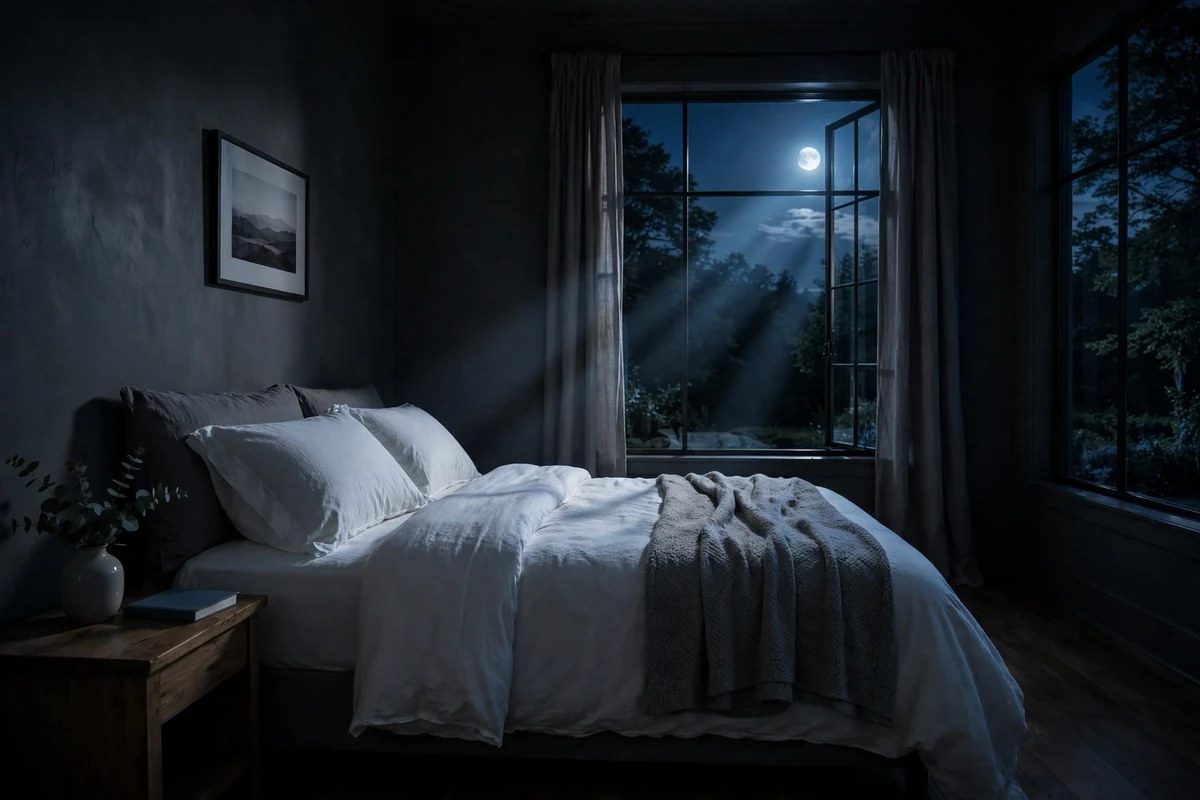
Your bedroom should feel like a cave: dark, cool, and quiet. Block light with blackout curtains or a sleep mask — even small amounts of light through the eyelids suppress melatonin. Set the thermostat to around 65 to 68°F (18 to 20°C); your core body temperature needs to drop to initiate sleep, and a cool room helps it happen. Use earplugs or a white noise machine if street noise, a snoring partner, or thin walls keep you up. Small environmental upgrades beat expensive supplements almost every time, and learning to make your home cozy can turn your bedroom into a genuine sleep sanctuary.
4. Cut Caffeine After Noon
Caffeine has a half-life of five to six hours, which means the 3 p.m. coffee is still half-active in your system at 9 p.m. For slow metabolizers — and you may be one without knowing it — the effect lasts even longer. Set a personal caffeine curfew of noon or 1 p.m. and watch your sleep latency shrink. Switch afternoon cravings to herbal tea or water. Many people are shocked to discover that their “insomnia” was just a latte habit.
5. Limit Alcohol — It Sedates You, Then Wrecks Your Sleep
A nightcap feels relaxing because alcohol is a sedative, but sedation is not sleep. Alcohol fragments the second half of the night, suppresses REM sleep (the stage critical for memory and emotional processing), and increases snoring and bathroom trips. You fall asleep faster and wake up more. If you drink, finish at least three to four hours before bed, keep it moderate, and notice how dramatically your sleep quality — and your mornings — change on alcohol-free nights.
6. Exercise Regularly, but Time It Right
Regular physical activity is one of the most reliable sleep improvers in the research literature — it deepens slow-wave sleep and shortens the time it takes to fall asleep. Morning and afternoon workouts are ideal. Vigorous exercise within two to three hours of bedtime can be stimulating for some people, though gentle yoga or stretching is fine anytime. If poor sleep has made you sedentary, start small: even a 20-minute daily walk measurably improves sleep quality within a few weeks.
7. Build a Wind-Down Routine
You cannot sprint all day and then slam on the brakes at 10:30 p.m. Your nervous system needs a transition. Build a 30- to 60-minute wind-down ritual: dim the lights, take a warm shower or bath (the subsequent drop in body temperature promotes sleepiness), read a physical book, stretch, or practice slow breathing. Do it in the same order each night. Over time, the routine itself becomes a powerful sleep cue — your brain starts releasing melatonin when the ritual begins, before your head even hits the pillow.
8. Put the Phone Away — Seriously
Screens hurt sleep in two ways: blue-enriched light suppresses melatonin, and the content — news, arguments, endless scrolling — keeps your mind aroused. The research is blunt: people who use phones in bed take longer to fall asleep and get less REM sleep. Charge your phone outside the bedroom and buy a ten-dollar alarm clock. If that feels impossible, start with a 30-minute screen-free buffer before bed and extend it. Your sleep is worth more than one more scroll.
9. Watch What You Eat and Drink in the Evening
Heavy, spicy, or fatty meals close to bedtime trigger reflux and restless sleep. Finish dinner two to three hours before bed, and if you need a snack, choose something light — a banana, a small bowl of oatmeal, or warm milk with honey. Avoid large amounts of liquid right before bed to cut nighttime bathroom trips. Interestingly, what you cook matters too: planning calm, simple evening meals with homemade dinner ideas beats heavy takeout that sits in your stomach all night. And skip the “sleepytime” nightcap myth from tip five — it backfires.
10. Get Out of Bed If You Cannot Sleep
Lying awake for an hour trains your brain to associate your bed with frustration — the opposite of what you want. Sleep specialists recommend the “20-minute rule”: if you are still awake after about 20 minutes, get up, go to another room, and do something calm and boring in dim light until you feel drowsy. Then return to bed. This technique, called stimulus control, is a cornerstone of CBT-I (cognitive behavioral therapy for insomnia), the most effective long-term insomnia treatment we have — more effective than sleeping pills, without side effects.
11. Manage Stress and Racing Thoughts
For most adults, the number-one sleep thief is not noise or light — it is a racing mind. Bills, deadlines, arguments, and worries loop endlessly the moment the lights go out. Two tools help enormously. First, a “worry journal”: spend ten minutes before your wind-down routine writing down tomorrow’s tasks and worries, which tells your brain it does not need to rehearse them at 2 a.m. Second, learn to notice unkind self-talk — the harsh inner critic that amplifies nighttime anxiety — and practice replacing it with neutral, factual statements. If anxiety regularly steals your sleep, professional support helps: exploring mental health resources or speaking with a counselor, such as the team at a mental health clinic, can address the root cause rather than just the symptom. Financial worry is another classic 3 a.m. visitor — working toward an emergency fund removes one of the most common sources of nighttime stress.
12. Nap Smart — or Skip It
Naps are a double-edged sword. A 20-minute early-afternoon nap can boost alertness without hurting nighttime sleep. But long or late naps — 90 minutes at 5 p.m. — steal your sleep pressure and push bedtime later. If you are trying to fix your nights, skip naps entirely for two weeks. If you must nap, keep it under 30 minutes and finish before 3 p.m.
13. Consider What Poor Sleep Does to Your Heart and Weight
Sleep is not just about feeling rested — it is cardiovascular medicine. Chronic short sleep raises blood pressure, increases inflammation, and disrupts the hormones that control hunger, driving weight gain. People who consistently sleep under six hours face significantly higher risks of hypertension and heart disease. If you already track your numbers, improving sleep is one of the most effective natural ways to lower blood pressure naturally. Athletes take this seriously too — proper recovery sleep is why sports physicals for competitive athletes always cover rest habits. Treat sleep as a health intervention, not a luxury.
14. Track It, Then Tweak It
You cannot improve what you do not measure. For two weeks, keep a simple sleep diary: bedtime, wake time, how long it took to fall asleep, nighttime wake-ups, caffeine and alcohol, and a 1-to-10 morning energy rating. Patterns jump out fast — the late coffee, the Sunday-night anxiety, the overheated room. Wearables can help, and our roundup of the best tech gadgets of 2026 includes sleep trackers worth considering — but do not obsess over the data. Use tracking to test one change at a time, keep what works, and discard the rest.
When to See a Doctor About Sleep
Self-help covers most sleep problems, but some need medical attention. See a doctor if you snore loudly with gasping or choking (possible sleep apnea), if you experience overwhelming daytime sleepiness despite adequate time in bed, if restless legs regularly delay your sleep, or if insomnia persists more than three weeks despite good sleep habits. Sleep apnea in particular is dangerously underdiagnosed — effective treatments exist, and treating it transforms both nights and days.
Conclusion: Start Tonight
Knowing how to sleep better at night is not complicated — consistency, light, temperature, and a calm mind do most of the work. Pick two changes from this list and start tonight: set a firm wake time and get morning sunlight tomorrow. Give it fourteen days. Better sleep compounds like interest — a little more each night, until one day you realize the 3 p.m. slump is just gone.
An evening heat session can help you wind down — learn how a sauna before bed relaxes your body and supports deeper sleep.