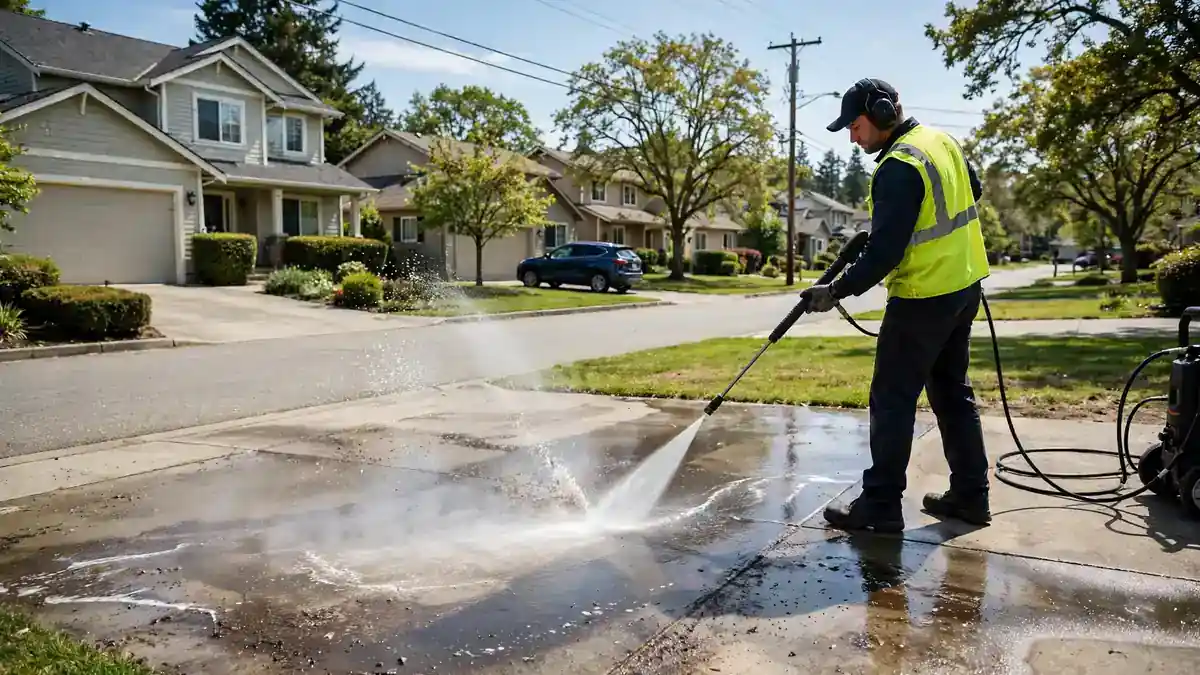
Look at any suburban driveway in America and you will see an opportunity. Algae-stained siding, mildewed decks, oil-spotted concrete — homeowners notice the grime every time they pull in, and most of them would rather pay someone else to blast it away than rent a machine and do it themselves. That is the simple, durable demand behind the pressure washing business, one of the most accessible service businesses an American can start in 2026.
A pressure washing business is not glamorous, but it is practical. Startup costs stay far below most other trades, you can operate from a pickup truck, and the work pays by the job — many operators clear several hundred dollars per appointment. This guide walks you through exactly how to start a pressure washing business the right way: real 2026 costs, the equipment that actually matters, pricing that protects your margins, legal setup, and how to land your first customers.
What a Pressure Washing Business Really Does
A pressure washing business cleans exterior surfaces using high-pressure water, often combined with detergents and soft-wash techniques. The core services include:
- Residential work: house siding, driveways, sidewalks, decks, fences, patios, roofs (soft wash), and gutters.
- Commercial work: storefronts, parking lots, building exteriors, restaurant dumpster pads, fleet vehicles, and awnings.
- Add-on services: gutter cleaning, window washing, deck staining, and concrete sealing.
Residential jobs make up most of a beginner’s revenue because they are easy to sell and easy to schedule. Commercial contracts pay more but usually go to established operators with insurance certificates and references. Starting residential and growing into commercial is the proven path. If you are weighing this against other entry-level service businesses, it helps to compare it with guides like how to start a car detailing business, which shares the same job-based, low-overhead DNA.
How Much Does It Cost to Start a Pressure Washing Business in 2026?
Realistic startup costs for a pressure washing business in 2026 land between $5,000 and $15,000, depending on whether you go residential-only with a mid-range machine or invest in commercial-grade equipment from day one. Here is a typical breakdown:
- Commercial pressure washer (4–8 GPM): $1,500–$4,500
- Surface cleaner attachment: $200–$500
- Hoses, wands, nozzles, and fittings: $300–$600
- Chemicals and detergents: $200–$400 to start
- Water tank and trailer (optional at first): $800–$3,000
- General liability insurance: $800–$1,500 per year
- Business license and registration: $50–$500 (varies by state and city)
- Website, branding, and marketing launch: $300–$1,000
- Safety gear and misc tools: $200–$400
You can start leaner if you already own a truck or SUV and begin with a quality 4 GPM machine. But do not buy a cheap consumer-grade washer from a big-box store and call it a business — it will burn out in months of daily use. Financing part of the launch is normal; SBA loans explained walks through government-backed options that fit small service businesses.
Choose the Right Pressure Washer and Equipment
The single most important decision in your pressure washing business is the machine. Two numbers matter: PSI (pressure) and GPM (gallons per minute, or flow). Professionals prioritize GPM over PSI, because flow is what cleans faster — a 4 GPM machine at 3,500 PSI cleans roughly twice as fast as a 2.5 GPM unit at the same pressure.
Minimum specs for professional work
- Gas-powered, 4 GPM or higher for residential and light commercial work
- 3,500–4,000 PSI maximum rating
- Belt-drive pump preferred over direct drive — it runs cooler and lasts longer
- Honda or Kohler engine for parts availability and reliability
Accessories that pay for themselves
A surface cleaner is the highest-ROI attachment you will buy. It cleans driveways and patios in straight, streak-free passes, cutting job time dramatically. You will also need a selection of nozzles (the 25-degree and 40-degree tips handle most surfaces safely), 100–200 feet of quality hose so you can park away from the house, a downstream chemical injector for applying detergents, and a turbo nozzle for stubborn stains on concrete.
Safety gear is non-negotiable: steel-toe boots, safety glasses, gloves, and hearing protection. High-pressure water can cut skin and etch concrete, so respect the tool from day one. If capital is tight, this business still qualifies as a realistic way to start a business with no money in the lean sense — many operators begin with a used commercial washer and reinvest profits into upgrades.
Licenses, Insurance, and Legal Setup
A pressure washing business is a real business, and the paperwork protects you when something goes wrong — a broken window, damaged siding, or a slip-and-fall claim can erase months of profit if you are uninsured.
- Business entity: most operators start as an LLC for liability protection. The sole proprietorship vs LLC comparison explains the trade-offs clearly.
- General liability insurance: $1M/$2M coverage is the industry standard; many commercial clients require a certificate of insurance before hiring you.
- Business license: requirements vary by city and state — check your local clerk’s office.
- EIN and bank account: get a free EIN from the IRS and keep business money separate from day one.
- Chemical handling: some states require licensing for applying certain cleaning chemicals; know your local rules before you offer soft-wash roof cleaning.
Writing down your plan, even a simple one, forces you to think through pricing, marketing, and cash flow before you spend a dollar on equipment. How to write a business plan gives you a practical template for a one-page service-business plan.
How to Price Pressure Washing Jobs
Underpricing is the number-one reason new pressure washing businesses fail. They quote too low to win jobs, then discover the math does not cover fuel, chemicals, insurance, and their own time. In 2026, these are realistic US market rates:
- Per square foot: $0.10–$0.50, depending on surface and region
- Driveway (2-car): $100–$250
- House wash (1,500–2,000 sq ft): $250–$600
- Deck or fence: $150–$400
- Roof soft wash: $300–$800
- Commercial flatwork: quoted per project, often $500–$2,500+
The best approach is to calculate your minimum hourly rate first. Add up monthly fixed costs (insurance, loan payments, marketing), divide by the billable hours you realistically expect, and add your target profit. If that number is $75/hour, a two-hour driveway job should be priced at $150 minimum — never below it, no matter what a competitor charges.
Flat-rate package pricing (“Whole House Wash from $299”) converts better than open-ended quotes because customers know the cost upfront. Always visit — or request photos of — the property before quoting anything unusual, like a heavily stained roof or a large commercial lot.
How to Get Your First Pressure Washing Customers
The fastest path to your first ten customers does not involve paid ads. It involves visibility and trust:
- Google Business Profile: claim it on day one, add photos of real before-and-after work, and ask every happy customer for a review. Local search is where most pressure washing jobs originate.
- Nextdoor and Facebook groups: post an introductory offer for your own neighborhood; neighbors trust neighbors.
- Door hangers and yard signs: old-school but extremely effective — hang them in neighborhoods where you just finished a job so people see the results.
- Before-and-after photos: nothing sells this service like a dramatic side-by-side. Build a portfolio from your first free or discounted jobs for friends and family.
- Realtors and property managers: one realtor relationship can deliver steady pre-listing exterior cleanings.
Longer-term, your website and local SEO compound: content that answers “how much does it cost to pressure wash a house” or “driveway cleaning near me” keeps bringing leads while you sleep. For a full playbook, see digital marketing strategies for small businesses.
Realistic Profit Margins in a Pressure Washing Business
A well-run residential pressure washing business typically keeps 40–60% profit margins after direct costs (fuel, chemicals, water, insurance allocation). The leverage is simple: once the equipment is paid for, each job’s marginal cost is mostly your time and a few dollars of chemicals.
Full-time solo operators commonly gross $75,000–$150,000 per year; experienced two-crew operations in strong markets can pass $250,000. The constraint is never the machine — it is the marketing. The operators who earn the most are the ones who learned to sell, not just to wash.
Seasonality matters: demand peaks in spring and early summer, dips in winter (especially in northern states). Smart operators use slow months for equipment maintenance, marketing, and offering discounted winter services like gutter cleaning. Comparing notes with a companion service such as how to start a vending machine business shows how different service models handle the same seasonality question.
Common Mistakes New Pressure Washing Operators Make
- Buying the wrong machine: consumer-grade washers die fast and clean slow.
- Skipping insurance: one broken window can cost more than a year of premiums.
- Etching concrete or stripping paint: too much pressure or the wrong nozzle damages property — practice on your own driveway first.
- No water supply plan: some jobs lack an outdoor spigot; a buffer tank on the truck solves this.
- Charging by gut feeling: track every job’s time and costs so pricing stays profitable.
- Ignoring reviews: in a local service business, your review count is your billboard.
Many beginners run this business evenings and weekends before going full-time. If that is your plan, the start a side business while working full-time guide covers how to manage the transition without burning out.
Pressure Washing Business FAQ
Do I need a special license to start a pressure washing business?
Most states do not require a trade-specific license, but you will need a general business license from your city or county, and some states regulate chemical application. Always check local rules.
How much can a pressure washing business make?
Solo operators typically earn $75,000–$150,000 in annual revenue with 40–60% margins. Revenue scales with marketing, crew size, and commercial contracts.
Is a pressure washing business profitable in winter?
Demand drops in cold climates, but many operators stay busy with commercial work, holiday lighting installation, or discounted residential specials. Planning for seasonality in your cash flow is essential — see how to start a small business in the USA for budgeting fundamentals.
Should I offer soft washing too?
Yes. Soft washing (low pressure plus detergents) is required for roofs and delicate siding, and it commands premium prices. Learn the chemical ratios carefully before offering it.
Conclusion: Is a Pressure Washing Business Worth Starting in 2026?
If you want a business you can start for under $15,000, run from a truck, and scale with marketing rather than massive capital, a pressure washing business is one of the strongest options in the American service economy in 2026. The demand is visible on every dirty driveway in the country, the economics work, and the barrier to entry is skill and hustle rather than money.
Start with quality equipment, insure yourself properly, price like a professional, and get your first reviews fast. For a broader view of what else is working right now, browse small business ideas for 2026 — but if you want dirty-to-clean transformations and cash-paying customers within weeks, pressure washing deserves a hard look.