
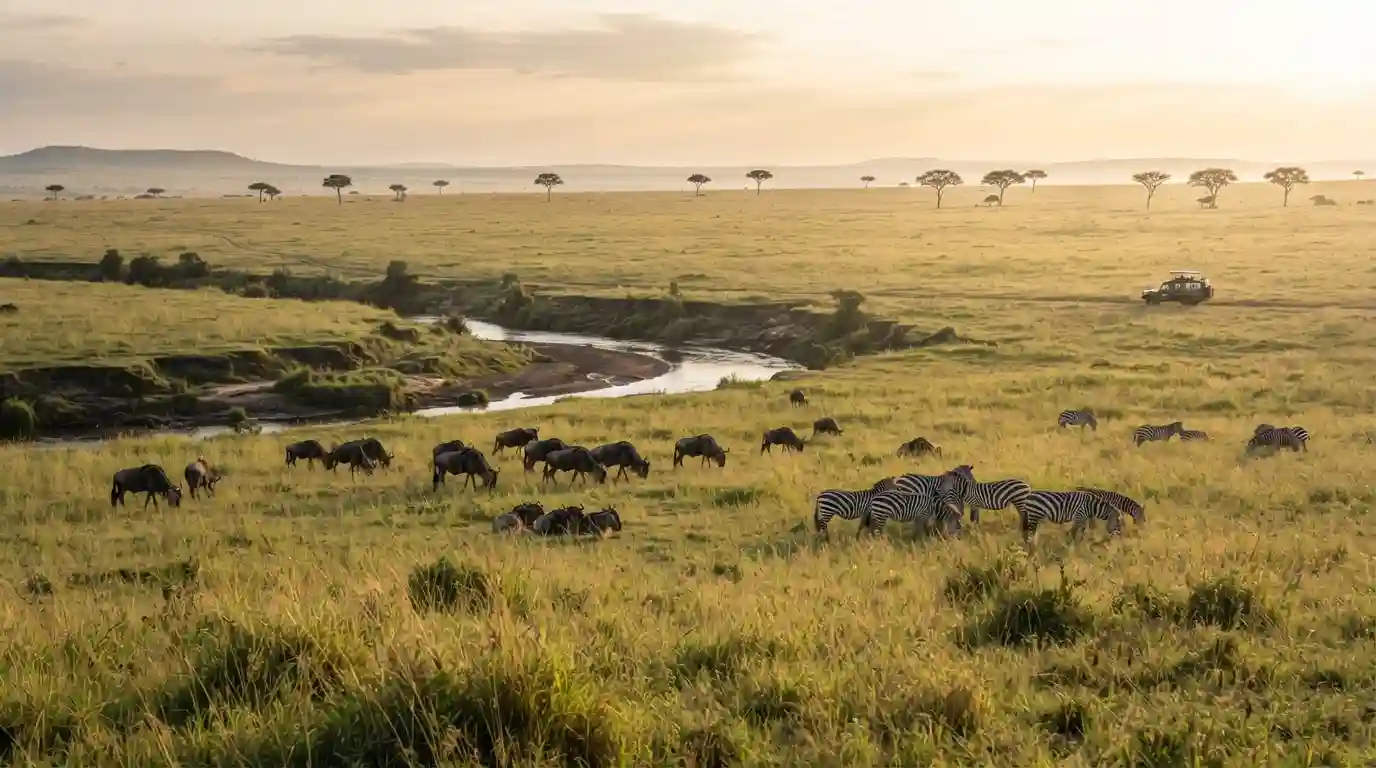
If you are planning a safari and searching for the best places to visit in Masai Mara, it helps to understand what makes each part of the ecosystem special. From the Mara River and Mara Triangle to Talek Gate, scenic grasslands, nearby conservancies, and Maasai cultural experiences, there are plenty of places and activities to include in a well-planned itinerary.
This guide highlights the most worthwhile places and experiences to consider when planning your Masai Mara adventure.
Why Visit Masai Mara?
Masai Mara combines spectacular landscapes with exceptional opportunities to see African wildlife in its natural environment. The ecosystem is particularly famous for lions, leopards, cheetahs, elephants, buffalo, giraffes, zebras, wildebeest, and numerous other species.
The destination also appeals to travelers interested in photography, nature, cultural tourism, outdoor adventures, and luxury safari lodges. Its location in southwestern Kenya makes it an excellent choice for travelers building a broader East African itinerary.
If you enjoy exploring destinations around the world, you can also compare this safari experience with other top places to visit in the world before finalizing your travel plans.
1. Mara River
The Mara River is one of the most recognizable natural features in the Masai Mara ecosystem. It provides a dramatic setting for wildlife viewing and is closely associated with the seasonal movement of wildebeest and other grazing animals.
During the migration period, river crossings can become one of the most dramatic wildlife spectacles in East Africa. However, wildlife movements are natural and unpredictable, so visitors should not expect a crossing simply because they visit during migration season.
Even outside migration periods, the river and surrounding vegetation can attract hippos, crocodiles, birds, and other wildlife.
2. Mara Triangle
The Mara Triangle is a particularly scenic part of the wider Masai Mara ecosystem. Its open plains and wildlife-rich landscapes make it an important area for safari drives and wildlife photography.
The landscape can feel especially expansive here, with wide horizons and relatively uninterrupted views across the grasslands. Early morning and late afternoon drives can provide excellent opportunities to observe animals when conditions are cooler and the light is softer.
3. Talek River and Talek Area
The Talek River and surrounding area provide another interesting environment for wildlife viewing. The river system contributes to the diverse habitats found throughout the Masai Mara.
Talek is also an important access area for visitors arriving through the eastern side of the reserve. Safari camps and lodges around the area can make it a practical base for exploring nearby game-viewing areas.
4. The Open Masai Mara Grasslands
For many travelers, the open savanna is the defining landscape of a Masai Mara safari. Vast grasslands create impressive views and provide habitat for large herds of herbivores and the predators that follow them.
These plains are ideal for classic safari photography. Depending on the season, you may encounter wildebeest, zebra, gazelles, giraffes, buffalo, elephants, and a variety of birds.
The experience is particularly different from visiting destinations focused on mountains, beaches, or urban attractions. If you enjoy nature-focused travel, consider comparing the Mara’s landscapes with the best natural places to visit in California.
5. Wildlife Viewing Areas for Big Cats
Masai Mara is widely recognized for its big-cat sightings. Lions are commonly associated with the reserve, while cheetahs and leopards can also be encountered.
Rather than searching for a single guaranteed location, safari drivers typically explore areas where recent wildlife activity has been reported. Predator sightings can change quickly because animals move according to food, weather, territory, and other natural conditions.
For photographers, patience is often more valuable than rushing between locations. Spending time observing animal behavior can produce more memorable experiences than simply collecting a long list of sightings.
6. Maasai Cultural Experiences
A Masai Mara trip can include more than wildlife viewing. Cultural experiences provide an opportunity to learn about Maasai traditions, community life, crafts, music, and aspects of pastoral culture.
Responsible cultural tourism should prioritize respectful interaction and genuine community participation. Visitors should ask before taking photographs of people and follow the guidance of local hosts.
Travelers interested in cultural experiences can also explore international destinations featured in guides such as interesting places to visit in Japan, where cultural heritage and natural landscapes are similarly important parts of the travel experience.
7. Maasai Mara Conservancies
The wider Maasai Mara ecosystem includes community conservancies surrounding the national reserve. These areas can offer different safari experiences, including more intimate wildlife encounters and activities that may complement traditional game drives.
Depending on the conservancy and the accommodation you choose, activities can include guided walks, cultural visits, conservation-focused experiences, and other forms of low-impact tourism.
When selecting a conservancy, check its location, wildlife experience, accommodation style, permitted activities, and access arrangements before booking.
8. Sand River Area
The Sand River is another important watercourse within the broader Maasai Mara ecosystem. Its surrounding landscape provides habitat for wildlife and contributes to the ecological diversity of the region.
Travelers staying near this part of the ecosystem can enjoy scenic game drives and opportunities to experience the quieter side of the Mara away from some of the busier visitor areas.
9. Scenic Lookout Points
One of the pleasures of a Masai Mara safari is simply stopping to appreciate the landscape. Elevated viewpoints and open ridges can provide sweeping views over grasslands, distant hills, wildlife corridors, and changing skies.
These stops are especially valuable for travelers interested in landscape photography. Sunrise and sunset can transform the appearance of the savanna, creating strong contrasts between the sky, vegetation, and distant wildlife.
10. Hot-Air Balloon Safari Experience
A hot-air balloon safari offers a different perspective on the Masai Mara. Instead of viewing the landscape from a vehicle, travelers can see the broad patterns of grasslands, rivers, and wildlife from above.
Balloon flights are generally scheduled around sunrise and depend heavily on weather and operational conditions. Because availability and schedules can vary, travelers should arrange this experience well in advance.
If aerial adventure appeals to you, you may also enjoy researching other destinations known for outdoor experiences and scenic landscapes, including the best places to visit in New Zealand.
11. Birdwatching Locations
Masai Mara is not only about large mammals. The ecosystem supports a wide variety of bird species, making it worthwhile to carry binoculars even when your main goal is a traditional game drive.
Birdwatchers can encounter raptors, vultures, storks, secretary birds, rollers, hornbills, and many smaller species depending on the season and habitat.
Early morning is particularly useful for birdwatching because temperatures are cooler and wildlife activity is often high.
12. Sunrise Safari Drives
A sunrise game drive is one of the classic ways to experience the Masai Mara. The cooler morning temperatures can encourage wildlife activity, while the low-angle light creates excellent conditions for photography.
Morning drives may provide opportunities to observe predators returning from nighttime activity, herbivores feeding, and birds becoming active across the grasslands.
13. Sunset Safari Drives
Sunset offers a completely different atmosphere. As the temperature drops, the landscape takes on warmer tones and the savanna becomes visually dramatic.
Late-afternoon drives are also useful for travelers who prefer a slower safari schedule. Rather than trying to see everything in a single outing, visitors can focus on observing animal behavior and enjoying the landscape.
14. Wildlife Photography Locations
Masai Mara is an excellent destination for wildlife photographers because of its combination of open landscapes, large animals, predators, birds, and changing light.
A telephoto lens is useful for photographing wildlife without approaching animals too closely. A wider lens can also be valuable for environmental photographs that show animals within the larger savanna landscape.
Photography should always follow safari rules and maintain a safe distance from wildlife. Do not encourage drivers to chase animals or position vehicles irresponsibly simply to obtain a photograph.
15. Family-Friendly Safari Experiences
Families can enjoy the Masai Mara, although the ideal itinerary depends on the ages of the children. Younger travelers may benefit from shorter game drives, comfortable accommodation, and activities that break up long periods in a safari vehicle.
Families planning broader international trips can also explore destinations featured in our guide to the best places to visit in the United States with family.
16. Nearby Safari and Travel Extensions
Many travelers combine the Masai Mara with other destinations rather than spending the entire vacation in one location. Depending on your schedule, you can build a broader Kenya itinerary or continue to another country in East Africa.
For travelers comparing international safari-style experiences, destinations such as the best places to visit in South America for first-timers can provide inspiration for future wildlife and nature-focused journeys.
Best Time to Visit Masai Mara
The best time to visit depends on what you want to experience. The dry seasons are generally popular for wildlife viewing because animals can be easier to spot around remaining water sources and vegetation may be less dense.
The annual wildebeest migration is another major attraction, but its timing and exact location can vary from year to year. Travelers should therefore treat migration viewing as a natural event rather than a guaranteed scheduled performance.
If seasonal travel is important to your planning, you can also explore destinations such as Tennessee during fall or Vermont in winter for completely different seasonal experiences.
How Many Days Do You Need in Masai Mara?
A three- to four-night stay can provide enough time for several game drives without making the safari feel rushed. Shorter trips can still work, particularly for travelers combining Masai Mara with other Kenyan destinations.
Longer stays allow more flexibility when searching for specific wildlife and provide greater opportunities to experience different areas of the ecosystem.
What to Pack for a Masai Mara Safari
- Lightweight, comfortable clothing
- A warm layer for cool early mornings
- Sun protection and a wide-brimmed hat
- Sunglasses
- Comfortable walking shoes
- Binoculars
- Camera and appropriate lenses
- Reusable water bottle
- Personal medications and basic travel essentials
- Small day bag for game drives
Choosing practical clothing and keeping luggage manageable can make transfers between camps and lodges much easier.
Tips for a Better Masai Mara Visit
- Book accommodation based on location: Your lodge or camp’s position can affect how much time you spend traveling to different game-viewing areas.
- Plan more than one game drive: Wildlife activity changes throughout the day, so multiple drives increase your opportunities for different sightings.
- Be patient: Safari experiences are unpredictable. A quiet period can suddenly turn into an unforgettable wildlife encounter.
- Respect wildlife: Never encourage unsafe approaches or disturb animals for photographs.
- Listen to your guide: Experienced guides understand animal behavior, local terrain, and safe viewing practices.
- Keep expectations realistic: No responsible safari operator can guarantee that you will see every species.
- Support local communities: Consider accommodation and experiences that contribute to conservation and local livelihoods.
Masai Mara vs. Other Wildlife Destinations
Masai Mara stands out because of its combination of accessible safari infrastructure, iconic savanna scenery, abundant wildlife, and the broader migration ecosystem connecting Kenya and Tanzania.
However, every wildlife destination offers a different experience. Travelers interested in comparing landscapes and travel styles can explore places to visit in Greece, northern Vietnam, or the Philippines for very different combinations of nature, culture, beaches, and outdoor experiences.
Final Thoughts
The best places to visit in Masai Mara are not limited to one landmark. The Mara River, Mara Triangle, Talek area, Sand River, open savanna, conservancies, cultural experiences, and wildlife-rich plains each contribute something different to the overall safari experience.
The key to a memorable visit is choosing an itinerary that balances wildlife viewing, scenery, cultural experiences, relaxation, and responsible tourism. Give yourself enough time to explore without rushing, follow local wildlife guidelines, and allow nature to determine what you see.
For travelers who love discovering new destinations, the Masai Mara can also serve as inspiration for a wider travel list, from African wilderness experiences to the top places to visit around the world.