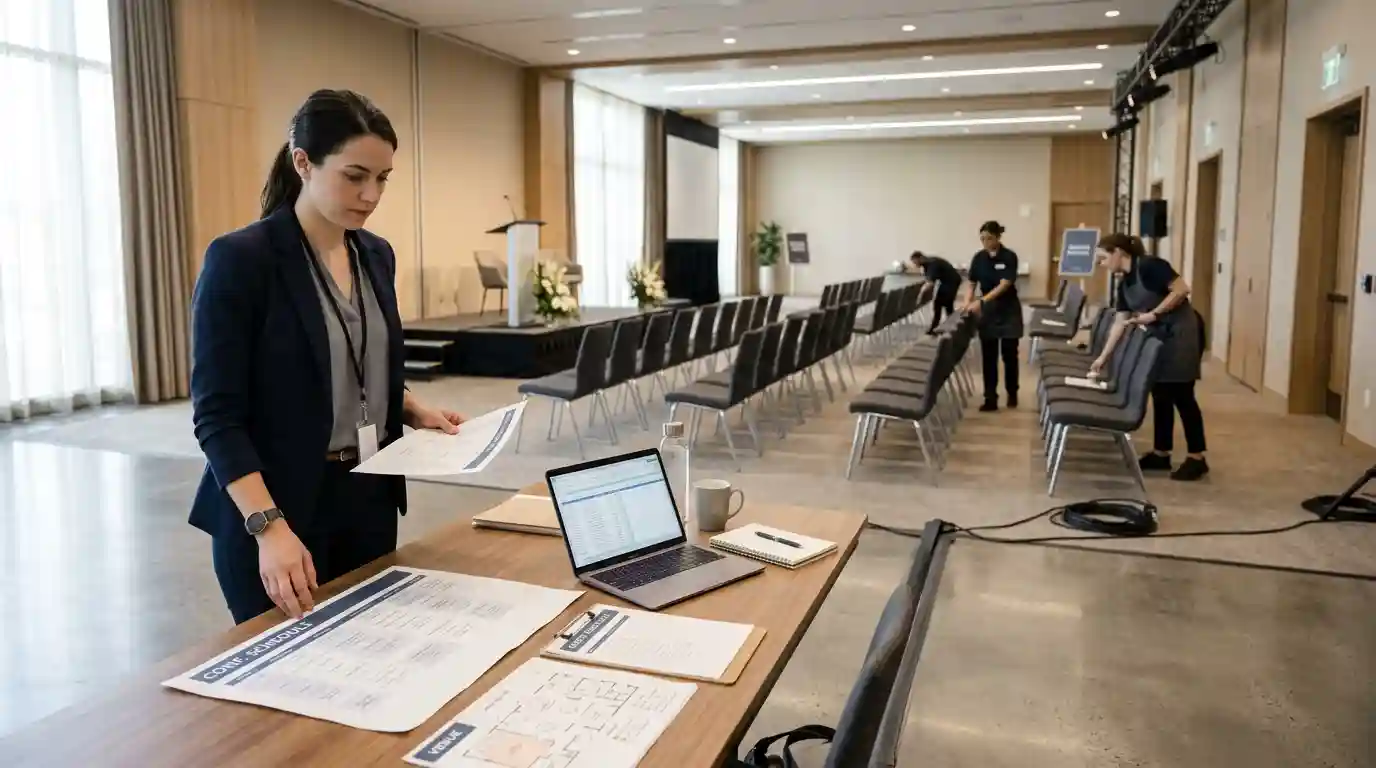
The biggest planning mistakes are often the ones people overlook: unclear responsibilities, underestimated costs, inconvenient schedules, missing equipment, and insufficient time for setup. This guide explains how to plan an event step by step, including the practical details that can make the difference between a stressful experience and a well-organised occasion.
1. Define the Purpose and Goals of Your Event
Before contacting venues or booking suppliers, decide why the event is taking place. Your purpose should guide every major decision, from the guest list and location to the programme and budget.
For example, a business networking event may focus on building professional relationships, while a fundraising event may aim to increase donations and community participation. A private celebration may prioritise guest comfort, entertainment, and memorable experiences.
Write down two or three measurable goals. These could include attracting a particular number of attendees, generating qualified business leads, raising a fundraising target, or achieving a specified level of guest satisfaction.
Clear objectives also make it easier to evaluate the results afterwards. If your event involves promoting a business, consider how it fits into your broader digital marketing strategy for small businesses.
2. Establish a Realistic Event Budget
Budgeting is one of the most important parts of event planning because costs can increase quickly when small expenses are overlooked. Before committing to bookings, estimate how much you can spend and divide that amount into practical categories.
- Venue: Rental fees, deposits, cleaning charges, and additional hours.
- Food and beverages: Catering, refreshments, service staff, and dietary requirements.
- Equipment: Microphones, speakers, screens, lighting, staging, and furniture.
- People: Event coordinators, hosts, performers, photographers, and temporary staff.
- Promotion: Invitations, printed materials, online advertising, and registration tools.
- Logistics: Transportation, parking, deliveries, accommodation, and setup.
- Contingency: A reserve for unexpected expenses.
Keep a contingency allowance of around 10–15% of the estimated budget when practical. The appropriate amount depends on the event’s complexity, supplier arrangements, and financial flexibility.
Ask suppliers for written quotations and confirm what each price includes. Taxes, overtime, delivery, equipment installation, and cancellation charges can substantially change the final amount.
If your event is intended to generate revenue, estimate ticket income, sponsorships, and other realistic income sources separately from expenses. Do not rely on unconfirmed sponsorships or optimistic attendance figures to cover essential costs.
3. Choose a Suitable Date, Time, and Venue
The right venue is not necessarily the most impressive one. It is the location that fits your objectives, audience, budget, accessibility needs, and event format.
Start by estimating attendance. Then compare venues based on capacity, location, public transport, parking, accessibility, available facilities, catering policies, and technical equipment. Ask whether the quoted capacity refers to seated guests, standing guests, or a particular room layout.
When selecting a date, check for public holidays, major local events, school schedules, industry conferences, and other commitments that could affect attendance. For events involving travelling guests, allow enough time for transport and accommodation arrangements.
Visit the venue before signing a contract whenever possible. Check entrances, restrooms, emergency exits, loading areas, electrical outlets, ventilation, and spaces for registration or refreshments. Take measurements if you need stages, exhibition stands, or special equipment.
If the event is part of a wider trip or destination experience, reviewing practical travel essentials can help you anticipate the needs of attendees and staff travelling to the location.
4. Build a Detailed Planning Timeline
Leaving everything until the final week creates unnecessary pressure. Create a timeline that works backwards from the event date, with deadlines for major decisions and smaller operational tasks.
For a medium-sized event, a planning period of several weeks to several months may be appropriate. Large conferences, weddings, and major public gatherings may require considerably more time.
- Early planning: Confirm objectives, budget, date, venue, and key suppliers.
- Development: Finalise the programme, open registration, organise catering, and arrange equipment.
- Preparation: Confirm attendance, collect supplier requirements, brief staff, and prepare signage.
- Final week: Reconfirm bookings, review the schedule, check deliveries, and distribute contact details.
- Event day: Complete setup, test equipment, brief the team, and monitor the schedule.
- After the event: Settle invoices, thank participants, collect feedback, and review performance.
Assign every task an owner and deadline. A shared checklist or project tracker can prevent responsibilities from being forgotten, particularly when several people are involved.
5. Understand Your Audience and Manage Invitations
Your audience influences the event’s atmosphere, format, programme, food, accessibility arrangements, and communication style. Think about who is attending, what they expect, and what would make the experience worthwhile for them.
Prepare a guest list and choose an appropriate invitation method. Depending on the occasion, this might include email invitations, a registration page, printed invitations, or direct communication with selected guests.
Provide the essential information clearly:
- Event date, start time, and expected finish time.
- Venue address and transport or parking information.
- Registration instructions and ticket details, where applicable.
- Dress code, age restrictions, or entry requirements, if relevant.
- Contact information for questions and accessibility requests.
Set a response deadline and monitor registrations. Send reminders at appropriate intervals and make it easy for guests to report dietary requirements or changes in attendance.
For public-facing entertainment events, clear ticket information is especially important. If your event involves a performance, you can also explore how audience experiences are presented in content about entertainment event tickets.
6. Select Reliable Vendors and Confirm Responsibilities
Event suppliers may include caterers, decorators, rental companies, audiovisual technicians, photographers, entertainers, security personnel, and transportation providers. Their reliability can directly affect the guest experience.
Compare suppliers using more than price alone. Consider their experience with similar events, communication, availability, insurance where appropriate, cancellation terms, and ability to meet your requirements.
Confirm every important arrangement in writing. Contracts or booking confirmations should explain the services provided, payment schedule, delivery and collection times, setup requirements, overtime charges, and procedures for changes or cancellations.
Give suppliers a single event contact whenever possible. This reduces confusion when several people are coordinating deliveries, room access, technical requirements, or last-minute adjustments.
For larger events, create a contact sheet containing supplier names, phone numbers, arrival times, responsibilities, and backup contacts. Share it with the people who need it, while keeping personal information appropriately protected.
7. Create a Programme That Keeps Guests Engaged
A good programme gives the event structure without making the experience feel rushed. Plan the order of activities and estimate how long each segment will take, including transitions and breaks.
For example, a corporate event might include registration, opening remarks, presentations, networking, refreshments, and closing announcements. A celebration may include guest arrival, food, speeches, entertainment, and informal social time.
Do not fill every minute. Guests may need time to move between rooms, speak with one another, use facilities, or resolve registration issues. Speakers and performers may also need additional time for preparation.
Share the schedule with presenters, suppliers, and event staff. Identify which activities can be shortened if the event runs late and which elements must happen at a specific time.
Entertainment should match the audience and occasion. Consider noise levels, age suitability, venue restrictions, and the needs of guests who prefer quieter spaces. If live music or performances are central to your plans, understanding different entertainment formats can help you make a more informed choice.
8. Plan Event Promotion and Registration
Even a carefully organised event can struggle if the intended audience does not know about it. Choose promotional channels based on where your audience is most likely to discover the event.
Depending on your goals, promotion may include email campaigns, social media, partner organisations, community groups, business networks, posters, or paid advertising. Keep the event name, date, location, benefits, and registration instructions consistent across all channels.
Prepare promotional materials early enough to give people time to make arrangements. For a business event, align the campaign with your wider digital marketing and business growth activities rather than treating event promotion as an isolated task.
Track registrations against your target. If responses are slow, review the message, audience, timing, and registration process before increasing promotional spending.
For ticketed events, explain the ticket types, prices, refund terms, and entry procedure. For free events, consider whether a registration reminder or attendance confirmation would help reduce no-shows.
9. Prepare for Risks and Unexpected Problems
One of the most overlooked parts of event planning is deciding what to do when something goes wrong. A backup plan does not guarantee that every problem can be avoided, but it helps the team respond calmly and quickly.
Identify likely risks based on the venue, audience, activities, season, and event size. Common examples include severe weather, supplier delays, technical failures, staff absences, low attendance, medical incidents, and transportation disruptions.
For each significant risk, decide who is responsible, what action should be taken, and how the team will communicate. Depending on the event, preparations may include backup microphones, an alternative indoor space, spare supplies, replacement staff, or an adjusted schedule.
Review the venue’s emergency procedures, accessible evacuation arrangements, first-aid provisions, and any applicable permits or safety requirements. Events involving crowds, temporary structures, alcohol, or specialised activities may require additional professional guidance and approvals.
Keep a contingency fund and avoid spending the entire budget before the event begins. Make sure the lead organiser can authorise reasonable emergency decisions without waiting for several layers of approval.
10. Coordinate the Event Day Carefully
On the day itself, the goal is to make the experience feel organised for guests, even when the team is handling multiple tasks behind the scenes.
Arrive early enough to inspect the venue and supervise setup. Test microphones, screens, lighting, internet connections, registration systems, and any equipment needed for presentations or performances.
Conduct a short team briefing covering the schedule, responsibilities, communication method, emergency procedures, and the person authorised to make decisions. Make sure everyone knows where to go for help.
Use a central schedule to monitor arrivals, deliveries, speaker timings, catering, and room changes. Designate someone to handle unexpected issues so that the main organiser can continue overseeing the event.
Pay attention to the guest experience throughout the day. Clear signs, approachable staff, accessible routes, clean facilities, and accurate announcements can be just as important as impressive decorations.
11. Evaluate Results After the Event
Event planning does not end when the last guest leaves. Post-event follow-up helps you understand what worked, settle outstanding responsibilities, and improve future occasions.
Begin with practical tasks: confirm that equipment has been returned, check the venue, collect supplier invoices, resolve outstanding payments, and thank speakers, sponsors, volunteers, and attendees.
Then compare the results with the goals established at the beginning. Useful measures may include attendance, registration-to-attendance rate, total expenditure, revenue, donations, audience feedback, leads generated, or engagement with follow-up communications.
Ask participants what they liked, what caused difficulty, and what they would change. Combine their feedback with observations from the planning team and suppliers.
Record the final budget, supplier performance, attendance figures, problems encountered, and recommended improvements in a short post-event report. This creates a practical reference for the next event rather than forcing the team to start from scratch.
Common Event Planning Mistakes to Avoid
Even experienced organisers can overlook important details. Watch for these common mistakes:
- Starting without clear objectives: Unclear goals make budgeting and decision-making more difficult.
- Underestimating costs: Deposits, taxes, delivery charges, overtime, and last-minute purchases can add up.
- Choosing a venue based on appearance alone: Capacity, access, facilities, and logistics matter just as much.
- Leaving responsibilities undefined: Tasks may be missed when everyone assumes someone else is handling them.
- Ignoring the attendee experience: Long queues, poor signage, and confusing instructions can undermine an otherwise good event.
- Failing to prepare alternatives: Technical issues and supplier delays are easier to manage when backup options exist.
- Skipping the post-event review: Without evaluating results, the same problems may recur.
Final Thoughts
Successful event planning comes from making clear decisions early, managing the details systematically, and preparing for situations that may not go according to plan. Start with a defined purpose, build a realistic budget, choose the right venue, establish a timeline, and communicate responsibilities clearly.
Most importantly, plan around the people attending. A well-organised event is not simply one where the schedule is followed; it is one where guests feel welcome, activities run smoothly, and the event achieves its intended purpose.
Use these steps as a practical checklist, adapt them to the size and type of your event, and record what you learn afterwards. With preparation and consistent coordination, you can reduce avoidable stress and create a more rewarding experience for everyone involved.
As you navigate the complexities of event planning, it’s essential to consider not only the logistics but also the financial structure that underpins your operations. Choosing the right business entity can significantly impact your financial management and tax obligations, particularly when dealing with various expenses associated with events. For instance, the distinction between different organizational forms, such as the benefits and drawbacks of an S corporation versus an LLC, can affect how you handle potential liabilities and profitability from events. Understanding these differences will empower you to make informed decisions that align with your overall business strategy. For an in-depth comparison of these two structures, explore the implications of S corp vs LLC to determine which is the most advantageous for your unique situation.
As you navigate the intricate landscape of event planning, it’s essential to recognize that the skills you develop in this domain can translate to various professional endeavors, including recruitment. Just as a successful event hinges on clear objectives and effective communication, crafting an enticing job posting requires a strategic approach. Understanding the nuances of your audience and articulating the role’s expectations are vital components of both processes. For instance, if you aim to attract top talent, knowing how to write a job description that resonates with potential candidates can significantly enhance your recruitment efforts. By focusing on clarity, relevance, and engagement, you not only ensure a successful event but also build a compelling narrative around your organizational needs. how to write a job description that stands out is a skill worth mastering in today’s competitive landscape.