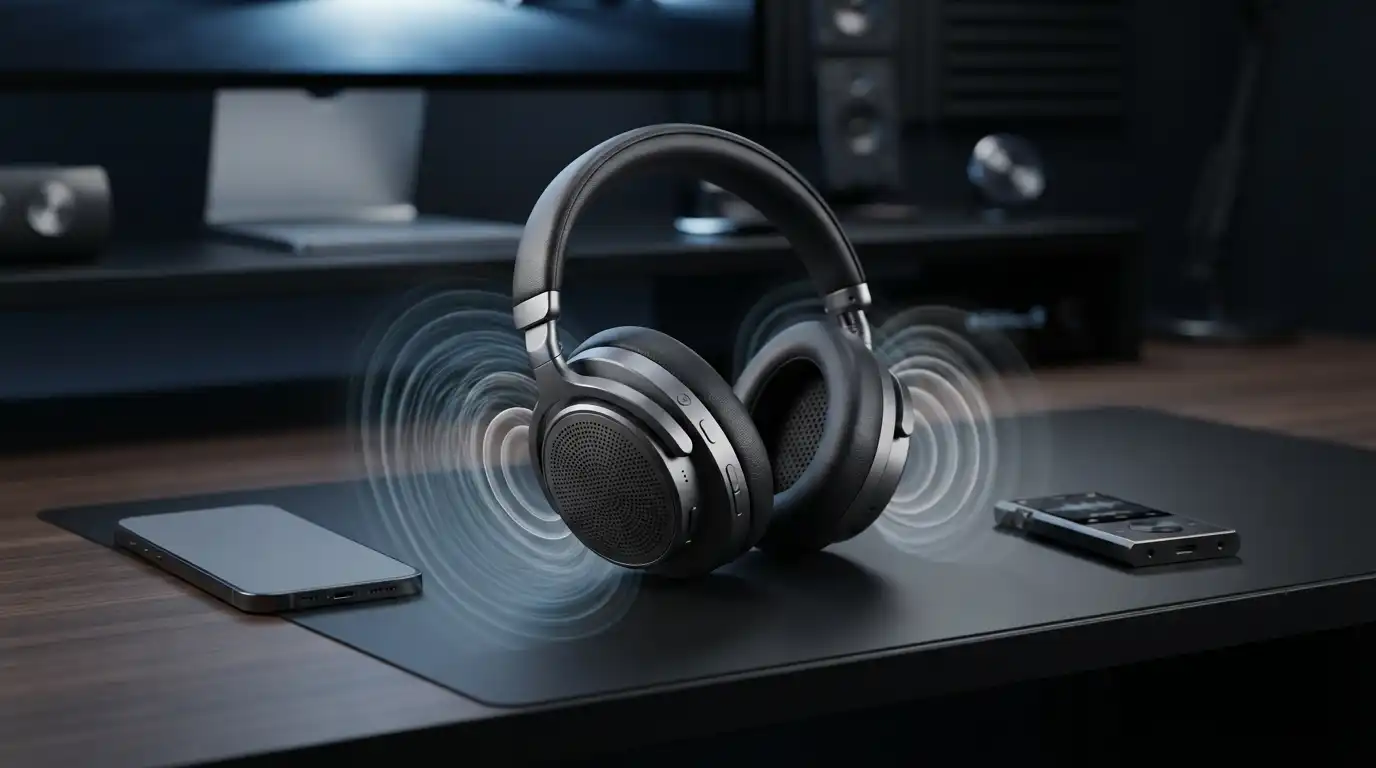
Noise-cancelling technology has changed the way people experience music, podcasts, films, games, calls, and everyday sounds. What once felt like a premium feature on a small number of headphones is now becoming an expected part of modern personal audio. As microphones, processors, wireless connectivity, and software continue to improve, noise cancellation is moving toward a more adaptive and personalized future.
The evolution of audio is also connected to broader developments in gaming technology, smart devices, artificial intelligence, and connected entertainment. Understanding where noise-cancelling technology is heading helps explain why future headphones and earbuds may do much more than simply reduce background noise.
What Is Noise-Cancelling Technology?
Noise cancellation is a technology designed to reduce unwanted ambient sound so listeners can focus more clearly on the audio they want to hear. Modern headphones commonly use microphones to detect surrounding sounds and electronic processing to produce a signal that helps counteract portions of that unwanted noise.
There are two major approaches. Passive noise isolation relies on the physical design of ear cups or ear tips to block sound. Active noise cancellation, often called ANC, uses microphones and electronic processing to reduce external noise.
The most effective headphones often combine both methods. Physical isolation handles part of the outside environment while electronic processing works on additional background noise.
How Active Noise Cancellation Works
At a basic level, ANC systems monitor the surrounding environment through microphones. A processor analyzes the incoming sound and generates a carefully controlled signal intended to reduce the perceived effect of unwanted noise.
This process happens extremely quickly. The headphones continuously react to changes in the surrounding environment rather than relying on a single fixed noise profile.
That is why modern ANC headphones can perform differently depending on whether the listener is sitting in a quiet office, traveling on an airplane, riding public transportation, or walking through a busy street.
Why Adaptive Noise Cancellation Matters
One of the most important developments in the future of audio is adaptive noise cancellation. Instead of applying the same level of cancellation all the time, adaptive systems can adjust their behavior according to environmental conditions.
A quiet workspace may require very little processing, while the steady low-frequency sound of an aircraft cabin may benefit from stronger cancellation. A busy street can present a different challenge because sounds may be unpredictable and constantly changing.
This adaptive approach is part of a broader movement toward devices that respond intelligently to their surroundings. Similar ideas are becoming increasingly common across smart home devices, connected electronics, and other consumer technology.
Artificial Intelligence Could Make Audio More Personalized
Artificial intelligence has the potential to make noise cancellation more context-aware. Instead of simply identifying sound as “noise,” future systems could become better at recognizing different types of environments and adjusting audio processing accordingly.
For example, a future pair of earbuds could distinguish between continuous transportation noise, conversations, music playing nearby, keyboard sounds, or other environmental patterns. The goal would not necessarily be to eliminate every sound but to intelligently manage which sounds should receive attention.
This direction fits into the wider development of consumer AI tools and intelligent software. As explored in AI tools and emerging digital technology, machine learning is increasingly being incorporated into everyday digital experiences.
Noise Cancellation and Spatial Audio
Noise cancellation is only one part of the future audio experience. Spatial audio is another important development, allowing compatible content to create a greater sense of direction and dimensionality.
Combining effective noise control with spatial audio could make music, movies, games, and other forms of entertainment feel more immersive. Instead of simply hearing sound from left and right channels, listeners can experience a more expansive sound field.
This could be particularly useful for gaming. As gaming experiences become more sophisticated, audio can play an increasingly important role in creating environmental awareness and immersion. Readers interested in the broader evolution of gaming can also explore gaming experiences and digital entertainment.
Wireless Connectivity Is Changing the Listening Experience
Modern personal audio is increasingly wireless. Bluetooth connectivity allows headphones and earbuds to connect with smartphones, computers, tablets, televisions, and other compatible devices without physical cables.
As wireless connectivity improves, users increasingly expect reliable connections, low latency, efficient battery consumption, and easy switching between devices.
The broader importance of connectivity can also be seen in areas such as gaming hardware. For example, reliable wireless networking is an important part of the experience discussed in this guide to the best PC Wi-Fi cards for gaming.
Better Audio Processing in Smaller Devices
Another major trend is miniaturization. Wireless earbuds have become remarkably small while still offering microphones, processors, batteries, wireless radios, and increasingly sophisticated audio features.
Future improvements may allow even more processing capability to fit into compact devices. Smaller components and more efficient processors could support better noise management without requiring significantly larger hardware.
This trend reflects a larger shift across consumer technology, where powerful digital capabilities are increasingly being integrated into compact everyday products. Broader examples can be found in discussions about modern technology solutions and digital innovation.
Battery Life Remains a Major Challenge
Advanced audio processing requires energy, and battery life remains one of the biggest practical considerations for wireless headphones and earbuds.
Manufacturers therefore have to balance processing power with efficiency. Stronger noise cancellation, wireless connectivity, voice features, spatial audio, and other functions can all increase energy consumption.
Future progress will likely depend not only on larger batteries but also on more efficient processors, improved power management, and software that intelligently activates features only when necessary.
Voice Features Could Become More Integrated
Microphones already allow many headphones to handle phone calls and voice commands. Future audio devices could make these capabilities more deeply integrated into the listening experience.
A headset could potentially manage music, calls, notifications, environmental awareness, and voice interactions without requiring the listener to constantly reach for a smartphone.
This type of integration reflects the broader development of connected digital ecosystems, where devices increasingly communicate with one another. Related developments can be explored through technology-driven business solutions and modern software and developer technology.
Personalized Sound Profiles
The future of audio may also become increasingly personalized. People do not hear sound in exactly the same way, and listeners have different preferences for bass, vocals, treble, volume, and overall balance.
Future headphones could use software-based profiles to create more individualized listening experiences. Instead of choosing from a few basic equalizer settings, users may be able to create detailed profiles based on their preferences, environment, and listening habits.
Personalization could also extend to different activities. A listener might use one profile for music, another for podcasts, another for gaming, and another for calls.
Noise Cancellation Beyond Headphones
Although headphones and earbuds are the most familiar applications, noise-control technology can be useful in other environments. Cars, offices, smart devices, entertainment systems, and communication equipment can all benefit from sophisticated audio processing.
Connected homes are an especially interesting area. As smart devices become more integrated, audio systems may communicate with other household technologies to create more responsive environments.
The growing relationship between connected devices and everyday living is also reflected in broader smart-home developments and modern home technology.
Audio and the Future of Entertainment
Audio technology is becoming increasingly important across entertainment. Music, streaming video, gaming, virtual experiences, podcasts, and interactive media all depend on high-quality sound.
The relationship between sound and entertainment is explored in the broader evolution of music and entertainment. As entertainment platforms become more immersive, audio quality can become an important part of how audiences experience digital content.
Gaming is another area where immersive sound can have a significant role. Developments in digital gaming experiences show how technology continues to combine visual and audio elements to create more interactive environments.
Smarter Noise Management Instead of Complete Silence
The future of noise cancellation may not be about creating absolute silence. In many situations, completely blocking the outside world is neither practical nor desirable.
Instead, future systems may focus on selective awareness. Users could reduce distracting background noise while continuing to hear important sounds such as announcements, alarms, conversations, or nearby activity.
This approach could make headphones more useful in everyday environments because listeners would have greater control over how much of the outside world reaches them.
Sustainability Could Influence Future Audio Hardware
As consumer electronics become more widespread, sustainability is another issue that manufacturers must consider. Longer-lasting products, repairability, efficient components, responsible materials, and improved battery technology can all influence the environmental footprint of personal audio devices.
The broader technology industry is also exploring ways to make products and production processes more efficient. Similar discussions can be found in areas such as eco-friendly product development.
What Could the Next Generation of Headphones Offer?
Future headphones and earbuds are likely to combine several technologies rather than relying on noise cancellation alone. A single device could offer adaptive ANC, personalized sound profiles, spatial audio, improved voice processing, wireless connectivity, environmental awareness, and intelligent software.
These developments are part of a much larger transformation in consumer technology. The evolution of gaming and technology trends, for example, demonstrates how hardware and software increasingly work together rather than operating as separate components.
Audio products could follow the same path. The physical headphones may remain familiar, but the software and intelligence inside them could become substantially more sophisticated.
How Consumers May Choose Audio Devices in the Future
As features increase, choosing headphones may become less about a single specification and more about the overall experience. Battery life, comfort, microphone quality, connectivity, software support, noise cancellation, sound personalization, and device compatibility can all matter.
Consumers may also increasingly consider how well a product fits into their wider digital ecosystem. Someone who uses multiple smart devices may value seamless connectivity, while a gamer may prioritize low latency and positional audio.
The same principle applies across digital products, where users increasingly expect technology to work smoothly across different platforms and services. Broader technology ecosystems continue to evolve alongside developments in digital transformation.
The Future of Audio Is Adaptive and Connected
Noise-cancelling technology has already transformed personal listening, but its evolution is far from complete. Better microphones, faster processors, improved wireless standards, artificial intelligence, spatial audio, and personalized sound profiles could make future audio devices significantly more responsive.
The biggest change may be the shift from headphones as simple playback devices toward intelligent audio companions. Instead of merely playing sound, future devices could understand their surroundings, adapt to different situations, communicate with connected devices, and give listeners much greater control over what they hear.
As audio becomes increasingly connected to the wider technology ecosystem, the future of listening will likely be defined not by one breakthrough but by the combination of many smaller innovations working together.