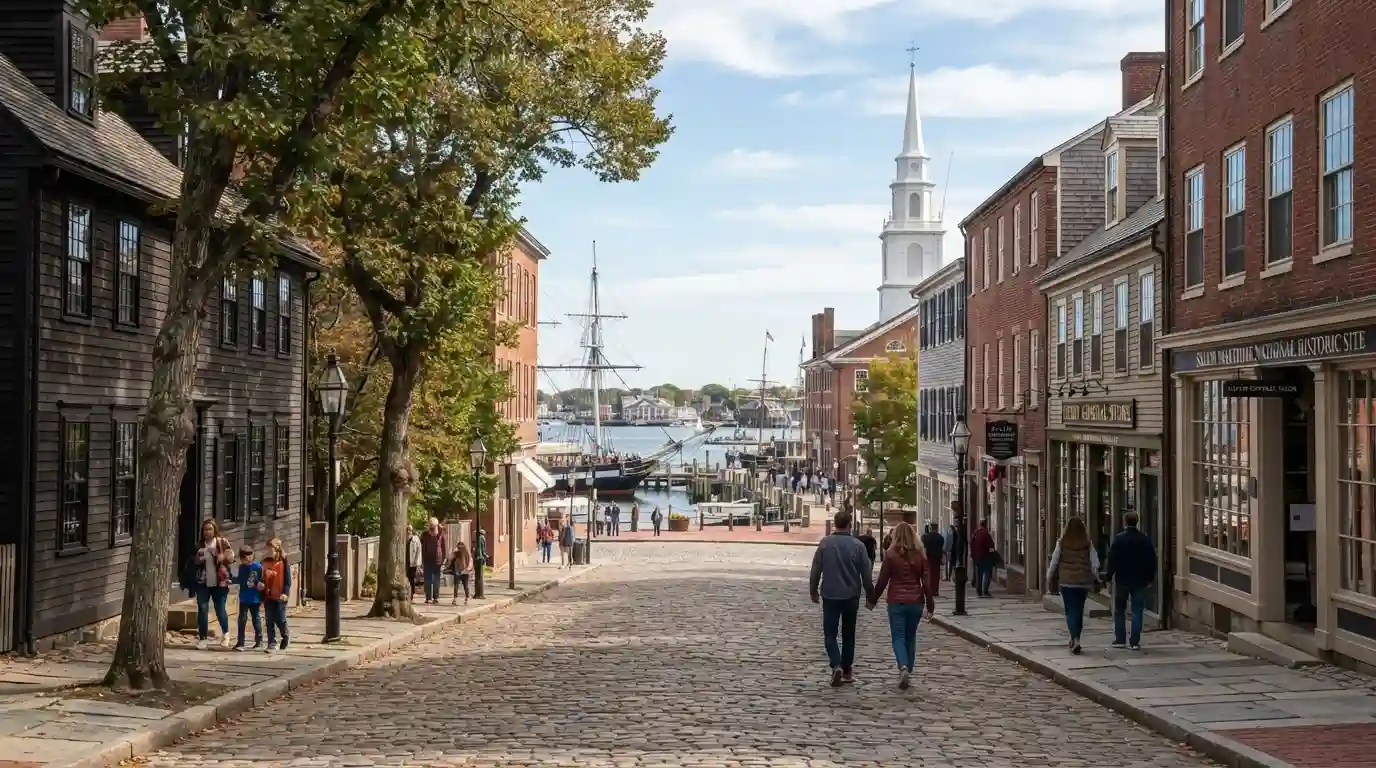
Salem, Massachusetts, is a destination where colonial history, maritime heritage, historic architecture, museums, literature, and the legacy of the 1692 witch trials come together in a compact and walkable city. While Salem is especially famous for its witch-trial history and October celebrations, there is much more to discover throughout the year.
Whether you are planning a weekend getaway, a family trip, a history-focused vacation, or a fall visit, this guide highlights the places and experiences that can help you make the most of your time in Salem.
Why Visit Salem, Massachusetts?
Salem offers an unusual combination of history and modern tourism. Its downtown area is filled with preserved buildings, museums, independent shops, restaurants, walking routes, and attractions that can be explored without spending all day in a car.
The city is also part of a wider New England travel itinerary. If you are planning a broader trip, you may also enjoy exploring destinations featured in our guide to places to visit near NYC, discovering places to visit in New England during fall, or building a larger itinerary around the best places to visit in the Midwest.
1. Salem Witch Museum
The Salem Witch Museum is one of the most recognizable attractions associated with the city’s history. A visit provides an opportunity to learn about the Salem witch trials of 1692 and understand how fear, accusations, social tensions, and legal proceedings shaped one of the most studied episodes in early American history.
For first-time visitors interested in the historical background behind Salem’s identity, the museum can provide useful context before exploring other historic locations around downtown.
2. Peabody Essex Museum
The Peabody Essex Museum is a major cultural attraction in the heart of Salem. Its collections and exhibitions extend well beyond the city’s witch-trial history, covering art, culture, design, maritime heritage, and international connections.
The museum is particularly useful for travelers who want a broader understanding of Salem and its relationship with global trade and culture. Its historic houses and architectural attractions also make it an important stop for visitors interested in historic New England homes.
If museums and cultural attractions are part of your travel plans, you can compare this experience with other destinations featured in our guide to nerdy places to visit in the US.
3. Salem Maritime National Historical Park
Salem’s history is closely connected to the sea, and Salem Maritime National Historical Park is one of the best places to experience that side of the city. The waterfront area features historic structures, wharves, gardens, and maritime landmarks.
Walking along the waterfront gives visitors a different perspective on Salem. Instead of focusing only on the city’s colonial and witch-trial stories, travelers can see how shipping and international commerce influenced the community.
Visitors interested in waterfront destinations may also want to explore our guide to places to visit in the Gulf of Mexico when planning future coastal travel.
4. The House of the Seven Gables
The House of the Seven Gables is one of Salem’s most recognizable historic homes. The property is strongly associated with Nathaniel Hawthorne’s famous novel and offers visitors an opportunity to explore Salem’s architectural and literary heritage.
The attraction is especially appealing to travelers who enjoy historic houses, American literature, and stories connected to the development of New England communities.
For travelers who enjoy combining historic buildings with cultural exploration, Salem fits naturally into a wider New England itinerary alongside other destinations highlighted in our guide to places to visit in winter.
5. The Witch House
The Witch House is another important historic stop for anyone researching the Salem witch trials. The building is associated with Judge Jonathan Corwin, who was involved in the 1692 proceedings.
Unlike attractions that focus primarily on storytelling or entertainment, historic sites such as the Witch House help visitors connect the events of 1692 with the physical environment in which Salem’s residents lived.
History enthusiasts may also enjoy exploring the broader range of cultural destinations included in our guide to amazing places to visit in Europe when planning future historical trips.
6. Salem Common
Salem Common provides a welcome open space near the city’s historic core. The green area is useful for travelers who want to take a break between museums, historic homes, walking tours, and downtown attractions.
It can also be a pleasant location for a relaxed stroll, especially when you want to experience Salem at a slower pace rather than moving from attraction to attraction.
7. Derby Wharf and Derby Wharf Light Station
Derby Wharf extends into Salem Harbor and offers one of the city’s most memorable waterfront walks. The historic setting provides views across the harbor while connecting visitors with Salem’s maritime past.
The Derby Wharf Light Station adds another distinctive landmark to the waterfront. The area is particularly attractive for travelers who enjoy photography, walking, maritime history, and open harbor views.
If scenic destinations are part of your travel interests, you can also explore our guide to natural places to visit in California for ideas farther west.
8. Chestnut Street
Chestnut Street is one of the places to explore when you want to appreciate Salem’s historic architecture. The street is lined with impressive homes and offers a glimpse into the wealth and architectural styles associated with Salem’s past.
A walk through the neighborhood can complement museum visits because it allows travelers to see historic architecture in its original urban setting rather than only inside a museum.
Visitors who enjoy architecture and distinctive neighborhoods may also want to explore Lancaster, Pennsylvania and other historic American destinations when planning a longer trip.
9. Ropes Mansion and Garden
Ropes Mansion is another notable historic property associated with Salem’s architectural heritage. The house and its surrounding garden offer visitors a quieter experience compared with some of the city’s busier attractions.
The garden is especially appealing during warmer months, while the historic character of the property makes it worthwhile for travelers interested in traditional New England architecture.
10. Salem’s Historic Downtown
One of the easiest ways to experience Salem is simply to explore its downtown streets on foot. The central area brings together historic buildings, museums, shops, restaurants, public spaces, and attractions within a relatively compact area.
Walking also allows visitors to discover smaller details that can be missed when traveling only between major attractions. Historic façades, old streets, local businesses, and public art all contribute to Salem’s atmosphere.
If you enjoy exploring cities on foot, consider adding destinations such as 5th Avenue in New York or places near Central Park to a future itinerary.
11. Pioneer Village
Pioneer Village offers another way to explore early colonial life. The living-history setting provides insight into how a seventeenth-century settlement could have looked and functioned.
It is a useful addition for travelers who want their Salem visit to extend beyond the famous witch-trial narrative and explore the city’s earlier colonial history.
12. Old Burying Point Cemetery
Old Burying Point Cemetery is one of Salem’s historic burial grounds and provides another connection to the city’s early history. Historic cemeteries can reveal information about the people, families, and social structures that shaped a community over generations.
Visitors should approach the site respectfully and treat it as a historic place rather than simply a photographic attraction.
13. Salem Willows
For a change of pace, Salem Willows offers a more relaxed coastal experience. The area is associated with recreation, waterfront views, and seasonal activities, making it a useful option when you want some time away from the concentration of historic attractions downtown.
Families and travelers looking for outdoor experiences can include Salem Willows alongside museums and historic sites to create a more balanced itinerary.
If family travel is your focus, our guide to places to visit in the United States with family provides additional destination ideas.
14. Essex Street Pedestrian Mall
Essex Street is an important part of Salem’s downtown visitor experience. The pedestrian-oriented area makes it easy to browse local businesses, stop for food, and continue exploring nearby attractions.
Because many Salem attractions are relatively close together, travelers can combine Essex Street with museums, historic homes, and walking routes without needing to drive between every stop.
15. Salem Heritage Trail
The Salem Heritage Trail is useful for visitors who want a self-guided way to understand the city’s historic landscape. Following a walking route can help organize a visit and connect individual landmarks into a larger story.
This approach is especially helpful if you have limited time and want to see several major areas of Salem during a single day.
16. Salem’s Waterfront
Salem’s waterfront deserves time beyond a quick visit to a single attraction. The harbor, historic wharves, maritime buildings, and walking areas provide a different atmosphere from the city’s inland streets.
A waterfront walk can be particularly enjoyable later in the day when you want to slow down after visiting museums and historic properties.
Travelers who enjoy coastal scenery can also look at our guide to the best coastal places to visit in Scotland for a very different international experience.
17. Salem’s Historic Architecture
Salem’s architecture is itself an attraction. The city contains examples of several historic architectural periods, making it worthwhile to pay attention to buildings while walking between major destinations.
Historic houses, churches, commercial buildings, gardens, and residential streets collectively show how Salem changed over time. Travelers interested in architecture can turn an ordinary walk into an informal architectural tour.
18. Salem’s Local Shops and Restaurants
Exploring Salem is not only about museums and historic sites. Local shops and restaurants are an important part of the visitor experience, particularly around the downtown and waterfront areas.
Taking time for a meal or browsing local businesses can make a day in Salem feel less rushed. It also provides an opportunity to experience the modern city alongside its historic identity.
If culinary travel is one of your interests, you can expand your future travel plans with our guides to Chetek restaurants and restaurants in Warren.
Best Time to Visit Salem, MA
Salem can be visited throughout the year, but the experience changes significantly with the seasons. Fall is especially associated with Salem because of Halloween events and the city’s strong connection to witch-trial history. October can also bring larger crowds, so travelers who prefer a quieter experience may consider another season.
Spring and summer are useful for visitors who want more opportunities for outdoor walks, gardens, waterfront exploration, and seasonal activities. Winter can provide a calmer atmosphere and a different view of Salem’s historic streets.
If you enjoy seasonal travel, you may also want to explore our guides to places to visit in Tennessee during fall, Vermont in winter, and West Coast destinations in winter.
How Many Days Do You Need in Salem?
A one-day trip can cover several of Salem’s central attractions, especially if you organize your route around downtown, the historic waterfront, and nearby museums. However, spending two days allows more time for historic houses, museums, shopping, restaurants, and slower walks through the city.
If you are visiting during a particularly busy period, allowing extra time can also make the experience more comfortable. A longer stay gives you more flexibility if attractions have timed admission or if you want to explore neighborhoods beyond the main tourist area.
Tips for Exploring Salem
- Plan your major attractions first: Identify museums and historic properties you most want to see before arriving.
- Wear comfortable shoes: Walking is one of the best ways to experience Salem.
- Allow time for the waterfront: Salem’s maritime heritage is an important part of the city’s story.
- Expect seasonal differences: October can have a very different atmosphere from winter or early spring.
- Mix indoor and outdoor attractions: Combining museums with parks, historic streets, and waterfront walks creates a more balanced day.
- Respect historic sites: Cemeteries, memorials, and preserved properties should be treated as places of historical significance.
- Check attraction schedules: Opening days, tours, and seasonal programs can change throughout the year.
Frequently Asked Questions About Salem, MA
What is Salem, Massachusetts, best known for?
Salem is best known for the 1692 witch trials, but the city also has a significant maritime history, historic architecture, museums, literary connections, and a long relationship with international trade.
Is Salem worth visiting outside October?
Yes. Salem has historic houses, museums, waterfront attractions, gardens, shops, restaurants, and cultural activities that can be enjoyed throughout the year. Visiting outside October can also provide a different atmosphere.
Can you explore Salem without a car?
Much of central Salem is convenient to explore on foot. A walking-based itinerary can connect several museums, historic sites, shops, restaurants, and waterfront attractions.
How long should you spend in Salem?
One full day can cover several major attractions, while two days allow a more relaxed visit with additional museums, historic homes, waterfront time, shopping, and dining.
What should first-time visitors see in Salem?
First-time visitors can build an itinerary around the city’s historic downtown, Salem Witch Museum, Peabody Essex Museum, Salem Maritime National Historical Park, House of the Seven Gables, Witch House, and waterfront.
Final Thoughts
The top places to visit in Salem MA extend well beyond the city’s famous witch-trial attractions. Salem’s historic homes, museums, maritime landmarks, waterfront, architecture, gardens, and walkable downtown create a destination with several different sides to explore.
For a first visit, combining major historical attractions with time spent walking through the city’s streets and waterfront is a practical way to understand what makes Salem distinctive. Whether you visit during the colorful fall season or choose a quieter time of year, Salem offers plenty of opportunities to connect with New England history while enjoying a modern coastal city