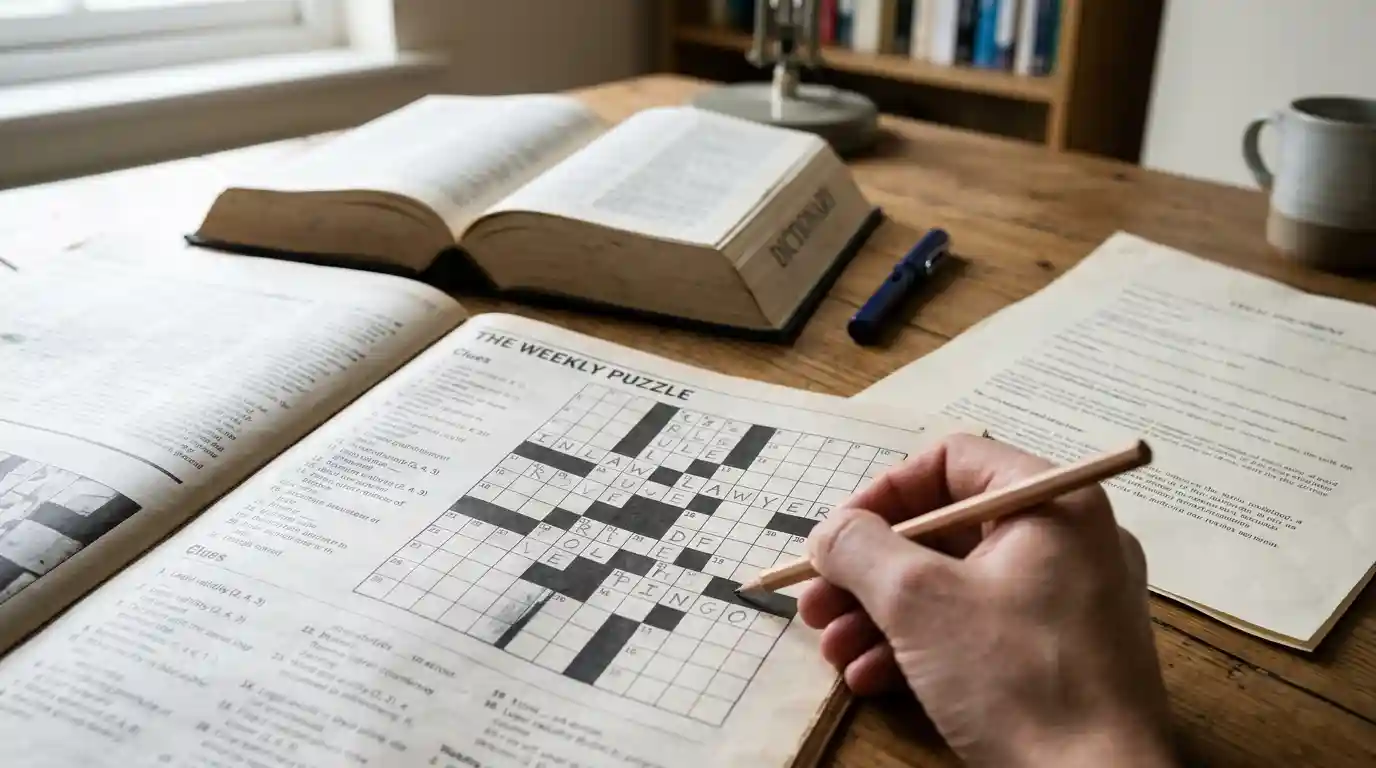
Trying to solve a legal validity crossword clue? The answer usually relates to legality, legitimacy, authenticity, or whether something is officially recognised as valid. However, the correct solution depends on the exact clue wording, the number of letters required, and the letters already filled into the puzzle.
Words such as legality, validity, legitimacy, and valid may be useful starting points, but they are not interchangeable in every crossword. Use the meaning of the clue and the available letter pattern to identify the best fit.
What Is the Answer to a Legal Validity Crossword Clue?
There is no single answer that fits every crossword using this wording. The puzzle’s letter count and precise phrasing are essential to finding the intended solution.
- Legality: Whether something conforms to the law.
- Validity: The state of being valid, sound, or legally acceptable in the relevant context.
- Legitimacy: The quality of being lawful, genuine, or properly authorised.
- Valid: An adjective describing something that meets the relevant requirements.
- Binding: Describes an agreement or decision that imposes an obligation under the applicable rules.
- Ratified: Formally approved or confirmed, often in relation to an agreement or decision.
- Authenticity: The quality of being genuine or what something claims to be.
These terms have different meanings and lengths. For example, “legality” has eight letters, “validity” has eight, “valid” has five, and “binding” has seven. Match the definition to the available spaces before selecting an answer.
How to Find the Correct Crossword Answer
1. Count the Available Letters
Start by checking the number of squares in the answer. A clue requiring five letters rules out longer possibilities such as “legality” and “validity.” This simple step can eliminate many unsuitable options.
Remember that the number of letters is only a constraint, not proof that a particular word is correct. Several words can have the same length while expressing different meanings.
2. Examine the Exact Clue Wording
Pay attention to whether the clue asks for a noun, adjective, or action. “Legal validity” may point towards a concept such as legality or validity, while “legally acceptable” may call for an adjective such as valid.
Crossword clues can also use indirect definitions, abbreviations, wordplay, or references to a particular subject. Read the entire clue rather than focusing on the word “legal” alone.
3. Use Crossing Letters
Fill in answers you already know and use their intersecting letters to narrow down the possibilities. If a candidate answer conflicts with a confirmed crossing word, reconsider the candidate or check whether the crossing answer is correct.
For instance, a pattern such as V-A-L-I-D can help identify “valid” when both the clue meaning and letter count support it. Avoid choosing a word solely because a few letters match.
4. Consider Synonyms Carefully
Synonyms can help generate possible answers, but legal terminology requires precision. “Valid,” “binding,” “authentic,” and “legal” describe different qualities. A genuine document is not automatically enforceable, and an agreement’s enforceability may depend on the applicable law and circumstances.
For another word-solving challenge, explore this egotistic entertainer crossword clue and compare how clue wording changes the likely answer.
5. Check the Grammar
The grammatical structure of the clue can provide another useful hint. A clue asking for a state or concept will often require a noun, whereas a clue describing something may require an adjective or past participle.
For example, “the quality of being legally acceptable” suggests a noun, while “legally acceptable” suggests an adjective. Always verify the grammar against the puzzle’s answer pattern.
Understanding Legal Validity in Plain English
Outside crossword puzzles, legal validity concerns whether an act, document, agreement, or decision satisfies the requirements that make it legally effective in a particular context.
The exact requirements vary according to the relevant jurisdiction and subject. Depending on the situation, factors may include authority, consent, capacity, required formalities, and compliance with applicable law. A document can appear authentic without necessarily being legally valid or enforceable.
This distinction matters when interpreting clues that use words such as “lawful,” “binding,” “official,” or “authorised.” These terms overlap in everyday conversation but do not always have the same legal meaning.
Common Mistakes When Solving Legal Validity Clues
- Ignoring the letter count: A possible synonym is not useful if it cannot fit the grid.
- Confusing related terms: Legality, validity, authenticity, and enforceability are not identical concepts.
- Overlooking crossing letters: Intersections provide valuable evidence for or against an answer.
- Assuming there is only one universal answer: Different crossword publishers can use similar wording for different solutions.
- Forcing an answer too early: Keep more than one candidate until the clue and crossing letters support a clear choice.
- Overlooking wordplay: A clue may require a synonym, abbreviation, or another form of wordplay rather than a direct definition.
Related Legal and Word-Puzzle Topics
Exploring related clues can help you become more comfortable with definitions, synonyms, and the way crossword setters use language. These Lumepost articles offer additional reading on related word puzzles, legal terminology, and reasoning:
- Sports venues crossword clue — practise interpreting a clue that points towards a category of places.
- Are Groms street legal? — explore a question involving road legality and applicable rules.
- Maryland legal tint limits — see how legal requirements can depend on a specific jurisdiction.
- Education law specialists — learn about legal issues in an educational setting.
- Legal validity crossword clue — revisit the topic and review the possible meanings.
Frequently Asked Questions
What is the most likely answer to a legal validity crossword clue?
“Legality” and “validity” are natural starting points when the clue asks about legal validity. However, neither is guaranteed to be the intended answer. Check the exact wording, required letter count, and crossing letters.
Can “valid” be an answer to a legal validity clue?
Yes, if the clue calls for an adjective and the answer length fits. “Valid” has five letters and can describe something that meets the relevant legal or formal requirements.
What is the difference between legality and validity?
Legality generally concerns conformity with the law. Validity concerns whether something meets the requirements necessary to be recognised as effective or acceptable in the relevant context. Their precise meanings depend on how the terms are used.
How can crossing letters help solve this clue?
Crossing letters reduce the number of possible answers. Compare the known letters with candidate words and eliminate options that do not fit the grid or the clue’s meaning.
Why might different websites give different answers?
The wording may be incomplete, the crossword may have a different letter count, or the clue may come from a different puzzle edition. Some websites also list possible synonyms rather than a verified answer for a specific grid.
What should I do if none of the suggested words fits?
Recheck the clue, count the squares, and review the intersecting answers. If the solution remains unclear, use the full clue and its letter pattern to narrow the options instead of forcing a guess.
Final Thoughts
Solving a legal validity crossword clue becomes easier when you combine meaning, grammar, letter count, and crossing letters. Start with candidates such as “legality,” “validity,” or “valid,” but treat them as possibilities rather than confirmed answers until they fit the complete puzzle.
The most reliable approach is to let the clue and grid guide your choice. Careful attention to wording will help you solve this clue and approach other vocabulary-based crossword challenges with greater confidence.