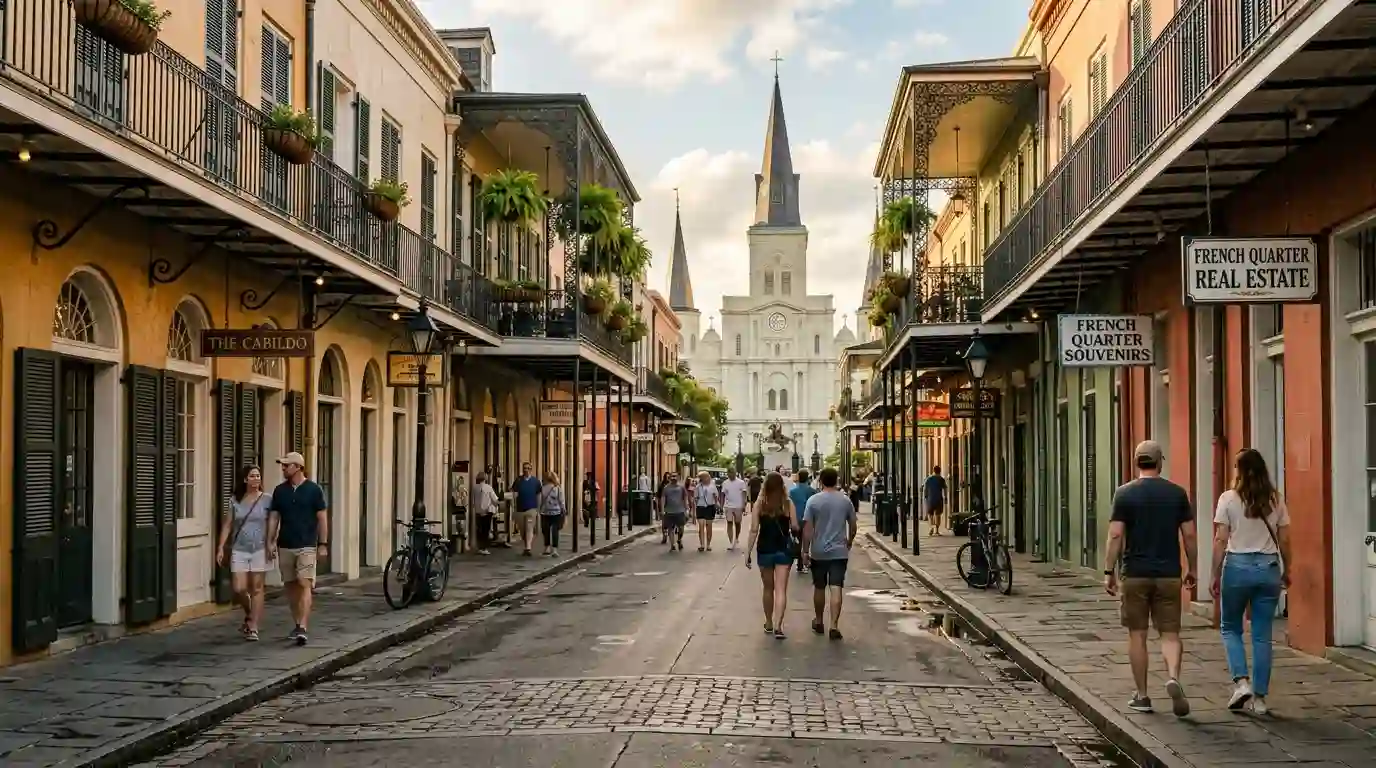
New Orleans, Louisiana, is a destination known for its distinctive music, historic neighborhoods, Creole and Cajun food, colorful festivals, and vibrant cultural traditions. From the architecture of the French Quarter to the peaceful green spaces of City Park, the city offers experiences for history enthusiasts, families, couples, and first-time visitors.
If you are wondering what places to visit in New Orleans, planning your itinerary around its historic landmarks, live music venues, museums, waterfront areas, and local food experiences is a great place to start. These attractions showcase different sides of the city while helping you make the most of your trip.
1. Explore the French Quarter
The French Quarter is one of New Orleans’ most recognizable neighborhoods. Its historic buildings, wrought-iron balconies, lively streets, courtyards, and distinctive architecture create an atmosphere that reflects the city’s French, Spanish, African, and Creole influences.
Walk along Royal Street to browse art galleries and antique shops, admire the architecture on quieter residential streets, and explore the area’s restaurants and historic landmarks. Bourbon Street is known for nightlife, while other parts of the neighborhood offer a more relaxed experience during the day.
Allow several hours to explore the district on foot. Comfortable shoes are useful because many of its most interesting details are best discovered by walking.
2. Visit Jackson Square
Jackson Square is a historic public space in the heart of the French Quarter. Artists, street performers, visitors, and local residents contribute to its lively atmosphere. The square is also an excellent place to admire the surrounding architecture and take photographs.
Spend time viewing the historic buildings around the square, including the St. Louis Cathedral. Nearby streets contain cafés, shops, and opportunities to learn more about New Orleans’ history. Visiting earlier in the day can provide a calmer experience before the busiest sightseeing hours.
3. Admire St. Louis Cathedral
St. Louis Cathedral is one of the city’s most prominent architectural landmarks. Its distinctive façade and position overlooking Jackson Square make it an important stop for visitors interested in history, architecture, and religious heritage.
Take time to appreciate the exterior and, when the building is open to visitors, explore the interior respectfully. Remember that it remains an active place of worship, so services and religious activities may affect sightseeing access.
4. Experience the Music on Frenchmen Street
Frenchmen Street, in the Faubourg Marigny neighborhood, is a popular destination for live music. Jazz, blues, funk, and other musical styles can be heard at venues throughout the area, giving visitors an opportunity to experience the city’s musical culture.
Visit in the evening to discover performances and enjoy the surrounding restaurants and bars. Individual venues have their own schedules, admission policies, and age restrictions, so check the details before making plans.
If live music is a priority, consider choosing accommodation within convenient reach of the French Quarter or Faubourg Marigny. This can make returning after an evening out easier.
5. Discover the Garden District
The Garden District offers a different atmosphere from the busy French Quarter. This historic neighborhood is known for grand homes, landscaped gardens, mature trees, and architectural styles that include Greek Revival and Victorian influences.
Walking through its residential streets provides an opportunity to appreciate the city’s historic character at a slower pace. The area is particularly appealing to architecture enthusiasts and travelers who enjoy photography.
Remember that many homes are privately owned. Admire their exterior features from public sidewalks and respect residents’ privacy while exploring the neighborhood.
6. Spend Time at City Park
City Park is one of New Orleans’ largest green spaces and a welcome break from the urban sightseeing circuit. Its oak trees, walking paths, gardens, and recreational areas make it suitable for families, couples, and solo travelers.
Depending on your interests, you can enjoy a leisurely walk, spend time outdoors, or visit attractions located within the park, including the New Orleans Museum of Art and the Besthoff Sculpture Garden.
Because the park is extensive, identify the attractions you want to see before arriving. This will help you plan your time without rushing between different areas.
7. Visit the New Orleans Museum of Art
The New Orleans Museum of Art, located in City Park, presents collections spanning a range of artistic periods and cultures. It is an excellent choice for visitors who want to balance outdoor exploration with an indoor cultural experience.
Art lovers can explore the museum’s exhibitions and collections, while nearby park attractions provide opportunities to continue the visit outdoors. Check current exhibition information, opening hours, and admission details before your trip.
8. Explore the Sydney and Walda Besthoff Sculpture Garden
The Besthoff Sculpture Garden, associated with the New Orleans Museum of Art, combines contemporary sculpture with landscaped outdoor surroundings. Paths wind among trees, water features, and artworks, creating a peaceful environment for a relaxed visit.
The garden is especially appealing to visitors who enjoy art but prefer exploring it outside a traditional gallery. Combine it with City Park and the museum to make the most of your time in this part of New Orleans.
9. Learn at The National WWII Museum
The National WWII Museum is a major attraction for visitors interested in military history and the experiences of people during the Second World War. Its exhibitions use artifacts, personal stories, photographs, and multimedia displays to explain the conflict and its wider impact.
Set aside several hours if you want to explore the museum in depth. Travelers with limited time should review the available exhibitions in advance and prioritize the areas that interest them most.
The museum is also a useful indoor activity during very hot weather or rainy conditions. Verify current admission arrangements and exhibit availability before visiting.
10. Discover Mardi Gras World
Mardi Gras World offers a closer look at the creative work behind New Orleans’ famous Carnival celebrations. Visitors can learn about parade traditions and see the colorful floats, sculptures, and artistic elements associated with Mardi Gras.
This attraction can be especially enjoyable for families and travelers visiting outside the Carnival season who still want to understand the city’s festival culture.
Before your visit, check tour availability and operating arrangements. If you are traveling during Mardi Gras, allow additional time for traffic, street closures, and event-related crowds.
11. Enjoy a Traditional New Orleans Food Experience
Food is an essential part of visiting New Orleans. Local menus may feature gumbo, jambalaya, red beans and rice, po’boys, crawfish dishes when in season, and beignets. The city’s culinary traditions reflect a mixture of cultural influences developed over generations.
Café du Monde is a well-known stop for beignets and café au lait. You can also explore independent restaurants and neighborhood cafés to discover different interpretations of local favorites.
Travelers with dietary restrictions should confirm ingredients and preparation methods directly with restaurants. Popular establishments can be busy at peak times, so consider flexible meal plans.
12. Experience Preservation Hall
Preservation Hall is closely associated with traditional New Orleans jazz. Its intimate performance setting provides an opportunity to hear musicians perform a style of music deeply connected to the city’s cultural identity.
Check the current performance calendar and seating arrangements before visiting. Because performances can be popular and the venue is intimate, planning ahead is helpful, particularly for evening visits and busy travel periods.
13. Walk Along the Mississippi Riverfront
The Mississippi River is central to New Orleans’ history, trade, and development. Exploring the riverfront offers a chance to see passing vessels, enjoy views of the water, and experience a different perspective on the city.
Consider walking along the Moonwalk near the French Quarter or exploring the riverfront around Woldenberg Park. These areas can be pleasant for a morning stroll or a break between visits to nearby attractions.
Riverfront conditions and available activities can vary, so check local information if you are planning a specific excursion or boat trip.
14. Visit Crescent Park
Crescent Park is a waterfront green space in the Bywater area, offering walking paths, open spaces, and views of the Mississippi River. Its location away from some of the busiest tourist streets makes it an appealing choice for visitors who want a quieter outdoor experience.
The park is well suited to a relaxed walk, photography, or a break during a neighborhood exploration. You can combine it with a visit to nearby Bywater streets to experience another side of New Orleans beyond its best-known historic district.
15. Explore Bayou St. John and the Surrounding Area
Bayou St. John provides a scenic setting for a slower-paced outing. The waterway and surrounding neighborhood offer opportunities for walking, enjoying outdoor views, and discovering residential areas that feel different from the central tourist districts.
Depending on your itinerary, you can combine the area with City Park or other nearby attractions. Check local conditions before planning water-based activities, and follow posted safety guidance around the water.
16. Learn About New Orleans’ Historic Cemeteries
New Orleans’ historic cemeteries are notable for above-ground tombs and distinctive burial traditions shaped partly by local geography and cultural history. They offer insight into the city’s past and its architectural heritage.
If you want to visit a cemetery, check whether public access is permitted and whether guided tours are available. Some sites have restricted entry or specific visitor rules, so avoid assuming that every cemetery can be explored independently.
Choose a knowledgeable guide if you want more context about the people, traditions, and preservation issues associated with these historic sites.
17. Take a Louisiana Swamp or Bayou Tour
A guided swamp or bayou excursion can provide a different perspective on the landscapes surrounding New Orleans. Depending on the location and tour, visitors may encounter wetlands, native plants, birds, and other wildlife.
Choose an operator that explains local ecosystems and follows responsible wildlife-viewing practices. Tour experiences vary, and wildlife sightings are never guaranteed. Review transportation arrangements, trip duration, weather policies, and accessibility before booking.
If you enjoy nature-focused travel, you can also explore other destination guides, including natural places to visit in California and places to visit in Mount Rainier National Park, for ideas for future outdoor adventures.
18. Plan a Day Trip or Extend Your Travel Itinerary
New Orleans can serve as a starting point for exploring more of Louisiana and the wider Gulf Coast region. Depending on your available time, interests, and transportation, you may want to extend your journey to other destinations rather than trying to fit every activity into a short city break.
For more trip-planning inspiration, explore these guides to places to visit around the Gulf of Mexico, places to visit in the Texas Panhandle, and places to visit in Marble Falls, Texas.
If your travels take you farther afield, you can also browse places to visit in the USA from Canada, places to visit in the United States with family, and places in the United States for couples.
19. Find More Seasonal Travel Inspiration
The best time to visit New Orleans depends on your preferred weather, budget, and interest in festivals. Spring is popular for outdoor activities and major events, while autumn can offer another appealing period for exploring the city. Summer is often hot and humid, so plan outdoor sightseeing around the weather and take breaks when needed.
For travelers who enjoy planning trips around seasonal scenery, LumePost also features guides to places to visit in Tennessee during fall, Tennessee destinations in autumn, places to visit in winter, and snowy places to visit in the United States.
Before booking your trip, check the local event calendar, hotel availability, and forecast. Major festivals can affect accommodation prices and transportation, so advance planning is especially useful during busy periods.
20. Make Time for Neighborhood Exploration
Some of the most memorable experiences in New Orleans happen between major attractions. Neighborhood cafés, local markets, small music venues, independent shops, and historic streets can reveal details that a tightly scheduled sightseeing tour might miss.
Consider exploring the Marigny, Bywater, and other accessible neighborhoods while respecting residential areas and local customs. Use well-lit routes at night, keep personal belongings secure, and plan transportation ahead if you intend to stay out late.
If you enjoy discovering destinations beyond the usual tourist circuit, browse LumePost’s guides to unique places to visit in Ireland, unique places to visit in New Zealand, and cultural, scientific, and historical places in the United States.
How Many Days Do You Need in New Orleans?
A two- or three-day visit can cover several major highlights, including the French Quarter, Jackson Square, a live music performance, and one or two museums. A longer stay allows more time for City Park, the Garden District, food experiences, neighborhood walks, and a guided excursion into the surrounding wetlands.
Build your itinerary around geography to reduce unnecessary travel between attractions. For example, explore the French Quarter and nearby riverfront together, then reserve another part of your trip for City Park and the Garden District. Keep some flexibility for weather, live music, and unexpected discoveries.
Practical Tips for Visiting New Orleans
- Choose your season carefully: Spring and autumn are often attractive for sightseeing, but conditions vary and major events can increase demand.
- Wear comfortable shoes: Historic neighborhoods are best explored on foot.
- Plan transportation: Use available streetcars, public transportation, walking routes, or rideshare services according to your itinerary.
- Book popular experiences ahead: Museum visits, guided tours, and music performances may require advance planning.
- Prepare for the weather: Bring water, sun protection, and rain protection when appropriate.
- Respect local culture: Be considerate in residential neighborhoods, religious sites, and performance venues.
- Verify current details: Check opening hours, access rules, admission costs, and event schedules before departure.
Final Thoughts
New Orleans offers a memorable combination of history, music, food, architecture, and outdoor experiences. From exploring the French Quarter and admiring Jackson Square to listening to jazz, visiting museums, and relaxing beside the Mississippi River, the city offers options for many different travel styles.
The best itinerary is one that balances famous landmarks with time to enjoy the city’s neighborhoods and local character. Choose the attractions that match your interests, plan around seasonal conditions, and leave room for spontaneous discoveries. With thoughtful preparation, a visit to New Orleans can become a rewarding part of your wider travel adventures.