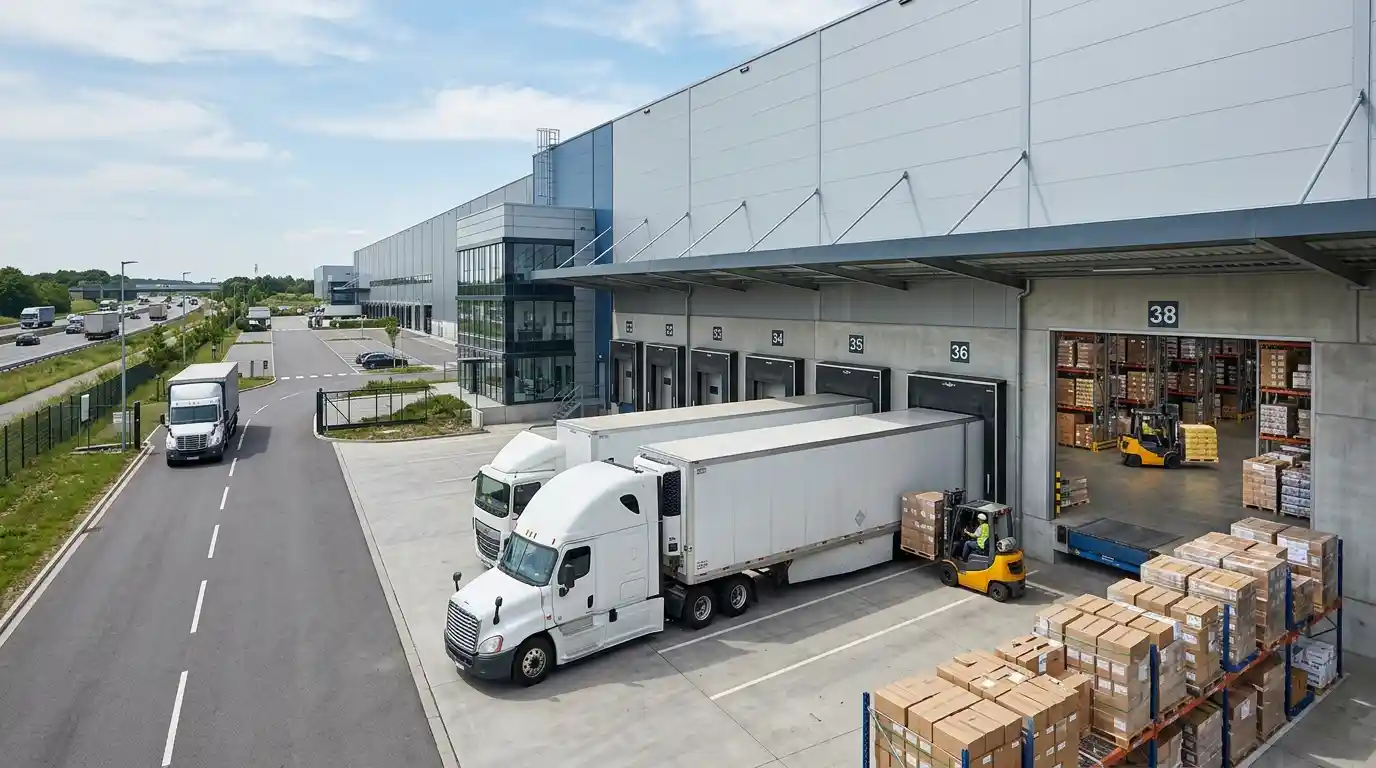
This guide explores the key features that matter when assessing a logistics hub, the role of modern warehouse technology, and the questions businesses should ask before committing to a supply chain arrangement.
Why Logistics Location Matters
A strategically positioned logistics facility can help businesses coordinate incoming goods, store inventory, prepare orders, and arrange outbound shipments. Its practical value depends on its actual access to major roads, freight corridors, distribution markets, and available carrier services.
When evaluating 12220 Carolina Logistics Dr, businesses should verify the property’s precise location, available transportation connections, operating arrangements, and suitability for their shipment volumes. An address alone does not establish that a facility has direct rail access, airport connections, or particular on-site services.
Location planning should also account for delivery destinations, employee access, vehicle restrictions, congestion, and the distance between suppliers, storage facilities, and customers. These factors can influence transport costs and delivery consistency over time.
Warehouse Facilities and Inventory Management
A well-managed warehouse provides an organised environment for receiving, storing, picking, packing, and dispatching products. The right layout reduces unnecessary handling and makes it easier for staff to locate inventory accurately.
Businesses assessing a potential logistics site should examine loading bays, vehicle access, storage capacity, ceiling clearance, handling equipment, fire protection, and the condition of the building. Temperature-controlled areas may be necessary for products with specific storage requirements, but their availability must be confirmed directly.
Inventory management is equally important. Accurate stock records help prevent overselling, misplaced goods, delayed orders, and avoidable replenishment costs. Companies can strengthen these processes by reviewing the complexities of global pharmaceutical logistics, particularly when considering how specialised products require careful coordination throughout the supply chain.
Transportation, Freight and Distribution Planning
Transportation connects suppliers, warehouses, retailers, manufacturers, and end customers. An effective distribution plan balances delivery speed with cost, capacity, reliability, and the handling requirements of different goods.
Before choosing a logistics location, companies should compare carrier availability, collection schedules, delivery coverage, freight rates, and contingency arrangements. They should also determine whether the provider offers freight consolidation, cross-docking, order fulfilment, returns processing, or other services required by the business.
Companies moving goods internationally may benefit from reviewing full-container-load logistics and freight coordination. Businesses handling complex shipping networks can also explore modern supply chain logistics operations and integrated logistics solutions to understand the range of processes involved in moving freight.
For operations that depend on several transport partners, shipping coordination and delivery management are useful areas to consider when assessing service requirements.
Technology That Improves Warehouse Performance
Warehouse management systems, barcode scanning, shipment tracking, and integrated order platforms can give businesses better visibility into stock levels and fulfilment progress. These tools help teams identify delays, reconcile inventory, and communicate more accurately with customers.
Automation can also support repetitive tasks, although the right solution depends on the facility’s scale, product mix, order volume, and available budget. A smaller operation may gain more from accurate inventory software and improved picking procedures than from expensive automated equipment.
Businesses exploring broader technology adoption can read about technology solutions for business operations, digital systems and operational innovation, and technology-driven business solutions.
Digital transformation should solve clearly identified operational problems. Businesses should assess system compatibility, staff training, implementation costs, data security, and ongoing maintenance before investing.
Security, Risk Management and Business Continuity
Goods can be exposed to theft, damage, misplacement, handling errors, and delays at different points in the distribution process. A reliable logistics operation needs practical safeguards covering both physical premises and shipment information.
During a site assessment, ask about access control, visitor procedures, CCTV coverage, incident reporting, fire protection, emergency planning, and insurance arrangements. Businesses handling valuable or sensitive inventory should establish clear responsibilities for loss prevention and claims.
Continuity planning is also essential. Weather disruptions, vehicle breakdowns, staffing shortages, system outages, and carrier capacity problems can affect delivery schedules. Alternative carriers, documented procedures, backup records, and clear escalation contacts help teams respond when normal operations are interrupted.
Organisations with additional transportation exposure can explore truck insurance and fleet risk considerations and this logistics location guide when reviewing their wider operational requirements.
Supporting E-Commerce, Retail and Manufacturing
Different industries need different logistics arrangements. E-commerce businesses often prioritise accurate picking, quick dispatch, parcel tracking, and returns processing. Retailers may need coordinated replenishment across multiple locations, while manufacturers depend on predictable inbound materials and timely movement of finished goods.
Companies should match warehouse capabilities to product dimensions, handling needs, order frequency, and seasonal demand. They should also establish performance targets for order accuracy, dispatch times, inventory discrepancies, damage rates, and on-time delivery.
Businesses considering how distribution fits into a wider commercial strategy may find freight planning for containerised shipments and secondary manufacturing processes relevant to their operational planning.
For companies selling through online channels, e-commerce growth and operational planning can provide additional context for thinking about order fulfilment as sales volumes change. Retail businesses can also consider retail environments and customer experience when aligning distribution with the needs of physical stores.
Cost Control and Logistics Performance Metrics
Choosing a logistics facility requires a full cost assessment rather than a comparison of headline rent or transport charges alone. Relevant expenses can include storage, handling, labour, packaging, insurance, fuel surcharges, technology, returns, and additional services.
Businesses should calculate their total logistics cost per order, shipment, pallet, or unit, using the measurement that best fits their operations. They can then compare providers and identify where changes may improve profitability without reducing service quality.
Useful performance indicators include:
- On-time delivery rate: the proportion of shipments delivered within the agreed window.
- Order accuracy: the percentage of orders picked and dispatched correctly.
- Inventory accuracy: the difference between recorded stock and physical stock.
- Order cycle time: the time between order placement and fulfilment or delivery, according to the chosen definition.
- Cost per shipment: the average logistics expenditure associated with each shipment.
- Damage and returns rate: the proportion of goods requiring replacement, claims, or return handling.
Reviewing these measures regularly helps businesses distinguish genuine operational improvements from temporary fluctuations. Performance targets should reflect customer expectations, product requirements, and the service agreement.
For wider business planning, business service growth strategies and sustainable business scaling can be considered alongside operational performance as an organisation expands.
Sustainability in Logistics Operations
Logistics sustainability involves reducing unnecessary transport, improving vehicle utilisation, limiting packaging waste, managing energy consumption, and using storage space efficiently. These measures can also reduce operating costs when implemented thoughtfully.
Businesses can start by consolidating shipments where practical, improving delivery routes, reducing empty vehicle journeys, and reviewing packaging dimensions. Warehouse operators can assess lighting, equipment efficiency, waste handling, and energy use.
Environmental claims should be supported by measurable evidence. Companies evaluating a facility should ask which sustainability measures are actually in place, how performance is monitored, and whether the available data covers the entire operation or only selected activities.
How to Evaluate 12220 Carolina Logistics Dr
Before selecting 12220 Carolina Logistics Dr for a business operation, conduct due diligence rather than relying on the address or promotional descriptions alone. The following checklist can help organise the assessment:
- Confirm the exact property address, ownership or management arrangements, and current availability.
- Verify road access, carrier coverage, travel times, and connections relevant to your shipment destinations.
- Inspect the premises, loading facilities, storage capacity, and any required specialised areas.
- Request written details of available services, service limits, operating hours, and additional charges.
- Review security arrangements, insurance responsibilities, emergency procedures, and contractual terms.
- Ask how inventory, orders, shipment tracking, and performance reporting are managed.
- Compare the total cost and service commitments with at least one suitable alternative.
These checks help establish whether the location matches the business’s practical needs. Specific claims about the property’s tenants, equipment, security systems, transport connections, certifications, or performance should be confirmed with the property owner or service operator before a decision is made.
Frequently Asked Questions
What should businesses consider when evaluating 12220 Carolina Logistics Dr?
Businesses should verify the property’s location, availability, access routes, building specifications, available services, security provisions, costs, and suitability for their products and shipment volumes.
Why is warehouse location important for supply chain efficiency?
A suitable location can reduce unnecessary transport, improve access to customers and suppliers, and make distribution easier to coordinate. The actual benefit depends on route conditions, carrier availability, and the company’s delivery network.
Which technologies can improve warehouse operations?
Inventory management software, barcode scanning, order management systems, and shipment tracking can improve visibility and accuracy. Automation may be appropriate where order volumes and operating costs justify the investment.
How can a business compare logistics providers?
Compare total costs, delivery performance, service coverage, order accuracy, handling capabilities, security procedures, contract terms, and the quality of operational reporting.
Does this address guarantee access to specialised logistics services?
No. The availability of freight consolidation, temperature-controlled storage, cross-docking, specialised handling, or other services must be verified directly with the property owner or relevant operator.
Conclusion
12220 Carolina Logistics Dr can be assessed as a potential logistics location by focusing on the factors that influence real-world supply chain performance: transportation access, warehouse suitability, inventory accuracy, technology, security, service availability, and total operating cost.
The most effective decision combines a physical site assessment with written service details, cost comparisons, and measurable performance requirements. By verifying property-specific information and aligning logistics capabilities with business objectives, companies can make a more informed decision about whether this location fits their distribution strategy.