
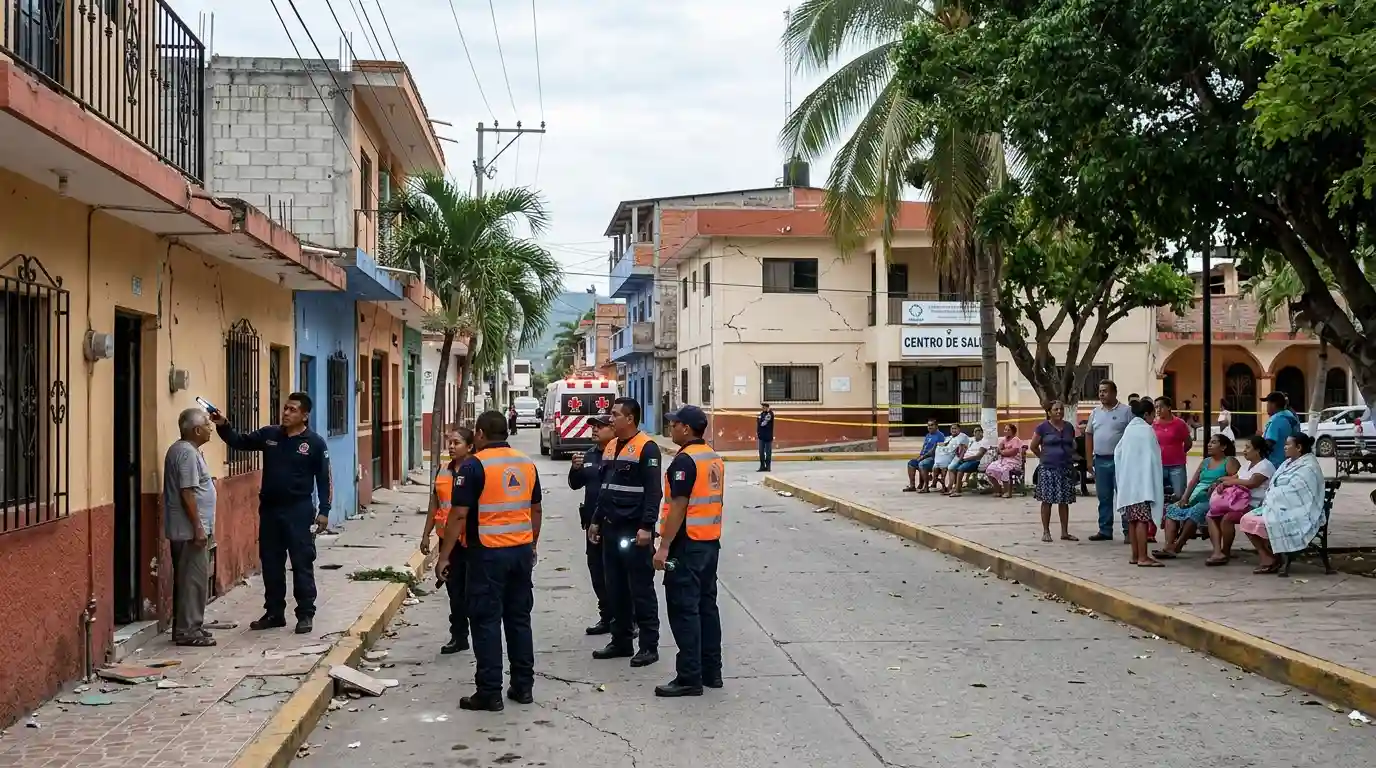
A powerful magnitude 6.5 earthquake struck southern Mexico on January 2, 2026, sending tremors across parts of the country and prompting emergency responses in affected communities. The earthquake occurred near the Pacific coast in Guerrero state, a region with a long history of seismic activity. Shaking was also felt in Mexico City, where residents and officials responded to earthquake alerts and precautionary evacuations.
What Happened During the Mexico Earthquake?
The earthquake occurred on the morning of January 2, 2026, near the Pacific coast of Guerrero. Initial reports described a magnitude of approximately 6.5, with the exact measurements and location subject to confirmation as seismic agencies reviewed their data.
The shaking interrupted normal activities in several places. In Mexico City, an earthquake alert prompted people to leave buildings as a precaution. The alert also interrupted a presidential press conference, illustrating how earthquake-warning systems can influence public safety procedures even when a city is some distance from the epicenter.
Early reports indicated that the earthquake caused concern across southern and central Mexico. Residents experienced a reminder that strong earthquakes can occur without much warning, making preparation essential for households, businesses, schools, and public institutions.
Where Was the Earthquake Centered?
The earthquake was centered in Guerrero, a state along Mexico’s Pacific coast. The region includes coastal communities, mountainous terrain, and the popular destination of Acapulco. Its position near an active tectonic boundary makes the surrounding area susceptible to earthquakes of varying magnitudes.
Mexico City, located farther inland, also experienced shaking. The distance between the capital and the earthquake’s origin demonstrates why seismic events can affect large populations beyond the immediate epicentral area.
People planning trips within Mexico should consider local conditions, transportation access, accommodation safety, and emergency procedures. Those exploring coastal destinations or planning longer journeys can also review practical travel advice, including these travel essentials worth bringing and tips for traveling with children.
Damage, Injuries, and Emergency Response
Initial earthquake reports require careful interpretation because information can change as emergency teams assess affected areas. Authorities must inspect buildings, roads, utilities, and public facilities before the full extent of damage becomes clear.
Reports following the January 2 event described fatalities, injuries, and damage to buildings. The severity of local effects depended on factors such as distance from the epicenter, the depth of the earthquake, ground conditions, construction quality, and the condition of individual structures.
Emergency personnel may need to check damaged buildings, assist injured residents, clear blocked routes, and restore essential services. People in affected areas should follow instructions from local authorities and avoid entering damaged structures until they have been assessed as safe.
Earthquake preparedness also matters for families who travel together. Visitors should identify emergency exits, agree on a meeting point, keep essential medication accessible, and ensure that children know how to contact a trusted adult if separated.
Why Is Mexico Vulnerable to Earthquakes?
Mexico lies in a tectonically active part of the world where several major plates interact. Along the country’s southern Pacific margin, the Cocos Plate moves beneath the North American Plate. This process, known as subduction, creates stresses that can be released through earthquakes.
Earthquakes occur when accumulated stress causes rocks along a fault to move suddenly. The released energy travels through the Earth as seismic waves, producing ground shaking that can vary significantly from one location to another.
The strength of the shaking people experience does not depend on magnitude alone. Earthquake depth, distance, local geology, and the design of buildings all influence potential impacts. A relatively deep earthquake may produce a different pattern of shaking from a shallower event of similar magnitude.
How Earthquake Early-Warning Systems Help
Earthquake early-warning systems use instruments to detect seismic activity and send alerts before stronger shaking reaches some locations. These systems do not predict earthquakes in advance. Instead, they provide a limited window in which people may be able to take protective action.
Depending on distance and the warning system involved, an alert may give people time to move away from windows, stop certain operations, or take cover. The available warning time can be short, and people close to an earthquake’s origin may receive little or no advance notice.
When an alert sounds, follow the established local safety procedure. Do not delay protective action to collect belongings, film the event, or search for additional information on a phone.
What Should You Do During an Earthquake?
If You Are Indoors
- Drop to your hands and knees before the shaking knocks you down.
- Cover your head and neck, and take shelter under sturdy furniture if available.
- Hold on to your shelter until the shaking stops.
- Stay away from windows, glass, and objects that could fall.
- Avoid elevators while the building is shaking.
If You Are Outdoors
- Move toward an open area away from buildings, walls, trees, and power lines.
- Remain in the open until the shaking ends.
- Watch for falling debris and damaged infrastructure.
If You Are Driving
- Pull over safely when possible, away from bridges, overpasses, buildings, and overhead wires.
- Remain inside the vehicle until the shaking stops.
- Check road conditions before continuing and follow official traffic instructions.
After the earthquake, expect possible aftershocks. Check yourself and others for injuries, leave visibly damaged buildings carefully, and avoid downed power lines. If you are near the coast and authorities issue a tsunami warning or evacuation instruction, move to the designated safe area immediately.
Travel Safety After an Earthquake
An earthquake does not automatically mean that every destination in a large region is unsafe. Conditions can differ considerably between cities and even between neighbouring communities. Travellers should make decisions using current local instructions, transport updates, accommodation assessments, and information from their tour operators.
Before resuming sightseeing, confirm that roads and public transport are operating and that the places you intend to visit are accessible. A flexible itinerary can help when attractions close temporarily or travel schedules change.
For broader itinerary planning, travellers may find inspiration in guides to South America for first-time visitors, places to visit around the world, and popular global travel destinations. These guides are useful for general trip planning, but they should not be treated as confirmation that a particular destination is currently safe to visit.
Travellers who need to change their plans should keep identification, booking details, essential medication, drinking water, and a charged phone accessible. Families should establish a meeting point in case mobile networks become congested or members become separated.
Building an Effective Earthquake Emergency Kit
A practical emergency kit can help households manage the first hours or days following a major disruption. Supplies should be adapted to household size, medical needs, climate, and the possibility that electricity, water, or transport may be temporarily unavailable.
- Drinking water and non-perishable food.
- A first-aid kit and essential medication.
- A flashlight with spare batteries or a reliable rechargeable light.
- A battery-powered or hand-crank radio where available.
- Portable phone chargers and charging cables.
- Copies of important documents stored securely.
- Basic hygiene supplies, sturdy footwear, and suitable clothing.
- Supplies for infants, older adults, and people with disabilities where needed.
Keep emergency supplies in a location that is easy to reach. Review them periodically and replace expired food, water, batteries, and medication as appropriate. A household communication plan is equally important because family members may not be together when an earthquake occurs.
What Happens After the Initial Tremor?
Aftershocks may follow a significant earthquake as the surrounding crust adjusts to changes in stress. Some are too small to notice, while others may be strong enough to cause additional damage, particularly to buildings already weakened by the mainshock.
Residents should remain alert, follow local emergency announcements, and avoid returning to damaged buildings without clearance. Authorities may also inspect bridges, water systems, hospitals, schools, and other essential infrastructure before normal operations resume.
Recovery can take longer than the initial emergency response. Repairing homes, restoring services, assessing structural damage, and supporting affected families may require sustained coordination between local communities and public agencies.
Why Earthquake Preparedness Matters
The January 2, 2026, earthquake in Guerrero highlights the importance of preparation in a country where seismic activity is a recurring natural hazard. Strong earthquakes can disrupt daily routines, affect transport, damage buildings, and create uncertainty for residents and visitors.
Preparedness cannot prevent an earthquake, but practical measures can reduce avoidable risks. Securing heavy furniture, learning protective actions, keeping emergency supplies ready, and understanding evacuation procedures can make a meaningful difference.
As communities assess the effects of an earthquake, accurate communication and careful safety checks remain essential. Residents and travellers alike should rely on current local instructions when deciding what to do next and should avoid sharing unverified claims about casualties, damage, or aftershocks.


