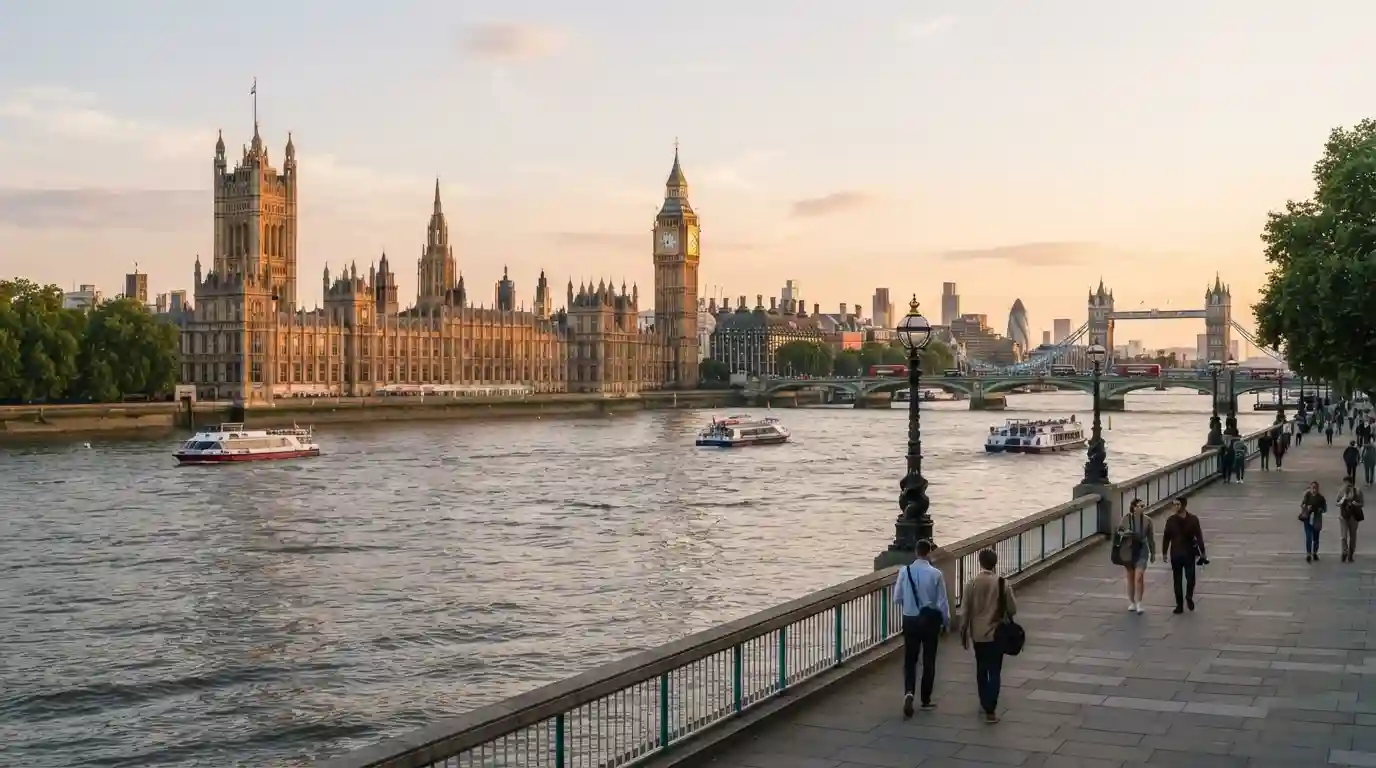
From the historic streets around Westminster to the atmosphere of Covent Garden and the views along the River Thames, the most popular places to visit in London offer something for almost every type of traveler. First-time visitors can focus on the city’s iconic attractions, while returning travelers can explore neighborhoods, markets, parks, galleries, and lesser-known cultural experiences.
If you enjoy building destination-based travel itineraries, you may also want to explore our guides to 25 places to visit in the world and the top 25 best places to visit in the world for additional trip inspiration.
Best Places to Visit in London
London is large enough that choosing where to go can feel overwhelming. The best approach is to group attractions by area so that you can experience several highlights without spending most of your day traveling between them.
1. Buckingham Palace
Buckingham Palace is one of London’s most recognizable landmarks and an obvious choice for a first visit. The official residence associated with the British monarch, the palace is especially popular with visitors interested in British history and royal traditions.
The area around the palace also connects easily with St James’s Park, The Mall, Green Park, and several central London attractions. Watching the Changing of the Guard can be another memorable experience when ceremonies are taking place.
2. Westminster Abbey
Westminster Abbey is one of London’s most important historic religious buildings. Its architecture, royal connections, memorials, and long history make it much more than a conventional sightseeing stop.
Its central location also makes it easy to combine with Westminster’s other major attractions. Visitors can explore the surrounding area on foot and continue toward Parliament Square and the River Thames.
3. Big Ben and the Houses of Parliament
Big Ben is among the most recognizable symbols of London. The famous clock tower forms part of the Palace of Westminster and stands beside the River Thames.
For many travelers, seeing Big Ben in person is an essential London experience. The surrounding streets and riverside areas provide excellent opportunities for photographs, particularly when the city’s historic architecture is viewed from across the Thames.
4. The London Eye
The London Eye provides a different perspective on the city. Its large observation capsules rise above the South Bank and offer broad views across central London.
It can be especially appealing to first-time visitors who want to understand London’s layout from above. A ride can also fit conveniently into a walking itinerary that includes the South Bank, Westminster, and other riverside attractions.
5. Tower Bridge
Tower Bridge is one of London’s most distinctive architectural landmarks. Its towers, suspension structure, and location over the Thames create one of the city’s most recognizable scenes.
The bridge is worth seeing from both sides of the river. Visitors can also explore the surrounding area, including the riverside walkways and historic attractions near the Tower of London.
6. Tower of London
The Tower of London offers a fascinating look into the city’s royal and political history. Its fortified architecture and centuries of stories give visitors a very different experience from London’s modern shopping streets and entertainment districts.
The Tower is particularly interesting for travelers who enjoy historic buildings, royal history, and dramatic stories connected with the development of London.
7. The British Museum
The British Museum is one of London’s major cultural attractions and a popular stop for travelers interested in art, archaeology, history, and civilizations from around the world.
Because the museum contains such a broad range of collections, it is worth allowing plenty of time rather than attempting to see everything quickly. Its location also makes it convenient to combine with a walk through central London.
8. Covent Garden
Covent Garden combines shopping, restaurants, street entertainment, historic architecture, and a lively atmosphere. It is one of the best places in central London for travelers who want sightseeing and entertainment in the same area.
The neighborhood works particularly well as an afternoon or evening stop. Visitors can explore its streets, browse shops, enjoy a meal, and continue toward nearby attractions.
9. Trafalgar Square
Trafalgar Square is a central meeting point surrounded by major cultural and historic attractions. Its large public space, fountains, monuments, and location make it an easy addition to almost any London itinerary.
It is also a useful starting point for exploring other central areas on foot. From here, travelers can continue toward museums, theaters, shopping streets, and historic landmarks.
10. St Paul’s Cathedral
St Paul’s Cathedral is another defining part of London’s skyline. Its large dome and historic interior make it one of the city’s most impressive architectural landmarks.
The cathedral sits in the City of London, an area where historic streets meet modern skyscrapers. Exploring the surrounding district can provide a strong contrast between London’s past and present.
11. Hyde Park
Hyde Park gives visitors a chance to experience London’s green side. The large park offers walking paths, open spaces, water, mature trees, and places to relax away from the busiest streets.
Travelers who enjoy combining urban sightseeing with outdoor experiences may find London’s parks particularly valuable. They provide a slower pace between visits to museums, monuments, and shopping districts.
12. The Natural History Museum
The Natural History Museum is a favorite destination for families, science enthusiasts, and travelers interested in the natural world. Its impressive architecture is part of the experience, while its collections cover subjects ranging from animals and fossils to Earth sciences.
The museum is located in South Kensington, making it possible to explore several major cultural attractions in the same general area.
13. Victoria and Albert Museum
The Victoria and Albert Museum, commonly known as the V&A, focuses on art, design, fashion, and decorative arts. Its diverse collections make it a strong choice for visitors who want something different from traditional historical sightseeing.
Its location near other South Kensington attractions makes it easy to include as part of a museum-focused day.
14. Camden Market
Camden Market is a lively destination known for food, shopping, independent stalls, and an alternative atmosphere. It offers a different side of London compared with the formal landmarks around Westminster.
Visitors can spend several hours browsing stalls, trying different foods, and exploring the surrounding streets. Camden is particularly appealing for travelers who enjoy local atmosphere and informal urban experiences.
15. The River Thames
The River Thames is not simply something to see between attractions. It is one of the best ways to experience London’s geography and changing skyline.
A riverside walk can connect several major attractions, while a boat trip offers another way to view landmarks from the water. Travelers who enjoy scenic experiences should consider building at least one Thames-focused section into their itinerary.
Popular London Neighborhoods Worth Exploring
London’s appeal goes beyond its famous landmarks. Its neighborhoods each have different personalities, making exploration between major attractions an important part of the trip.
Notting Hill
Notting Hill is known for colorful streets, distinctive architecture, independent shops, restaurants, and its famous market atmosphere. It is a good choice for travelers who want attractive streets and a more residential side of London.
Soho
Soho is centrally located and known for restaurants, nightlife, entertainment, and a diverse mix of businesses. It is particularly convenient for travelers looking for somewhere to eat or spend an evening after a day of sightseeing.
South Bank
South Bank is one of the most convenient riverside areas for visitors. Walking along the Thames here can connect major attractions while providing views of the London skyline.
Greenwich
Greenwich offers a combination of maritime history, architecture, open spaces, and spectacular views. It is slightly removed from the busiest central areas, making it an appealing option for travelers who have more time in London.
Best Places in London for Different Types of Travelers
Best for First-Time Visitors
First-time visitors should prioritize Buckingham Palace, Westminster Abbey, Big Ben, the London Eye, Tower Bridge, and the Tower of London. These attractions provide a strong introduction to London’s history, architecture, royal heritage, and modern cityscape.
Best for Families
Families can combine museums, parks, markets, and sightseeing attractions. The Natural History Museum, Hyde Park, the London Eye, and several riverside attractions can create a balanced itinerary without relying entirely on traditional historical sites.
Best for History Lovers
Travelers interested in history can focus on Westminster Abbey, the Tower of London, St Paul’s Cathedral, Buckingham Palace, and the historic streets of the City of London.
Best for Food Lovers
London’s food scene is exceptionally diverse. Areas such as Soho, Covent Garden, Camden, and Borough Market are useful starting points for discovering restaurants, street food, international cuisines, and traditional British options.
Best for Art and Culture
The British Museum, V&A, Natural History Museum, galleries, theaters, and cultural districts provide plenty of options for travelers who prefer art and culture over conventional sightseeing.
How to Plan a London Sightseeing Itinerary
The sheer number of attractions can make London difficult to plan efficiently. Instead of trying to visit every famous location, group attractions by geographic area.
For example, a Westminster-focused day can combine Buckingham Palace, St James’s Park, Westminster Abbey, Big Ben, Parliament, and the Thames. Another day can focus on Tower Bridge, the Tower of London, St Paul’s Cathedral, and the City of London.
Travelers planning broader international trips can also compare London’s attractions with our guides to the most amazing places to visit in Europe, the best places to visit in Europe in summer, and the best places to visit in Austria.
When Is the Best Time to Visit London?
London can be visited throughout the year, and the best season depends on what you want from the trip. Warmer months are generally attractive for walking, parks, outdoor sightseeing, and longer days, while colder months can offer a different atmosphere and potentially more comfortable conditions for indoor attractions.
Autumn can be particularly appealing for travelers who enjoy seasonal scenery and city walks. If you enjoy fall travel, you can also explore our guide to the best places to visit in Tennessee during fall and the best places to visit in New England during fall.
How Long Should You Spend in London?
A short weekend can cover several iconic landmarks, but three to five days provides considerably more flexibility. With additional time, you can explore museums, markets, neighborhoods, parks, and attractions outside the central sightseeing route.
If London is part of a larger international journey, planning the city as one segment of your trip can help prevent an overly rushed schedule. Travelers comparing European destinations can also look at our guides to top places to visit in Eastern Europe, unique places to visit in Switzerland, and top places to visit in Zurich.
Tips for Visiting London’s Most Popular Attractions
- Plan by neighborhood: Group nearby attractions together to reduce unnecessary travel.
- Start early: Popular landmarks can become considerably busier later in the day.
- Leave room for walking: Some of London’s best experiences happen between major attractions.
- Use public transportation: London’s extensive transport network makes it practical to move between different parts of the city.
- Balance indoor and outdoor activities: Museums and galleries can provide useful alternatives when weather conditions change.
- Do not overpack your itinerary: Visiting fewer places properly is often more enjoyable than rushing through a long list.
- Explore beyond central London: If you have several days, consider adding neighborhoods and attractions outside the traditional tourist core.
London as Part of a Larger Travel Adventure
London is also a useful starting point for travelers who want to explore more of the United Kingdom and Europe. Depending on your itinerary, you can combine the capital with destinations across England or continue to other European countries.
For travelers looking beyond Britain, our guides to the best places to visit in the North of England, top places to visit in the Cotswolds, and places to visit in South West England can help expand a UK travel plan.
Beyond Europe, travelers can find inspiration in our guides to the best places to visit in New Zealand in summer, interesting places to visit in Japan, and places to visit in Sri Lanka near Colombo.
Final Thoughts
The most popular places to visit in London range from royal landmarks and historic buildings to museums, markets, parks, riverside attractions, and lively neighborhoods. The city’s greatest strength is its variety: one day can involve centuries of history, while the next can focus on contemporary food, shopping, art, or entertainment.
For a first trip, concentrate on iconic landmarks such as Buckingham Palace, Westminster Abbey, Big Ben, the London Eye, Tower Bridge, and the Tower of London. Once those essentials are covered, leave time to explore neighborhoods such as Camden, Notting Hill, Soho, South Bank, and Greenwich.
Most importantly, do not treat London as a checklist of attractions. Give yourself time to walk, discover local streets, enjoy a meal, visit a museum, and experience the city at a comfortable pace. That combination of famous sights and everyday London atmosphere is what makes the destination memorable.