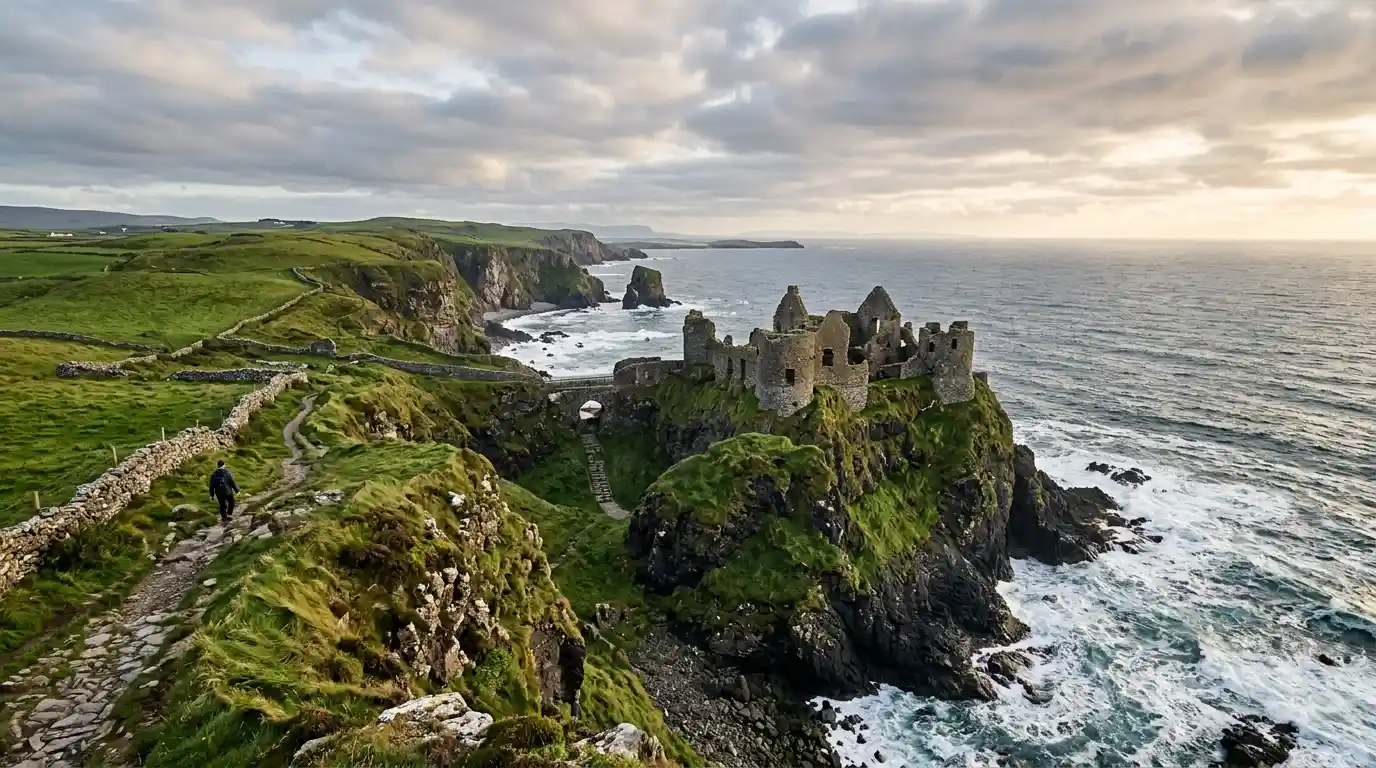
From the otherworldly basalt columns of the north coast to remote islands, historic monastic settlements, and peaceful mountain valleys, the most unique places to visit in Ireland offer experiences that go far beyond ordinary sightseeing. Whether you love nature, history, photography, or quiet coastal escapes, these destinations can make your Irish journey memorable.
Why Explore Ireland Beyond the Usual Tourist Stops?
Ireland’s appeal lies in its variety. You can explore prehistoric monuments in the morning, walk along a windswept Atlantic coastline in the afternoon, and spend the evening in a traditional village pub. Smaller destinations often offer a more personal connection with local culture, landscapes, and history.
If you are planning a wider European itinerary, you can also explore our guides to the most amazing places to visit in Europe, the best places to visit in Europe in summer, and places to visit in the Cotswolds for ideas on combining Ireland with other scenic destinations.
1. Giant’s Causeway, County Antrim
The Giant’s Causeway is one of Ireland’s most distinctive natural landmarks. Thousands of tightly packed basalt columns form geometric steps along the coast, creating a landscape that looks almost designed. These formations developed through ancient volcanic activity and are now protected as a UNESCO World Heritage Site.
Walk among the columns, admire the crashing Atlantic waves, and follow coastal paths for different views of the rock formations. Local folklore connects the site with the giant Finn McCool, adding a legendary dimension to the experience.
Best for: Geology, photography, coastal walks, and Irish legends.
Travel tip: Allow extra time to explore the surrounding coastline. Conditions can be windy and wet, so wear sturdy footwear and check access information before visiting.
For more dramatic coastal scenery elsewhere in the British Isles, see our guide to the best coastal places to visit in Scotland.
2. Skellig Michael, County Kerry
Rising sharply from the Atlantic Ocean, Skellig Michael is a remote rocky island famous for its early medieval monastic settlement. Monks once lived here in stone beehive-shaped huts, choosing an isolated environment for religious devotion and a demanding way of life.
The island’s steep stone steps, rugged cliffs, and sweeping sea views make it one of Ireland’s most extraordinary historic destinations. Its archaeological importance and wildlife, including seabirds, add to its appeal.
Best for: History, archaeology, dramatic scenery, and adventurous travelers.
Travel tip: Boat access is weather-dependent, and landing trips are limited. Reserve through an authorized operator where possible, confirm current arrangements, and be prepared for steep, exposed steps. This destination is not suitable for everyone.
3. Achill Island, County Mayo
Achill Island combines towering cliffs, open Atlantic beaches, green hills, and small coastal settlements. Keem Bay is especially striking, with its curved shoreline framed by steep slopes and clear water. The island also offers scenic drives and walking routes that reveal a quieter side of Ireland.
Visitors can explore traditional villages, discover traces of older settlements, and enjoy changing views of the ocean. The landscape is particularly rewarding for travelers who prefer outdoor experiences over crowded attractions.
Best for: Scenic drives, beaches, hiking, and landscape photography.
Travel tip: Weather changes quickly on the west coast. Build flexibility into your itinerary and check local conditions before setting out on cliff walks.
If you enjoy remote island landscapes, consider comparing Achill with unique places to visit in New Zealand, another destination known for dramatic natural scenery.
4. The Aran Islands, County Galway
The Aran Islands offer a distinctive mix of Irish-language culture, stone walls, ancient forts, and rugged Atlantic scenery. Inis Mór, the largest island, is home to Dún Aonghasa, a prehistoric stone fort dramatically positioned on the edge of a high coastal cliff.
Life here moves at a slower pace than in major cities. Cycling between settlements, visiting historic sites, and observing traditional island life can make a visit feel especially memorable.
Best for: Cultural experiences, cycling, archaeology, and island scenery.
Travel tip: Ferries operate from mainland departure points, and schedules may change with the weather. Check transport times before planning a day trip, or stay overnight to explore more comfortably.
5. Slieve League Cliffs, County Donegal
Slieve League’s immense cliffs rise dramatically above the Atlantic and provide some of the most impressive coastal views in Ireland. They are often less crowded than the better-known Cliffs of Moher, making them attractive to travelers seeking a quieter experience.
Lookouts and walking routes offer different perspectives on the cliffs, ocean, and surrounding hills. On clear days, the combination of immense drops and distant sea views creates a powerful sense of scale.
Best for: Hiking, photography, and spectacular Atlantic scenery.
Travel tip: Stay behind barriers, avoid exposed edges in strong winds, and check trail conditions before attempting longer walks.
For more natural destinations across the United States, explore the best natural places to visit in California or scenic trails and features at Lassen Volcanic National Park.
6. Glendalough, County Wicklow
Glendalough is a historic monastic settlement set within a beautiful valley in the Wicklow Mountains. Its round tower, stone church ruins, and graveyard tell the story of a religious community founded in the early medieval period.
Two lakes, woodland paths, and mountain trails surround the historic site. Visitors can combine cultural exploration with a peaceful walk through one of Ireland’s most attractive inland landscapes.
Best for: History, gentle walks, mountain scenery, and nature photography.
Travel tip: Arrive early during busy periods and choose a walking route that matches your fitness level. Some mountain trails are longer and more challenging than the paths around the main settlement.
7. The Burren, County Clare
The Burren is a remarkable limestone landscape where exposed rock, fissures, rare plants, and archaeological remains create an unusual natural environment. At first glance, the terrain may look barren, but it supports an unexpected variety of plant life, including species associated with different climates.
Ancient tombs, stone structures, and traditional rural settlements add a historical dimension to the region. The Burren is an excellent destination for travelers who enjoy geology, botany, and landscapes that differ from the usual green image of Ireland.
Best for: Geology, wildflowers in season, archaeology, and nature walks.
Travel tip: Follow marked paths, avoid damaging fragile vegetation, and wear footwear suitable for uneven limestone surfaces.
8. Dunluce Castle, County Antrim
Dunluce Castle stands on a rocky coastal outcrop connected to the mainland by a narrow bridge. The surviving walls and towers reveal the remains of a once-important medieval stronghold, while the surrounding sea gives the ruins an especially dramatic setting.
Its location makes it a rewarding stop on a drive along Northern Ireland’s Causeway Coast. The combination of castle architecture, sea cliffs, and local stories appeals to both history lovers and photographers.
Best for: Medieval history, architecture, and coastal photography.
Travel tip: Check visitor access and opening arrangements before traveling. Uneven surfaces and exposed coastal conditions require care.
Travelers interested in historic landscapes elsewhere can also explore places to visit in Saint-Tropez and this Ireland travel guide when planning their broader destination research.
9. Cobh, County Cork
Cobh is a colorful harbor town with steep streets, waterfront views, and an important maritime history. Its skyline is dominated by St. Colman’s Cathedral, while the town’s museums and heritage attractions explore emigration, transatlantic travel, and the area’s connection with the Titanic’s final port of call before its voyage across the Atlantic.
Brightly painted buildings and views across Cork Harbour make Cobh an inviting place to wander at a relaxed pace. It offers a different experience from Ireland’s wild coastal landscapes by focusing on architecture, local history, and harbor life.
Best for: Maritime history, architecture, museums, and photography.
Travel tip: Allow time for the uphill streets, and check museum opening hours if a particular historical attraction is central to your visit.
10. Connemara, County Galway
Connemara is known for rugged mountains, peatlands, lakes, stone walls, and a coastline dotted with small communities. Its scenery feels open and untamed, especially along quieter roads that pass through valleys and around the edges of the Atlantic.
The region is also part of the Gaeltacht, where Irish remains an important community language. Travelers can explore traditional music, local crafts, and rural life alongside hiking and scenic drives.
Best for: Outdoor adventures, cultural experiences, photography, and scenic road trips.
Travel tip: Distances can take longer than expected on narrow rural roads. Plan fewer stops per day so you can enjoy the scenery without rushing.
For more destinations centered on memorable scenery, see the best places to visit in Montana and unique places to visit in Switzerland.
11. Blarney Castle and Gardens, County Cork
Blarney Castle is a medieval stronghold surrounded by extensive gardens and woodland walks. It is best known for the Blarney Stone, which tradition associates with the gift of eloquence. The castle itself, however, is only one part of the experience.
Visitors can discover unusual rock formations, garden paths, mature trees, and landscaped areas that change character throughout the seasons. It is an appealing stop for travelers who enjoy combining history with time outdoors.
Best for: Heritage, gardens, photography, and family outings.
Travel tip: Set aside enough time for the grounds as well as the castle. Check accessibility and any restrictions before visiting the stone or climbing the tower.
12. Copper Coast, County Waterford
The Copper Coast stretches along a scenic section of Waterford’s southern coastline, where coves, cliffs, beaches, and geological formations reveal a long natural history. The area takes its name from its mining heritage, which adds another layer of interest to its coastal scenery.
Small villages and viewpoints make the region well suited to a relaxed drive with short walks along the way. It is a good alternative for travelers who want Atlantic-style scenery without following the busiest tourist routes.
Best for: Coastal walks, geology, quiet beaches, and scenic drives.
Travel tip: Coastal weather can change quickly. Use designated parking areas and avoid unstable cliff edges.
If scenic coastal journeys are your priority, compare this region with places to visit in southwest England and Scotland’s coastal destinations.
13. Gap of Dunloe, County Kerry
The Gap of Dunloe is a narrow mountain pass between the MacGillycuddy’s Reeks and the Purple Mountain range. Its winding road, rocky slopes, small lakes, and open valleys create one of Ireland’s most memorable inland landscapes.
Visitors can explore on foot, cycle where permitted, or arrange local transport. The scenery changes with the light and weather, giving the route a different character throughout the day.
Best for: Hiking, mountain scenery, photography, and outdoor exploration.
Travel tip: Check local transport arrangements and route conditions in advance. Bring rain protection and allow enough time to return safely.
For another destination known for dramatic mountain scenery, consider places to visit in Mount Rainier National Park.
14. Lough Hyne, County Cork
Lough Hyne is a saltwater lake near the southwest coast of Ireland, surrounded by wooded hills and quiet countryside. Its sheltered setting makes it a distinctive place for nature observation, walking, and enjoying the peaceful atmosphere of rural West Cork.
The lake is known for its unusual marine environment and is an important site for scientific and ecological interest. Visitors who prefer calm landscapes to major attractions may find it especially rewarding.
Best for: Nature lovers, peaceful scenery, kayaking where permitted, and wildlife observation.
Travel tip: Check local guidance before entering the water or arranging activities. Respect protected habitats and leave the area as you found it.
15. Newgrange, County Meath
Newgrange is a prehistoric passage tomb built thousands of years before the great stone monuments of many later civilizations. Its circular mound, decorated entrance stone, and carefully engineered passage demonstrate the remarkable skills of the people who created it.
A particularly fascinating feature is the way sunlight enters the inner chamber around the winter solstice under specific conditions. The site forms part of the Brú na Bóinne UNESCO World Heritage property and provides a powerful connection with Ireland’s distant past.
Best for: Archaeology, ancient history, and cultural heritage.
Travel tip: Visits are managed through the official visitor arrangements, and access to the chamber may be limited. Book ahead and confirm the current tour details.
More Ireland Travel Inspiration
Choosing unusual destinations is easier when you consider the kind of trip you want. Ireland’s islands and cliffs suit outdoor enthusiasts, while its castles, prehistoric sites, and harbor towns are ideal for travelers interested in history and culture.
If you are building a longer international itinerary, explore the best places to visit in Austria, places to visit in Zurich, places to visit in northern France, and the best places to visit in northern Vietnam. These guides can help you compare landscapes and cultural experiences across different regions.
For broader trip ideas, you may also enjoy 25 of the best places to visit in the world, another guide to places to visit around the world, and Europe’s more budget-friendly destinations.
How to Plan a Trip to Ireland’s Unique Places
Choose the Right Season
Late spring and summer generally provide longer daylight hours for sightseeing and walking. Autumn can bring quieter roads and attractive colors, while winter offers a different atmosphere but shorter days and more challenging weather. Conditions vary, so plan around your activities rather than relying on a single season as ideal for every destination.
Allow Enough Time for Travel
Some of Ireland’s most memorable places are in rural or remote areas. Narrow roads, ferry schedules, and changing weather can affect travel times. Rather than attempting to cover the whole island in a few days, focus on one or two regions and leave room for spontaneous stops.
Combine Nature with History
Pair coastal walks with historic castles, or combine a mountain drive with a visit to a traditional village. This balance helps you experience Ireland’s varied landscapes and cultural heritage without making every day feel the same.
Respect Local Communities and Landscapes
Stay on marked trails, follow access restrictions, take litter with you, and respect private property. In rural areas, be considerate when parking or passing through small communities. Responsible travel helps preserve the character of the places that make Ireland special.
Check Access Before You Go
Remote islands, historic sites, and exposed coastal routes may have seasonal restrictions or weather-related closures. Verify opening times, ferry availability, walking conditions, and booking requirements before setting out.
Final Thoughts
The most unique places to visit in Ireland reveal a country shaped by ancient history, Atlantic weather, dramatic geology, and enduring local traditions. From the extraordinary rock formations of the Giant’s Causeway to the prehistoric chambers of Newgrange and the quiet waters of Lough Hyne, every destination offers a different way to understand the island.
Rather than trying to see everything in one trip, choose the places that match your interests and explore them at a comfortable pace. With thoughtful planning, Ireland’s lesser-known landscapes and historic sites can become the most memorable part of your journey.