Whether you are planning a weekend escape, a family holiday, a romantic break, or a longer road trip, the best places to visit in Northern France combine cultural heritage with scenic landscapes and distinctive local traditions. This guide explores twelve destinations worth considering, along with practical tips to help you plan your itinerary.
1. Lille: A Lively City with Flemish Charm
Lille is one of the most appealing cities in northern France, known for its Flemish-influenced architecture, lively squares, museums, and welcoming atmosphere. Its historic centre is ideal for exploring on foot, with colourful façades, independent shops, cafés, and restaurants lining its streets.
Start at Grand Place, officially Place du Général-de-Gaulle, where elegant historic buildings surround a bustling public square. Continue to the Old Stock Exchange, or Vieille Bourse, and explore Vieux-Lille for boutique shopping and traditional French bakeries. Art lovers can also visit the Palais des Beaux-Arts, which houses an extensive collection of European art.
Lille works particularly well for a short city break because many of its main attractions are close together. It is also a useful starting point for travellers arriving by train or planning onward journeys across northern France.
2. Rouen: Medieval Streets and Historic Landmarks
Rouen, the historic capital of Normandy, is famous for its timber-framed houses, Gothic architecture, and connections to Joan of Arc. Its compact historic centre makes it easy to combine sightseeing with relaxed walks and stops at local cafés.
The magnificent Rouen Cathedral dominates the skyline, while the Gros-Horloge offers one of the city’s most recognisable landmarks. Wander through the old streets to discover traditional shopfronts, small squares, and buildings that reveal the city’s medieval character.
Rouen is also a strong choice for travellers interested in French history and architecture. Allow enough time to explore beyond the main attractions, especially if you enjoy photography or prefer discovering destinations at a slower pace.
3. Étretat: Dramatic White Cliffs and Coastal Walks
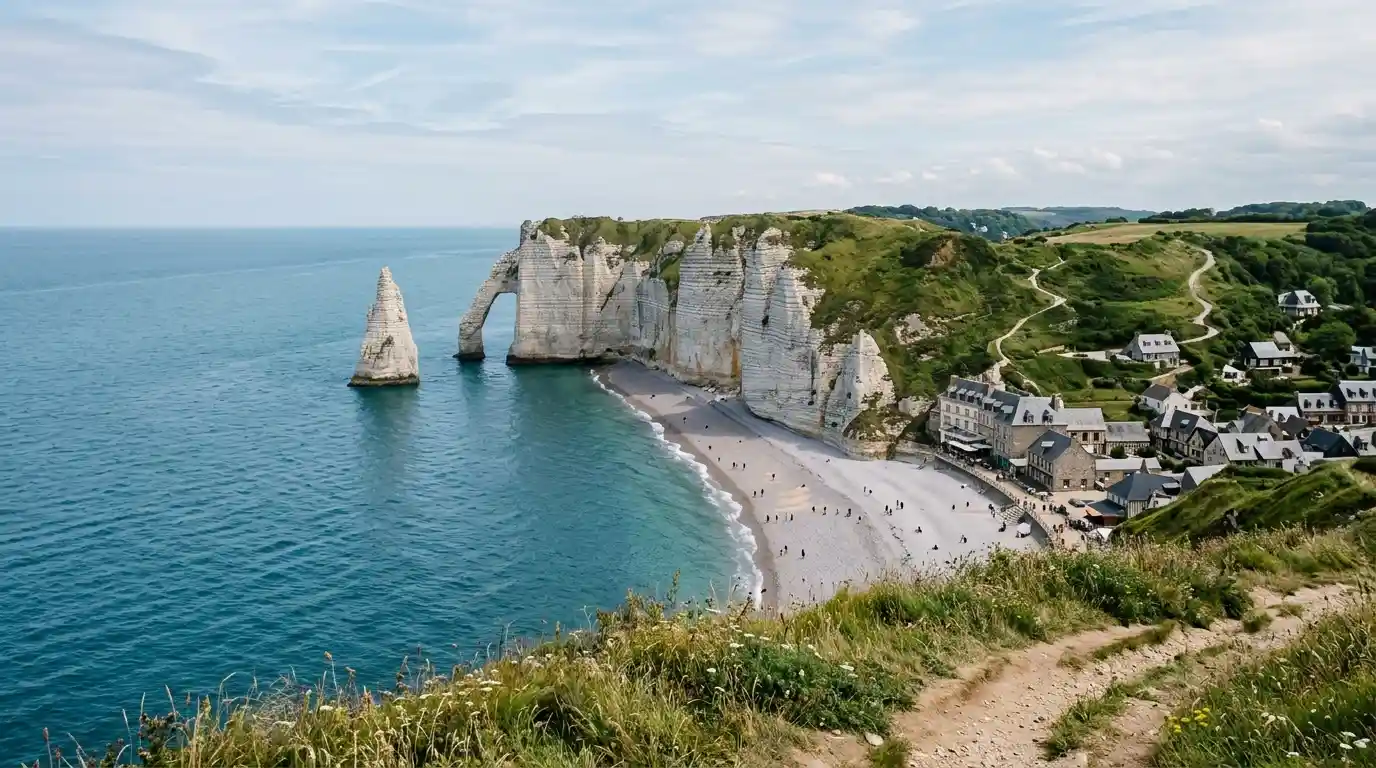
Étretat is one of Normandy’s most striking seaside destinations. Its white chalk cliffs, natural rock arches, and sweeping views across the English Channel create a memorable setting for a coastal escape.
The most rewarding experience is often a walk along the clifftop paths, where changing light and sea conditions create different views throughout the day. From elevated viewpoints, visitors can appreciate the scale of the rock formations and the contrast between the pale cliffs and blue-grey water.
The beach below is a beautiful place to pause, but the pebble shoreline and coastal paths require suitable footwear. Stay on marked routes, respect safety barriers, and avoid approaching unstable cliff edges.
Étretat is particularly attractive in spring and early autumn, when conditions may be more comfortable for walking. During busy summer periods, arriving early can help you enjoy the village and viewpoints before the largest crowds gather.
4. Honfleur: A Picturesque Harbour Town
Honfleur is known for its historic harbour, narrow streets, art galleries, and distinctive houses reflected in the water. It offers a more relaxed atmosphere than a major city and is an excellent destination for travellers who enjoy photography, local food, and leisurely exploration.
Begin around the Vieux Bassin, the old harbour surrounded by tall, narrow buildings. From there, explore the surrounding streets, browse independent galleries, and visit Sainte-Catherine Church, a remarkable timber-built church with a maritime character.
Seafood restaurants and traditional Normandy specialities add to the experience. Honfleur can be visited on a day trip, although staying overnight allows you to enjoy quieter streets in the evening and early morning.
5. Bayeux: A Gateway to Normandy’s History
Bayeux is an attractive historic town that provides an excellent base for exploring Normandy’s past. Its best-known attraction is the Bayeux Tapestry, the celebrated embroidered work depicting events surrounding the Norman Conquest of England. Check current exhibition arrangements before planning your visit.
The town itself deserves attention, with a beautiful cathedral, historic streets, and riverside walks. Compared with larger cities, Bayeux offers a calmer setting and makes a convenient base for visitors who want to explore nearby D-Day sites.
History enthusiasts should set aside time for the surrounding Normandy coastline, where museums, memorials, and preserved sites explain the events of June 1944. A guided excursion can help connect the different locations and provide context for what happened there.
6. The Normandy D-Day Beaches: A Meaningful Historical Journey
The Normandy landing beaches are among the most significant historical sites in France. Locations associated with the Allied landings of 6 June 1944 include Omaha Beach, Utah Beach, Gold Beach, Juno Beach, and Sword Beach.
Visitors can walk along the coastline, explore memorials, and learn about the experiences of soldiers and civilians during the Second World War. Nearby museums and military cemeteries provide additional context, making this an especially meaningful destination for travellers interested in modern history.
Because the sites are spread across a considerable area, planning transportation in advance is helpful. A car offers flexibility, while organised tours can make it easier to visit several locations in one day. Allow time for reflection rather than treating every stop as a quick photo opportunity.
7. Amiens: Gothic Architecture and Floating Gardens
Amiens, in the Hauts-de-France region, combines impressive architecture with peaceful green spaces. Its most famous landmark is Amiens Cathedral, a vast Gothic structure recognised for its scale, sculptural detail, and stained glass.
Another distinctive attraction is the Hortillonnages, a network of cultivated gardens and waterways traditionally used for market gardening. Depending on the season and operating arrangements, visitors may be able to explore parts of this landscape by boat.
Amiens is a good choice for travellers who want a mix of cultural sightseeing and time outdoors. The city can also fit into an itinerary linking Lille with destinations farther south in Normandy.
8. Arras: Grand Squares and Underground History
Arras is known for its elegant Flemish-style squares, historic townhouses, and distinctive belfry. The Grand Place and Place des Héros form the centre of the old town, where cafés and restaurants provide pleasant places to pause between visits.
The belfry offers an elevated perspective over the city when access is available. Beneath Arras, the Wellington Tunnels reveal another side of its history: an underground network used by Allied forces during the First World War.
Arras is an appealing destination for visitors who enjoy architecture and military history without the scale of a major metropolitan centre. It can be combined with Lille or other historic towns in the region.
9. Le Touquet-Paris-Plage: Beaches and Seaside Relaxation
Le Touquet-Paris-Plage is a stylish seaside resort on the Opal Coast, offering a broad sandy beach, pine woodland, elegant villas, and a lively town centre. It is a strong option for travellers seeking fresh sea air and a slower pace.
Spend time walking along the beach, exploring the shops, or cycling through nearby woodland paths. The town also has cafés, restaurants, and leisure activities that make it suitable for couples and families.
Weather along the northern coast can change quickly, so bring layers even during warmer months. Check local conditions before swimming or taking part in water sports, and follow beach safety guidance.
10. Dunkirk: Coastal Heritage and Maritime History
Dunkirk is a port city with a strong maritime identity and an important place in Second World War history. It is particularly associated with Operation Dynamo, the 1940 evacuation of Allied troops from the beaches of Dunkirk.
Visitors can explore the waterfront, discover local maritime heritage, and learn more about the evacuation through museums and historical sites. The beach offers a different atmosphere from the region’s dramatic chalk cliffs, with a broad stretch of coastline and open sea views.
Dunkirk is worth considering for travellers who want to explore the less-polished, more everyday side of northern France alongside its historical landmarks. It can also be paired with Lille or other destinations in the Hauts-de-France region.
11. Calais and the Opal Coast: Sea Views and Scenic Drives
Calais is widely known as a transport gateway between France and the United Kingdom, but the surrounding coastline offers reasons to stay longer. The city has maritime history, public art, and access to coastal landscapes that are often overlooked by travellers passing through.
Nearby Cap Blanc-Nez and Cap Gris-Nez provide impressive viewpoints over the English Channel. On clear days, the coastline offers expansive views, while walking paths reveal the changing landscape of cliffs, grassland, and sea.
For a road trip, the Opal Coast is a rewarding stretch to explore at a relaxed pace. Stop in small seaside communities, enjoy local seafood, and leave time for walks rather than rushing from one viewpoint to another.
12. Le Mont-Saint-Michel: An Iconic Excursion from Normandy
Le Mont-Saint-Michel is one of France’s most recognisable landmarks, famous for its medieval abbey rising above a rocky tidal island. It lies in Normandy near the border with Brittany, making it a memorable addition to a wider northern French itinerary.
Explore the narrow village streets and make the climb towards the abbey for views over the bay. The landscape changes dramatically with the tides, so check local conditions and follow official access and safety instructions before walking across the surrounding bay.
Mont-Saint-Michel is a longer excursion from many destinations in northern France, so it is best planned as a dedicated day trip or overnight stop rather than squeezed into a busy schedule. Arriving early or staying later can provide a more relaxed experience outside the busiest hours.
How to Plan a Northern France Trip
Choose a practical route
For a short break, focus on one part of the region instead of trying to see everything. Lille and Arras work well together for city sightseeing and history. Rouen, Honfleur, Étretat, and Bayeux can form the basis of a Normandy-focused trip. A longer journey can combine both areas, provided you allow enough time for travel between them.
Decide between trains and driving
Trains are useful for connecting major cities, while a rental car provides greater flexibility for coastal villages, beaches, and countryside stops. If you plan to visit several rural attractions, compare travel times and parking arrangements before deciding.
Visit in the right season
Late spring and early autumn can be pleasant for walking, sightseeing, and exploring towns. Summer brings longer days and a livelier coastal atmosphere, but popular destinations can be busy. Winter can offer quieter historic centres, although daylight is shorter and coastal weather may be unsettled.
Try regional food
Northern France has a distinctive food culture influenced by both French and Flemish traditions. Look for dishes such as carbonnade flamande, local cheeses, seafood, crêpes, and Normandy apple-based specialities. Menus vary by town and season, so ask local restaurants about regional dishes.
Allow enough time at each stop
A rushed itinerary can turn beautiful towns into brief photo stops. Give major cities at least a full day when possible, and allow extra time for the Normandy D-Day sites or coastal walks. If you are travelling with children or older family members, build in breaks and avoid packing too many activities into one day.
Explore More European Travel Ideas
Northern France can be part of a wider European holiday, especially for travellers who enjoy combining historic towns, coastlines, and cultural attractions. If you are extending your trip, explore our guides to the most amazing places to visit in Europe and European destinations for a summer holiday.
For a broader itinerary, you may also enjoy places to visit in Austria, places to visit in Greece, and Zurich in Switzerland. Travellers interested in contrasting landscapes can consider a road trip through Sicily or the villages of the Cotswolds.
Other useful inspiration includes Saint-Tropez, destinations in Eastern Europe, budget-friendly European travel, and where to stay when visiting Keukenhof in the Netherlands.
If you are comparing more regional escapes, you can also read about places to visit in northern England, destinations in southwest England, popular places to visit in London, coastal places in Scotland, and unique places to visit in Ireland.
Final Thoughts
The best places to visit in Northern France offer a varied mix of city life, medieval architecture, coastal scenery, and important historical landmarks. Lille provides culture and energy, Rouen and Bayeux bring history to life, and Étretat and the Opal Coast offer memorable seaside landscapes.
Rather than trying to cover every destination in one trip, choose the places that match your interests and build a realistic route around them. With thoughtful planning, Northern France can deliver a rewarding holiday filled with beautiful scenery, regional food, and experiences that stay with you long after you return home.