
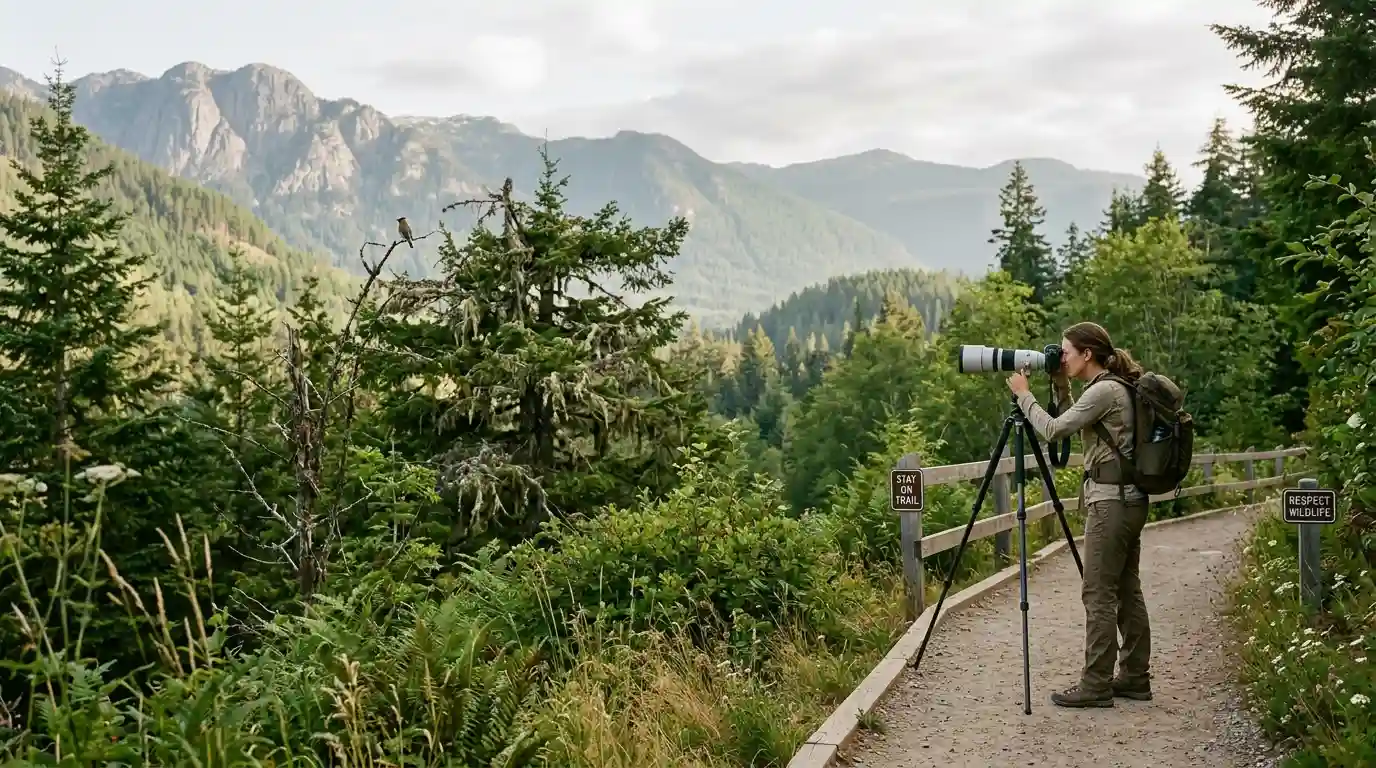
Learning how to protect the environment while taking pictures involves choosing suitable locations, respecting wildlife, staying on designated trails, and sharing photographs responsibly. These practices allow photographers to tell powerful visual stories while helping preserve the places they visit.
From quiet woodland scenes to dramatic coastlines, this guide explains how to take better environmental photographs while keeping nature’s well-being at the centre of every shot.
1. Understand the Principles of Responsible Environmental Photography
Responsible environmental photography combines creativity with respect for natural habitats. The goal is to document a scene without changing it simply to make a photograph more attractive.
Before taking pictures, consider whether your presence could disturb an animal, damage vegetation, expose a sensitive location, or interfere with other visitors. A photograph should never come at the expense of the environment it represents.
Use these principles as a starting point:
- Observe wildlife from a safe and respectful distance.
- Remain on established paths and designated viewing areas.
- Never remove plants, rocks, shells, or other natural materials for a photograph.
- Avoid baiting, chasing, touching, or feeding animals.
- Carry reusable supplies and take all rubbish home.
- Follow local rules, seasonal restrictions, and protected-area guidance.
These habits are particularly important when exploring fragile landscapes or planning visits to California’s natural attractions, where different environments may require different conservation precautions.
2. Choose the Right Time and Location
Good timing can improve both the quality of a photograph and the experience of the surrounding environment. Early morning and late afternoon often provide softer light, longer shadows, and more balanced colours than harsh midday sunshine.
However, the best time depends on your subject. Some animals are active at dawn, while others are easier to observe at different times. Research seasonal patterns and follow local wildlife guidance instead of approaching animals to force a particular shot.
Research the location before you arrive
Check access restrictions, trail conditions, weather forecasts, and photography rules. Find out whether particular areas are closed during breeding seasons or restoration work. If you are visiting a protected landscape, use official visitor information to understand which activities are permitted.
For example, planning a visit to Lassen Volcanic National Park requires attention to trail conditions, natural features, and the rules that protect the park. Similar preparation helps photographers explore other destinations without putting unnecessary pressure on their surroundings.
Nature-focused trips can also provide opportunities to document a variety of habitats. A journey through Japan’s cultural and natural landscapes or the coastlines of Scotland can inspire photographs of forests, shorelines, and changing weather while reminding visitors to respect local conservation measures.
3. Photograph Wildlife Without Disturbing It
Wildlife photography requires patience, careful observation, and a willingness to accept that animals do not follow a photographer’s schedule. The most responsible approach is to let animals behave naturally rather than trying to control their movements.
Keep a respectful distance
Use a telephoto lens, binoculars, or your camera’s optical zoom to photograph animals without approaching them too closely. If an animal changes direction, repeatedly looks toward you, becomes agitated, or moves away, give it more space.
Never block a route to food or water, surround an animal, disturb a nest, or attempt to attract wildlife with food or recorded calls. These actions can cause stress and may change natural behaviour.
Be especially careful in sensitive habitats
Grasslands, wetlands, forests, reefs, and nesting areas can be vulnerable to human disturbance. When photographing wildlife in places such as the Masai Mara, follow the guidance of authorised guides and keep the required distance from animals.
Likewise, when exploring New Zealand’s distinctive natural environments, learn about local biosecurity requirements and habitat protection rules before moving between locations.
4. Protect Plants, Soil, and Fragile Landscapes
A small change to a landscape can have a lasting effect when many visitors repeat the same behaviour. Walking off-trail, stepping on seedlings, disturbing moss, or moving stones can damage habitats that take years to recover.
Stay on marked trails, viewing platforms, and other permitted routes. Do not create new paths just to reach a better camera angle. When a viewpoint is crowded, wait for space or find a different composition instead of trampling nearby vegetation.
Photographers exploring Mount Rainier National Park should pay particular attention to fragile mountain vegetation and changing trail conditions. In other destinations, coastal plants, desert surfaces, and wetland soils may be equally vulnerable.
Natural landscapes can also tell important conservation stories. Images captured around the Gulf of Mexico can document coastal scenery and marine environments, provided photographers respect access rules and avoid disturbing shorelines or wildlife.
5. Use Photography Equipment Responsibly
You do not need a large collection of equipment to create meaningful environmental photographs. Carrying only what you need can make outdoor trips easier and reduce the risk of damaging vegetation or disturbing other visitors.
Choose practical, durable gear
- Use a camera or smartphone that suits your intended subjects.
- Carry a suitable lens rather than changing equipment unnecessarily in sensitive areas.
- Use a reusable water bottle and reusable storage bags.
- Protect batteries and electronic equipment from rain, dust, and extreme temperatures.
- Use a tripod only where permitted and place it carefully to avoid damaging plants.
Keep packaging, disposable wipes, batteries, and broken equipment out of natural habitats. Dispose of damaged batteries and electronic accessories through appropriate recycling or collection facilities.
Responsible consumption extends beyond photography. Choosing durable items and learning about eco-friendly sportswear can help outdoor enthusiasts consider the environmental impact of the clothing and equipment they use.
6. Improve Composition Without Manipulating Nature
Strong environmental photography does not require disturbing the subject. Often, a small adjustment in position, framing, or camera settings is enough to create a more compelling image.
Use natural framing
Branches, grasses, rock formations, and naturally occurring openings can guide the viewer’s attention toward the main subject. Make sure you do not bend plants, move branches, or rearrange natural objects to create the frame.
Look for reflections and patterns
Water reflections, repeating tree trunks, leaf patterns, and the contrast between sunlight and shadow can give a photograph depth. Wait for suitable conditions rather than disturbing a pond, moving wildlife, or altering the scene.
Experiment with perspective
Try wide compositions to show the relationship between a subject and its habitat. Close-up photographs can reveal leaf textures, natural patterns, and small details, provided you avoid touching or damaging the subject.
When photographing destinations such as South America’s varied landscapes or the Philippines’ natural attractions, think about how each frame communicates the relationship between the landscape, wildlife, and human activity.
7. Edit Environmental Photos Honestly
Editing can improve exposure, colour balance, sharpness, and contrast. The important distinction is between improving the presentation of a photograph and changing it in a way that misrepresents the environment.
Reasonable adjustments include:
- Correcting exposure and white balance.
- Reducing distracting digital noise.
- Making modest adjustments to contrast and saturation.
- Cropping the image to improve composition.
- Sharpening details without creating unnatural textures.
Avoid adding wildlife that was not present, removing visible pollution from a documentary image without disclosure, or exaggerating environmental damage to attract attention. If an image is intended to document a conservation issue, its accuracy matters as much as its visual appeal.
When combining multiple photographs or using generative editing, clearly identify the result as an illustration or composite whenever viewers could reasonably mistake it for an unaltered documentary photograph.
8. Share Photographs Without Exposing Vulnerable Places
Sharing environmental photographs can encourage people to appreciate nature and support conservation. However, publishing precise location information may unintentionally expose rare species, nesting sites, or fragile habitats to unwanted attention.
Before posting an image, consider the risks of revealing its location. Remove precise GPS metadata when necessary, avoid publishing sensitive coordinates, and follow any location-sharing guidance provided by conservation authorities.
Give appropriate credit when required, obtain permission before photographing identifiable people in situations where consent is appropriate, and respect restrictions on commercial photography. When publishing images, make sure captions accurately describe what the photograph shows.
Environmental storytelling can be strengthened by documenting places responsibly. Images from natural destinations near Colombo or family-friendly destinations in Washington State can inspire outdoor appreciation when shared with accurate context and respect for local rules.
9. Make Environmental Photography Part of Sustainable Travel
Photography often involves travelling to parks, beaches, forests, mountains, and other outdoor destinations. Planning transport, supplies, and activities carefully can reduce the impact of these trips.
Whenever practical, combine nearby photography locations into one trip, use established visitor facilities, bring reusable supplies, and follow local waste-management rules. Avoid approaching restricted areas or using vehicles in places where access is prohibited.
Photographers visiting Colorado during Thanksgiving should prepare for seasonal weather and check access conditions before setting out. Those exploring South West England can similarly plan around coastal conditions, local paths, and the needs of sensitive habitats.
For trips involving several stops, prioritise quality over quantity. Spending more time observing one location can produce better photographs than rushing between numerous sites and increasing unnecessary travel.
10. Help Your Photographs Support Conservation
Environmental images can help people understand habitats, recognise changes in landscapes, and appreciate species they may never encounter in person. Their impact is strongest when the photographs are accurate, ethically captured, and shared with meaningful context.
Consider documenting the same permitted viewpoint over time to show seasonal changes. Photograph restoration activities only with appropriate permission, and avoid presenting a single image as proof of a broad environmental trend without supporting evidence.
When appropriate, share your work with local conservation groups, educational projects, or community initiatives. Explain what viewers are seeing and encourage respectful behaviour rather than using dramatic imagery that misleads the audience.
Photographs of destinations such as California’s natural landscapes and New York State in summer can help people appreciate the variety of natural environments while reminding them that outdoor recreation comes with a responsibility to protect these places.
11. A Simple Checklist Before You Take a Photograph
Before pressing the shutter, take a moment to check the following:
- Am I allowed to photograph in this location?
- Am I staying on a permitted path or viewing area?
- Could my position or behaviour disturb wildlife?
- Am I avoiding damage to plants, soil, and other natural features?
- Do I have a way to carry out all my rubbish?
- Could sharing the location expose a sensitive habitat?
- Will my editing and caption accurately represent the scene?
If the answer to any question raises concern, change your approach before taking the photograph. A different angle, a longer lens, or simply waiting can often solve the problem.
Conclusion
Protecting the environment while taking pictures begins with a simple principle: capture nature without compromising it. By respecting wildlife, staying on designated trails, using equipment thoughtfully, editing honestly, and sharing images responsibly, photographers can create memorable work while reducing their impact on the natural world.
You do not need expensive equipment or dramatic locations to make a meaningful environmental photograph. Patience, observation, careful composition, and respect for the subject are far more important. Every responsible image can help people see the value of the natural world—and why it deserves protection long after the camera is put away.